Join WhatsApp Channel

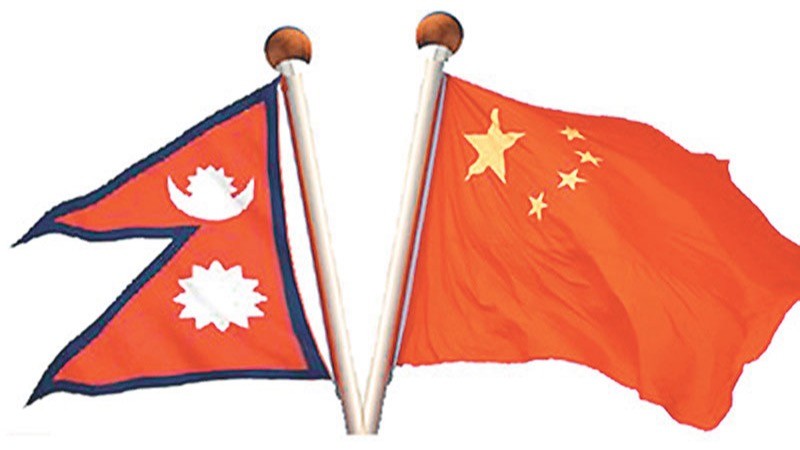
Foreign Minister Shisir Khanal’s visit to China this week marks a crucial point in Nepal’s foreign policy. Coming soon after his trip to India, the visit highlights Kathmandu’s aim to sustain strong ties with both neighboring countries and to promote Nepal’s economic goals.
For decades, Nepali governments have been accused of choosing sides between New Delhi and Beijing. Prime Minister Balendra Shah aims to take a different approach by emphasizing that Nepal’s foreign policy does not involve selecting one over the other. Instead, he advocates for constructive cooperation with both India and China to foster national development and prosperity.
Khanal’s meetings in Beijing are expected to focus on infrastructure, trade, connectivity, tourism and projects associated with China’s Belt and Road Initiative (BRI). He is scheduled to meet Chinese Foreign Minister Wang Yi, senior government officials, and representatives of the Chinese business community.
Economic Opportunity
Central to the visit is Nepal’s search for economic opportunity. The country’s development ambitions far exceed the resources available internally. Chinese investment and technical expertise could speed up long-delayed infrastructure projects. They could improve cross-border connectivity and strengthen energy and transportation networks. Attracting foreign investment has become a necessity rather than a choice at a time when the new government is under pressure to deliver economic growth and create jobs.
Trade is another priority. Amid growing commercial ties, Nepal continues to run a large trade deficit. Kathmandu hopes to secure greater access for Nepali products, particularly agricultural goods, handicrafts, and tourism-related services. A more balanced trading relationship would boost Nepal’s economy and give bilateral ties more long-term sustainability.
Tourism presents another area of untapped potential. Before the COVID-19 pandemic, Chinese visitors were among the fastest-growing groups of tourists arriving in Nepal. Reviving and expanding that flow could bring much-needed revenue and employment.
China also has important interests at stake. Beijing views Nepal as a strategically important neighbor to the south of the Himalayas. Stability in Nepal serves China’s security interests, especially with respect to Tibet. A peaceful, prosperous, and friendly Nepal helps reduce the risk of cross-border tensions while supporting China’s broader interests in South Asia.
The visit also allows Beijing to demonstrate that the BRI continues to deliver tangible benefits. As questions have emerged internationally about the financial sustainability of some BRI projects, successful cooperation in Nepal would provide China with a valuable example of infrastructure diplomacy producing concrete results.
At the same time, China is eager to build strong ties with Nepal’s new political leadership. The emergence of the Shah government has reshaped Nepal’s political landscape. Beijing will want to establish working relationships that protect its long-term interests regardless of future political changes in Kathmandu.
Yet opportunities are accompanied by challenges. For Nepal, the biggest one is ensuring that economic cooperation does not lead to excessive dependence. Chinese investment can help fill critical infrastructure gaps but Kathmandu must carefully assess the financial viability of every major project. Concerns about debt sustainability have complicated China’s infrastructure partnerships across the developing world. Nepal cannot afford projects that generate short-term political excitement but become long-term financial burdens.
Nepal must also manage the geopolitical dimensions of its relationship with China. Every significant engagement between Kathmandu and Beijing is closely watched in New Delhi. Although Khanal has emphasized that Nepal seeks positive relations with India and carries no ‘old baggage’ in bilateral ties, Kathmandu will still need to reassure India that stronger cooperation with China does not come at India’s expense.
China faces challenges of its own. Beijing generally enjoys goodwill in Nepal but public expectations have grown. Several high-profile projects announced over the years have moved slowly. This has created skepticism about whether promises will translate into results. Chinese officials may find themselves under pressure to show progress on existing commitments rather than simply unveiling new ones.
The broader strategic environment adds another complex dynamic. As competition among major powers intensifies, South Asia is increasingly becoming an arena of geopolitical competition. The growing engagement of the United States in Nepal has added to Beijing’s concerns. China will need to manage its relationship with Kathmandu carefully to avoid reinforcing perceptions that Nepal is becoming a battleground for regional influence.
Practical Results
Ultimately, the success of Khanal’s visit should not be measured by the number of agreements signed or the diplomatic statements issued. The real test will be whether both countries can deliver practical results that improve the lives of ordinary Nepalis and strengthen a relationship based on mutual benefit rather than geopolitical calculations.
Nepal’s goal is not to align itself exclusively with China or India. It is to maintain productive and balanced relations with both. Khanal’s visit to Beijing is another step toward that objective. The challenge now is to turn diplomatic balance into tangible gains for Nepal, for China, and for the future of their relationship.
Disclaimer: The opinions and views expressed in this article/column are those of the author(s) and do not necessarily reflect the views or positions of South Asian Herald.