Indians have been building communities far from home for generations.
In university towns and technology hubs across the United States, those communities have grown around temples and gurdwaras, professional associations and alumni groups, cricket clubs, cultural societies and, inevitably, food. New arrivals inherit some of these networks and create others of their own.
Increasingly, those circles include Pakistanis too.
On American campuses, the introduction is usually unceremonious. An Indian and a Pakistani become lab partners. They sit beside one another in class, turn up at the same startup event or discover each other at a cricket screening. Someone switches comfortably between Hindi and Urdu. Someone else starts an argument about biryani. Before long, another person has been added to the group chat.
Advertisement
There is something recognizably Indian about the ease with which these circles expand. India has always contained an extraordinary density of languages, faiths, cuisines and regional identities. Moving between difference is part of everyday social life. An Indian student arriving in California already knows that sharing a country, a language or a meal does not require everyone at the table to have the same history or opinions.
A Pakistani classmate simply adds another set of experiences to the room.
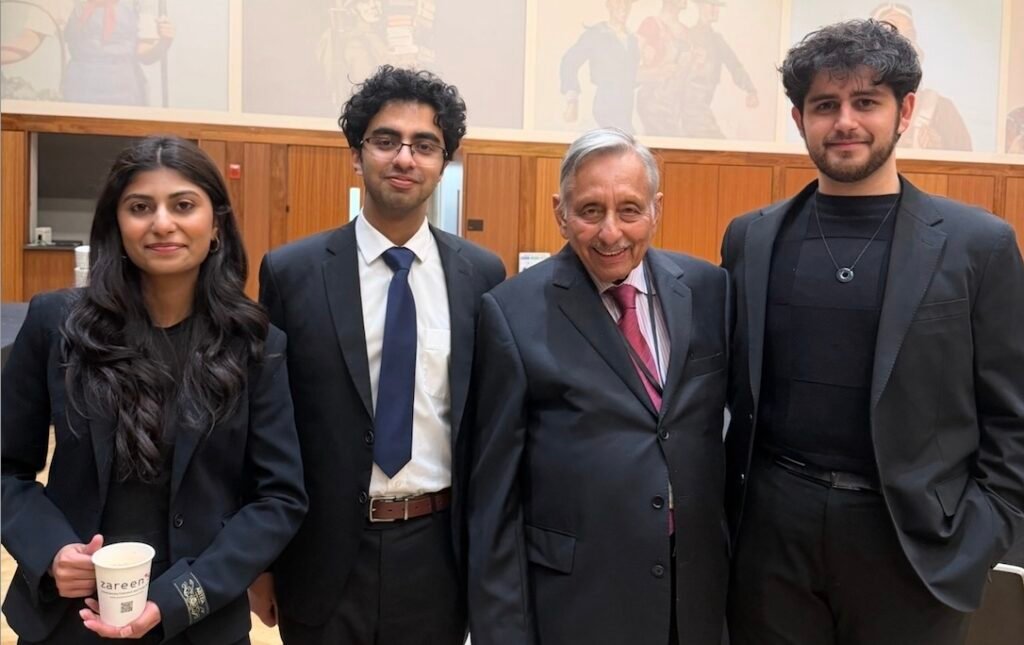
Luv Jawahrani arrived at Stanford with a personal connection to that history. An Indian Sindhi, his family traces its roots to Lahore and Sindh. The places his family remembered were now places he knew largely through stories. During one semester, he met Aimen Ejaz, a Pakistani student whose grandfather had migrated from Jalandhar. Their family histories pointed in different directions across the subcontinent. Their lives had brought them to the same university in California.
They began talking over a cricket match. The friendship itself needed little explanation. What interested them was whether the same ease they had found informally could be extended to other students. Those conversations helped create the Stanford Indo-Pak Dosti Forum and later the Dosti Project.
Its early programmes reflected the interests of the students around it. Indians and Pakistanis worked in mixed teams on disaster resilience, tech for good, sustainability and food security. Other initiatives explored entrepreneurship, community building, culture and international affairs. Stanford faculty served as mentors, and students brought scholars, founders and professionals into their classrooms. The emphasis of SIPDF was rooted in practicality: give people something to build, study or discuss together and let familiarity develop around it. There was plenty of room for the less serious parts too. Icebreakers, meals and informal conversations mattered.
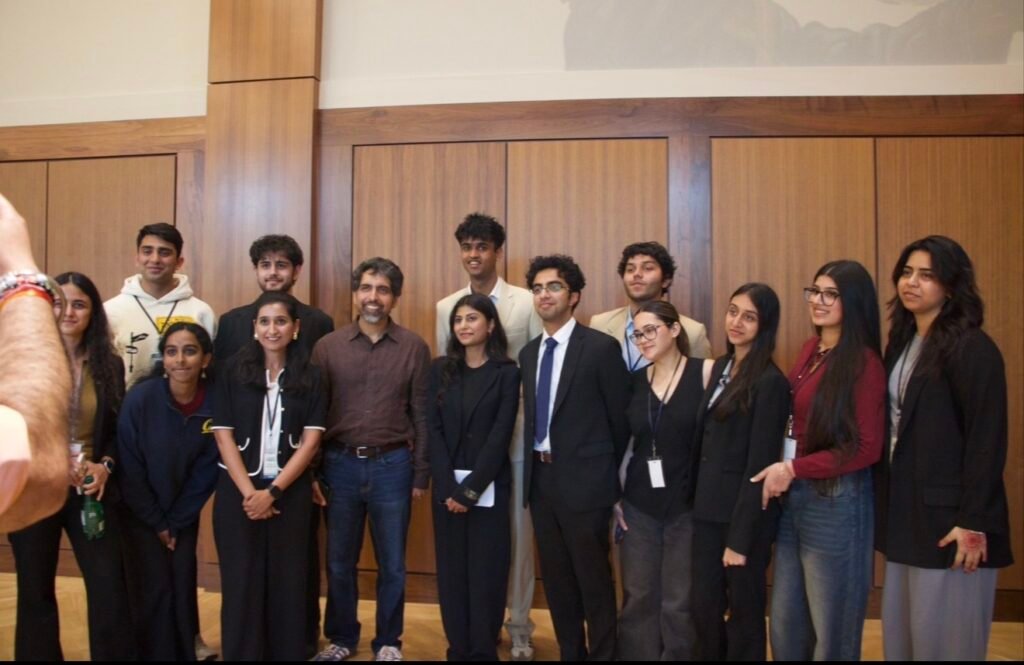
So did cricket and the dozens of small cultural references that travel remarkably well across the subcontinent. None of this required students to surrender the identities they arrived with. Indian students remained proudly Indian. Pakistani students remained Pakistani. They could disagree, sometimes sharply, and still work on the same project or meet again for dinner.
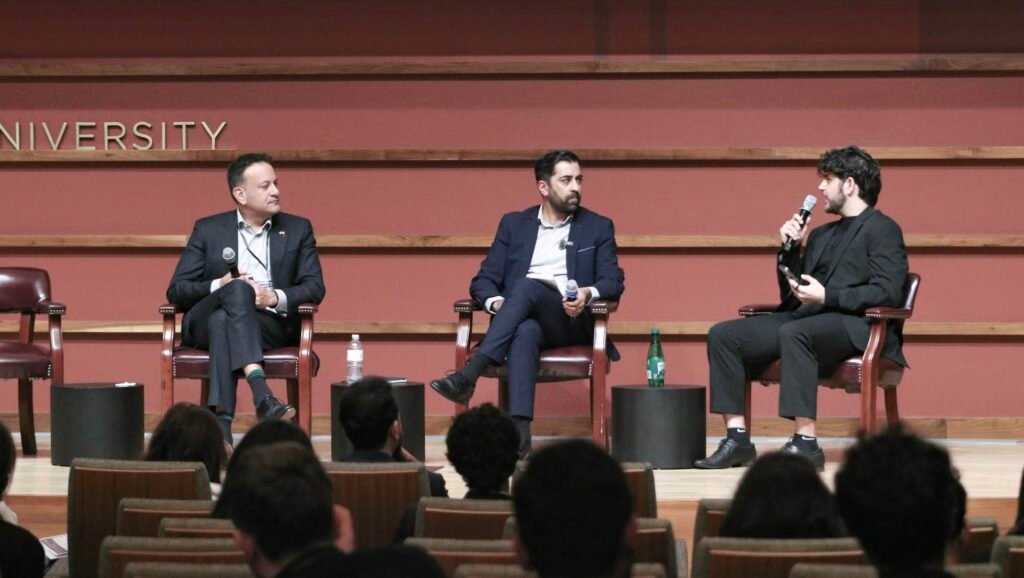
The Dosti Project’s inaugural India-Pakistan Friendship Conference at Stanford’s Hoover Institution on March 31 and April 1, 2026, brought that idea into a much larger room. More than 650 participants from over twenty countries attended sessions spanning entrepreneurship, technology, culture and international affairs. Sal Khan and Sharmeen Obaid-Chinoy were among the speakers. Entrepreneurs presented their work during a Demo Day.
One of the conference panels featured Indian-Pakistani couples. Several remained in touch after the event. Months later, some were still meeting for dinner in the Bay Area. There is no need to give those dinners more significance than the people attending them would. Their value lies partly in being ordinary. Families meet. Friends return. Someone organizes the next dinner. Someone sends a meme to the group chat.
The Dosti Project is now planning chapters at other universities, and the model leaves considerable freedom to each campus. Students interested in public health might organize around health. Engineers could build something together. Young founders might meet through entrepreneurship. Culture, research, sport or technology could work just as well.
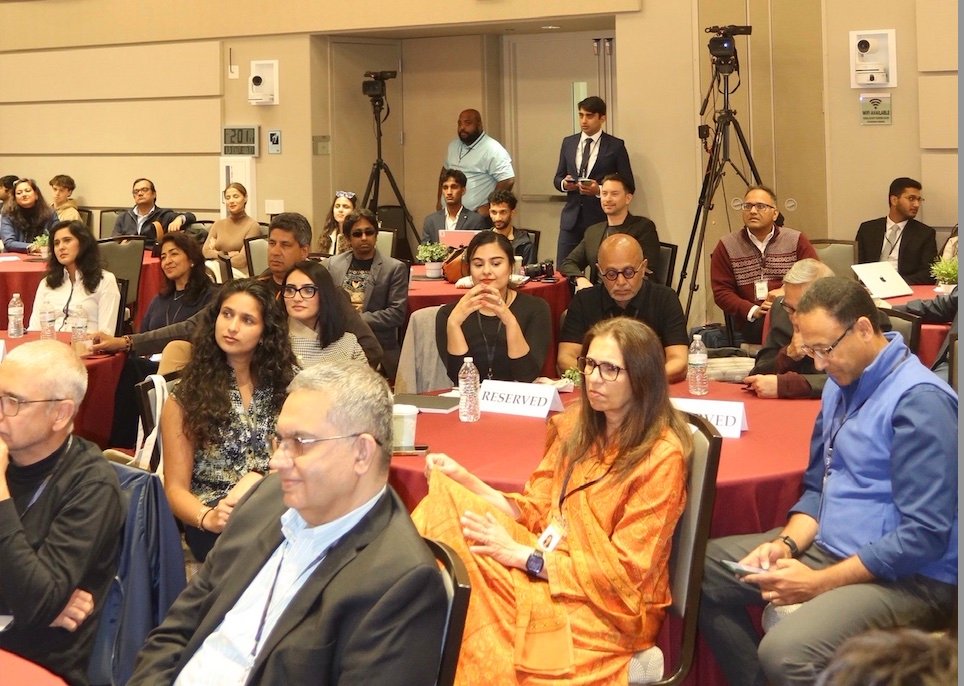
Diaspora communities do more than preserve what people bring from home. They also create institutions that could not have existed in quite the same way there. For younger Indians and Pakistanis in the United States, universities are becoming one such space. The relationships formed there are shaped by history, but they are not confined to repeating it. Students choose whom they work with, what they build together and which conversations are worth continuing after everyone leaves the room.
What lasts may be less the individual panel, project or hackathon than the network that forms around it: future engineers, entrepreneurs, researchers and public servants who first encountered one another as peers.
This August, Indian and Pakistani communities across the United States will celebrate their respective Independence Days a day apart. Decades after Partition, the border between the two countries remains consequential. But for a generation growing up, studying and working thousands of miles away from it, the border does not determine every relationship that comes after.
Disclaimer: The opinions and views expressed in this article/column are those of the author(s) and do not necessarily reflect the views or positions of South Asian Herald.