Join WhatsApp Channel

Two visits from Nepal to India in quick succession from the new establishment there. The first (June 1-5) was by Rabi Lamichchane, President of the Rastriya Swatantra Party (RSP), the newest political party in Nepal, which within a four-year span, has made itself a force to reckon with. The second (June 5-7) was by Shisir Khanal, Nepal’s new foreign minister.
First a word about India-Nepal ties. The two have an “open” border i.e. free movement between nations that share religious, cultural, linguistic and ethnic commonalities. Second, they two share a relationship described as “roti-beti ka rishta.”
“Roti” means bread in Hindi; it refers to millions of people of both countries who work in various economic sectors of the other country. “Beti” again in Hindi means daughter and refers to the inter-marriages between Indian and Nepali families over centuries. All point to a complex web of closeness and interdependence.
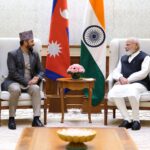
Back to the visits. After being blindsided by the political developments in Nepal last September, India has moved quickly to establish links with the RSP. The serenading of Lamichchane – meetings with Home Minister Amit Shah and Prime Minister Narendra Modi and the grand welcome at India’s ruling party headquarters – is part of this strategy. Khanal’s visit was no less warm.
The idea is to create comfort and familiarity that can be leveraged to keep troubles at bay. Given India’s troubles with Pakistan, China and to an extent with Bangladesh, ensuring stable ties with Nepal is a no brainer. Especially when both Lamichchane and Khanal say that they come with none of the political baggage of the past. Nepal’s former prime minister K.P Sharma Oli was seen as distinctly anti-India and pro-China.
There are the claims over territory — the Limpiyadhura-Kalapani-Lipulekh area. Interesting was the fact that the new Nepalese Prime Minister Balendra Shah recently said that both India and Nepal had encroached on other’s territories. That’s refreshing change; previously all blame was only on India. Shah’s comment that he had engaged the UK and China on this matter wasn’t appreciated by India. But during his visit, Khanal cleared the air saying Kathmandu wanted to resolve matters without external mediation.
What of the future? Voices on the ground in Nepal say PM Shah is concentrating on delivery of promises made to his people –especially in the first 100 days. Meaning domestic priorities take centre stage. On its part, India should devise ways to be seen as a partner in this process. Lamichchane set out some ideas in an Indian newspaper article.
The RSP, he said, “is Nepal’s new political reality, a young force.” Looking forward, he wondered why India and Nepal couldn’t link up at the state/provincial level – direct flights between Pokhara and Lumbini in Nepal to Delhi, Mumbai and Bengaluru, a digital corridor connecting Kathmandu and Bengaluru and partnerships between India’s industrialised states and Nepal. “We want to host institutions like the IIT and AIIMS in Nepal,” he said referring to India’s globally renowned engineering and medical training institutions. Nepal seems to be demanding more development-oriented diplomacy. It’s something India is familiar with and can deliver.
Disclaimer: The opinions and views expressed in this article/column are those of the author(s) and do not necessarily reflect the views or positions of South Asian Herald.