For centuries, India’s saree traditions evolved in response to geography, climate and local livelihoods, creating a remarkable diversity of fabrics, weaving techniques and draping styles across the subcontinent. Today, while regional identities remain deeply rooted, those boundaries are increasingly giving way to a national and global marketplace in which consumers are exploring handloom traditions far beyond their home states, according to Darshan Dudhoria, CEO of Indian Silk House Agencies (ISHA).
In an exclusive interview with South Asian Herald, Dudhoria said the future of India’s handloom sector lies in combining heritage with technology, authenticity and global reach. As demand grows among South Asian diaspora communities in the United States, Britain and the Gulf, Indian handloom sarees are finding new audiences overseas, prompting ISHA to plan pilot stores abroad by 2027. Dudhoria argues that the saree’s enduring appeal stems from its status not merely as clothing but as a cultural asset, one that has survived industrialization, fast fashion and changing consumer trends while continuing to support millions of weavers and artisans across India.
Under his leadership, the 54-year-old family business has transformed into a technology-enabled omnichannel retailer with 69 stores across 12 states and sustained annual growth of nearly 50 percent. Dudhoria has championed the integration of artificial intelligence, data-driven inventory management, and quality verification systems in a sector long dominated by informal practices.
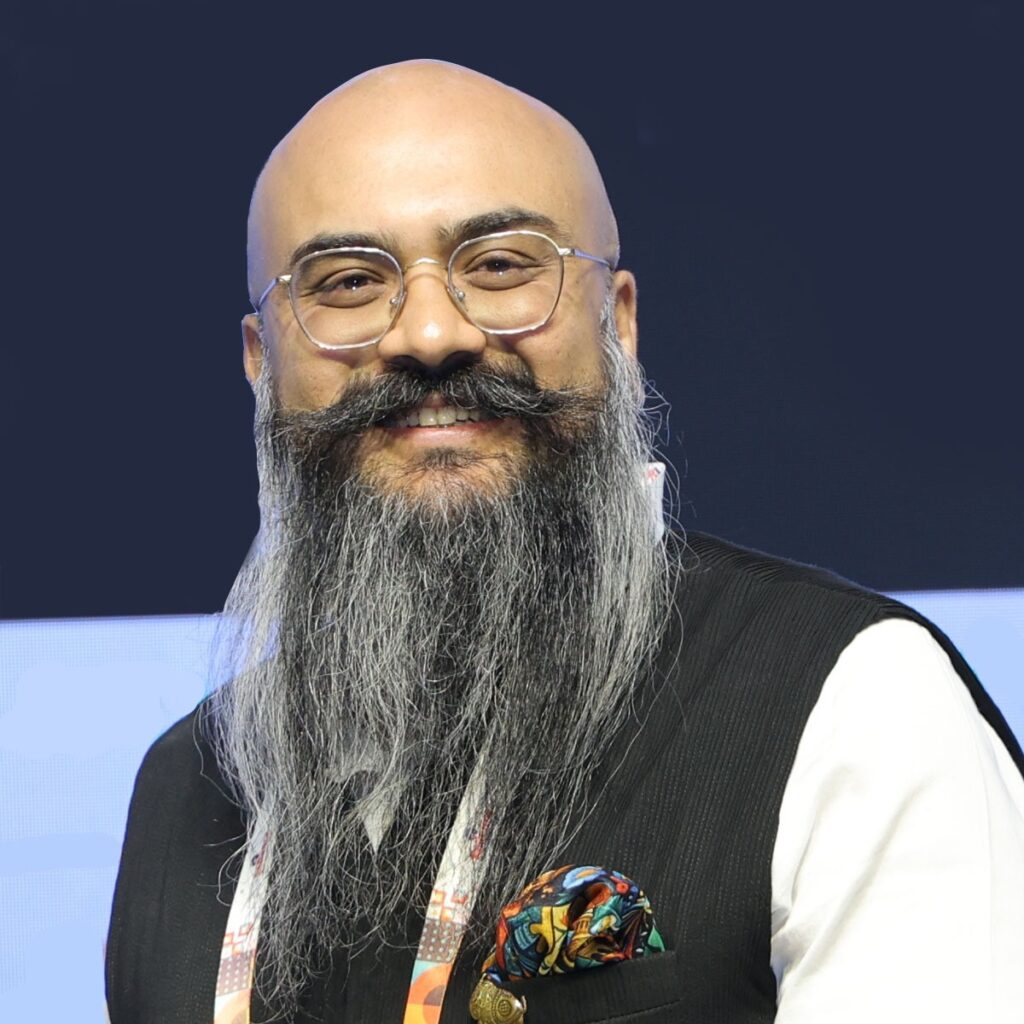
Beyond retail, he has built a broader ecosystem supporting India’s textile heritage through ventures such as AllSilks.com, a global platform for handloom sarees, and initiatives that support more than 15,000 artisans across 62 weaving clusters. A strong advocate for combining tradition with innovation, Dudhoria believes India’s handloom sector can achieve global scale without losing its authenticity, making him one of the most prominent voices in the future of India’s heritage retail industry.
Advertisement
Different regions have distinct weaving traditions like Kota Doria, Bengal cottons, Chanderi and Chettinad. How much of this was shaped by local climate and geography?
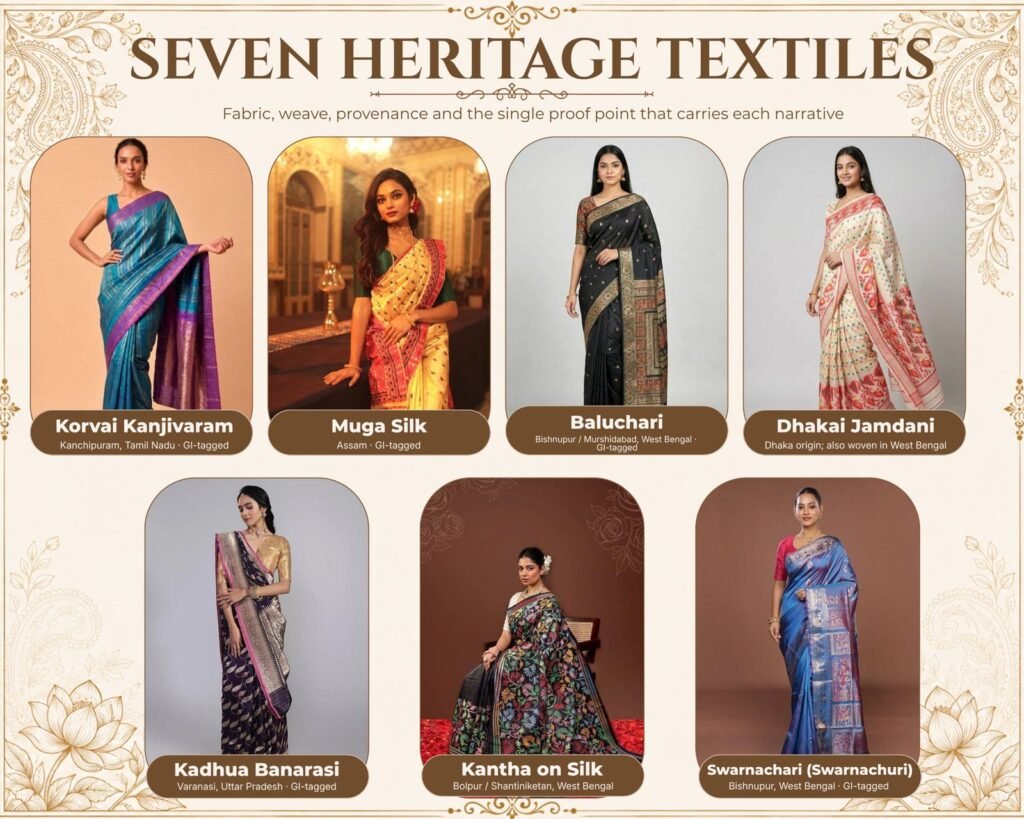
Almost entirely. The loom did not decide what to weave. The land did. Rajasthan is brutal in summer, so Kota Doria developed its open, square-check weave to let air move through the body. Bengal is humid for most of the year, which is why the region became home to fine cottons and the gossamer lightness of Jamdani. Kanjivaram grew in Tamil Nadu’s temple towns, where heavy silk was required for ritual, ceremony, and the kind of occasions where a saree needed to make a statement that lasted a lifetime. I work with 62 weaving clusters today, and I can tell you that in almost every single one of them, the original weave was a direct response to where those weavers lived and what they needed to do in it. Climate did not just inspire these traditions. It created them.
Are these regional preferences holding strong today, or are buying patterns shifting?
Both are true, and they are not in conflict. Across the 12 states we operate in, people still reach for their own region’s saree for a wedding, a puja, a ritual. That emotional and cultural loyalty has not moved. What has shifted is curiosity. Buyers who would never have encountered a Baluchari are now buying it in Lucknow. Women in Kolkata are adding Kanjivarams to their wardrobes. Regional identity is holding, but regional walls are coming down. That cross-regional appetite is precisely the gap that our “Sarees of India” model was built to serve. We are not replacing regional love. We are giving people access to more of it.
With rising temperatures, are consumers gravitating toward lighter fabrics regardless of their regional background?
Yes, and it is one of the clearest shifts I have seen across our stores. Linen, cotton, tissue, and lighter silks are gaining ground for daily and summer wear. Customers are explicit about it. They want something they can breathe in, something that works for a full day in the heat. But here is what I want people to understand: heavy silks are not losing. They are being used differently. They still rule weddings and occasions without question. What is actually happening is that women are building two distinct wardrobes. Light for daily life. Heavy for the moments that deserve it. One is not replacing the other. The category is expanding, not contracting.
The saree is draped in over 80 styles across India. How much of that variation was functional versus cultural?
Most of it started as functional. A woman farming in Maharashtra needed her legs free to move, so the Nauvari style was pinned between the legs for mobility. Fishing communities along the coasts developed drapes that kept fabric away from water and allowed fast movement. The styles were solutions before they were traditions. Over time, each regional drape became identity. It became the way a woman from that community was recognized at a glance. The functional origin got absorbed into culture so completely that today people do not think of it as a practical choice at all. But go back far enough, and almost every drape solved a problem first.
What makes India’s major weaving clusters like Varanasi, Kanjivaram and Pochampally each distinct?
Each cluster has one signature that no one else can replicate. Varanasi is kadhua brocade, where every motif is woven individually by hand on the loom. Kanchipuram is the korvai border, where the body and the border are woven as separate structures and interlocked by two weavers on a single loom. Pochampally is ikat, where the yarn is resist-dyed in precise patterns before weaving even begins, so the design emerges from the thread itself rather than being woven in afterwards. These are not stylistic preferences. They are distinct technical traditions that take years to learn. At ISHA, every saree carries a note showing the cluster it came from and the technique used. We also run Silk Mark verification, Handloom Mark checks, and zari purity testing. The provenance is not a story we tell. It is something we verify.
The saree has survived industrialization, partition, and fast fashion. What explains that resilience?
Because a saree is not a garment. It is identity. It is an heirloom that moves from mother to daughter. No one passes down a fast fashion purchase. And unlike most things people buy, a fine handloom saree holds its meaning and often grows in value. You cannot disrupt something that people treat as both culture and asset. The numbers bear this out in a way I find deeply satisfying, because people were writing obituaries for this category not long ago. ISHA has close to 50 percent year-on-year growth, sustained over four consecutive years. We have opened 69 stores across 12 states, roughly one new store every 14 days. That is not a category that is dying. That is a category that was waiting for someone to take it seriously.
Is the saree uniquely Indian, or do other cultures have comparable draped garment traditions?
Draped garments exist across cultures. The sarong is worn across Southeast Asia. The sari-like drapes appear in Sri Lanka and parts of East Africa. The ancient Greek peplos was a draped garment. But there is a distinction worth making: no other unstitched draped garment is still produced at this scale, still actively worn as an everyday and ceremonial choice, and still sustained by millions of working looms. India has over 35 lakh handloom weavers according to the last national census. That is not a craft on a museum shelf. That is a living industry. The saree’s survival at this scale, with this level of regional diversity and technical complexity, has no real parallel anywhere in the world.
With the South Asian diaspora spread across the US, UK and beyond, how large is the international opportunity for Indian handloom sarees?
It is our next home market, not a side opportunity. We launched AllSilks.com in 2015 specifically to reach diaspora customers in the US and UK who had no access to authentic handlooms outside of what family could carry in a suitcase. The demand was always there. What was missing was a platform with provenance and trust built in. We are now taking the next step: ISHA plans to open pilot stores in the UK, UAE and the US by mid-2027. The diaspora is not sentimental about the saree. They are serious buyers who understand its value deeply, often more than buyers in India, because they have seen what real craft looks like when it is rare. The next chapter of the saree’s story will be written on global high streets.
How have artisans kept their craft alive through decades of powerloom competition and industrialization?
Weavers kept their craft alive by finding buyers who understood what they were making. The problem was never the loom. It was the absence of a steady, reliable market that valued authenticity over price. What kills a craft is not competition. It is inconsistent income, which pushes the next generation toward more predictable work. ISHA’s 69 stores across 12 states, combined with the global reach of AllSilks.com, give over 15,000 weavers a regular buyer who will not haggle over authenticity. When a weaver knows the orders will come, the children stay in the craft. Beyond sarees, our work extends to community support. Bari Kothi, our 250-year-old heritage property in East India, was restored specifically to create sustainable livelihoods for 150-plus families. Keeping a craft alive is about keeping the community around it whole.
Where does automation pose the greatest risk to handloom weavers, the technology itself or the compliance burden around labor and environmental norms?
The real danger is neither. It is falling demand. If buyers stop choosing handloom, no compliance reform or technology policy will save it. The handloom sector should not try to compete with powerlooms on price. That is a fight it cannot win, and it should not want to. Where handloom wins are on authenticity, meaning, and the kind of value that actually appreciates over time. Technology, used correctly, is an ally for the weaver, not a threat. Digital design tools, authenticity verification systems, platforms that connect a weaver in Bishnupur directly to a buyer in Birmingham. All of that helps the craft. What we should resist is the version of technology that removes the human hand from the loom. The moment that happens, you no longer have handloom. You have a copy. And copies do not hold value.