Join WhatsApp Channel

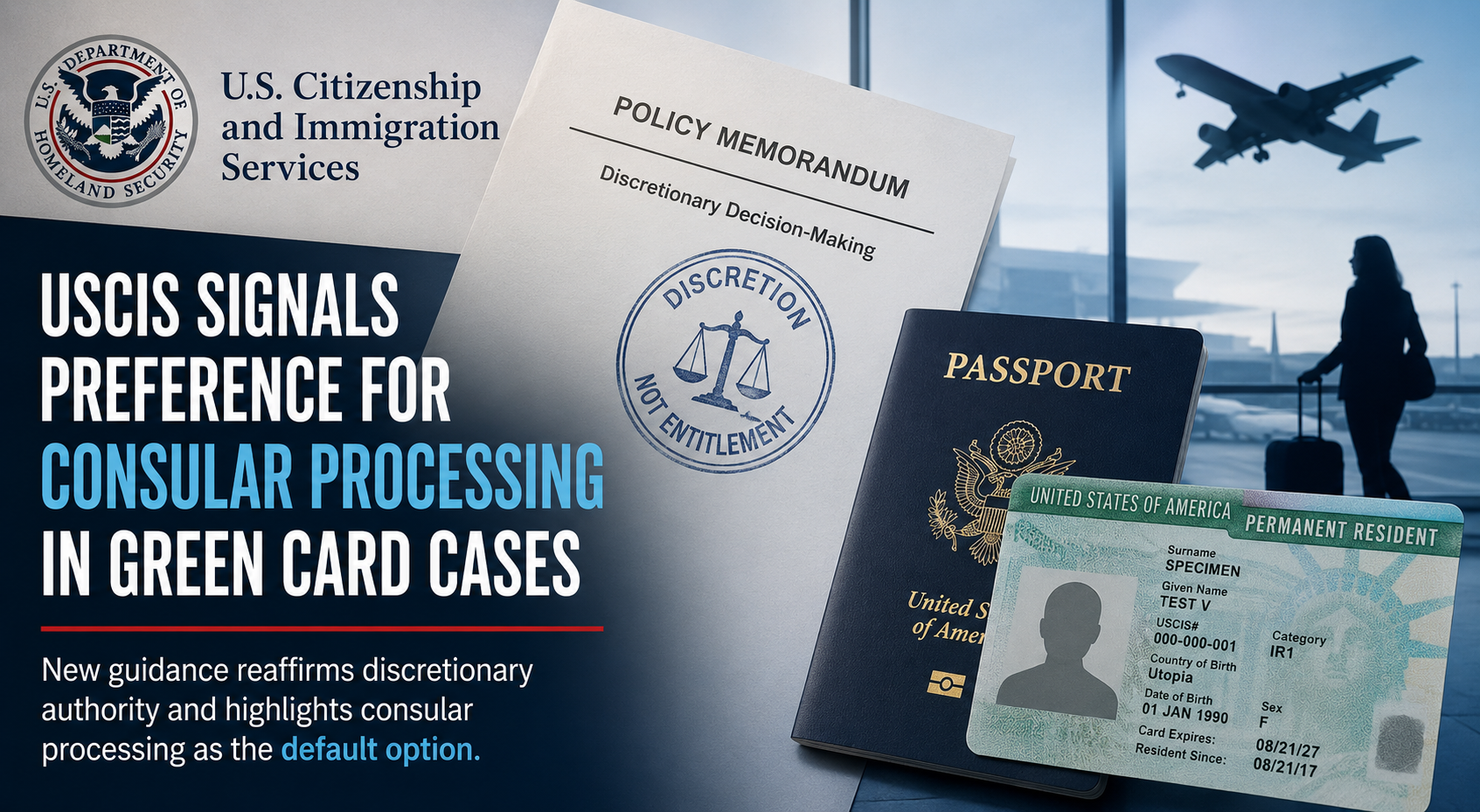
On May 21, 2026, U.S. Citizenship & Immigration Services (USCIS) issued a policy memorandum reminding officers that receiving a green card in the United States is a matter of discretion and administrative grace. This latest announcement reasserts the agency’s discretionary authority when deciding green card applications. This means that even when an applicant is otherwise eligible, ultimate approval still depends on whether the officer believes providing a green card is in the country’s best interest.
Specifically, USCIS will be considering all relevant factors and information regarding the alternative option of consular processing: applying for the immigrant visa at a consulate abroad and receiving the green card upon entry.
For some individuals, like family members who are overseas, this is the only way to legally apply for admission to the United States and is a multi-year process. But for foreign nationals who are within the United States pursuant to some visa (visitor, student, H-1B worker, priest, etc.), applying for a green card through USCIS has been the preferred option for decades. The entire process is handled domestically and, for typical cases, departure from the country was unnecessary.
USCIS has now instructed officers to consider consular processing as the default option for permanent residence, indicating that applicants for a green card should be departing the country and applying for permanent residence abroad. This may be especially unattractive to foreign nationals in H-1B or U status – or anyone else who has had a long immigration journey and been present for several years. Departing the United States for consular processing could entail long periods of family separation and/or loss of employment, with the addition of no guaranteed return.
Especially important to avoiding this undesirable outcome will be the officer’s consideration of the applicant’s visa status (whether he or she was a genuine visitor or student or worker) and any failure to depart the United States (overstays). Those with H and L visas are not exempt from this discretionary exercise but may receive more favorable treatment considering their special “dual intent” status; USCIS Spokesperson Zach Kahler noted the economic benefits their ongoing employment provides. Green card applicants in other employment-based statuses (E, TN, O, P, etc.) may also rely on their economic contributions as favorable factors.
The new guidance may ultimately fall hardest on those in B-2 or F-1 status who have either overstayed and/or sought a family-based green card soon after arrival.
The practical application of this new policy memorandum may take a few months. Immediately following the issuance of the memo, USCIS interviews began to include some basic questions about the ability to consular process and what positive attributes the applicant brings to the country. But to deny a green card application, officers must issue a denial notice that includes an analysis containing the positive and negative factors considered, along with an explanation of why the negative factors outweigh the positive factors in the decision. If a green card application is denied as a matter of discretion, the foreign national will need to depart the U.S. and pursue permanent residence through consular processing.
This latest policy shift continues in a line of efforts by USCIS Director Edlow to provide increasing levels of adjudicative authority to front-line officers as possible.
Disclaimer: The opinions and views expressed in this article/column are those of the author(s) and do not necessarily reflect the views or positions of South Asian Herald.
Related posts:
 Legal Perspective: SEVIS Terminations Leave International Students in Limbo and Searching for Practical Solutions
 New $250 Visa Integrity Fee to Increase U.S. Travel Costs for Foreign Nationals and Employers
 New Social Media Vetting Rules Spark Major Travel and Processing Delay Concerns for H-1B/H-4 Workers
 Caught in the Crossfire: How Trump’s Immigration Crackdown Is Reshaping the Indian American Dream