Join WhatsApp Channel

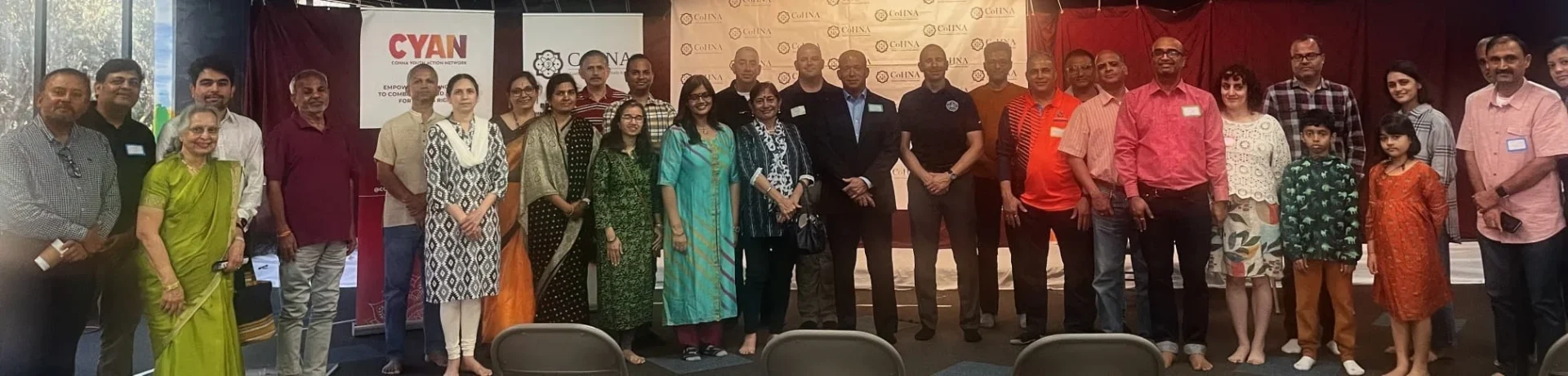
The Coalition of Hindus of North America (CoHNA) hosted a community safety event titled “Suraksha” on May 15, 2026, at the Shreemaya Krishnadham Temple in San Jose, California, bringing together members of the Hindu community, officers from the San Jose Police Department (SJPD), and representatives from the Santa Clara County District Attorney’s Office.
The event was organized amid concerns following four recent temple attacks in California. According to a statement from CoHNA, the initiative is part of the organization’s ongoing efforts to “track, educate, and tackle Hinduphobia” by helping educate law enforcement agencies while also informing community members about their rights and available resources to address hate-related incidents. “Suraksha,” a Sanskrit word meaning protection, is part of a series of community outreach programs CoHNA has conducted across the United States and Canada, including in New York City, Edina, Calgary, Toronto, and Montreal.
“This kind of engagement is critical,” said Manan Rawal, director of CoHNA’s Bay Area chapter. “Ensuring that our community understands how to report incidents, and that law enforcement understands Hindu community concerns, is an essential step toward building trust and improving safety outcomes. We thank the SJPD and DA’s office for their partnership in this important task and the temple trustees for their support.”
The San Jose event included presentations and training sessions led by SJPD Lieutenant Anthony Kilmer and Sergeant Kassey Padia, along with representatives from the Santa Clara County District Attorney’s Office, including Chief Trial Deputy Daniel Okonkwo and Supervising Deputy District Attorney Adam Flores.
Temple leaders and members of CoHNA’s Bay Area team also addressed attendees. The program opened with the chanting of sacred mantras and a welcome by young members of the Hindu community.
According to the statement, SJPD officers provided an overview of how hate crimes and hate-motivated incidents are defined, reported, and investigated. Officials emphasized the importance of community awareness and timely reporting in promoting accountability and prevention.
“The officers explained the distinction between hate crimes, which involve criminal acts motivated by bias, and hate-motivated incidents, which may not rise to the level of a crime but are still documented and tracked by law enforcement,” the statement said.
Participants were also guided through the reporting process, including when to contact emergency services and how to document non-emergency incidents. Officers noted that all reports, regardless of severity, contribute to “pattern recognition, resource allocation, and early intervention.”
Representatives from the District Attorney’s Office discussed the judicial process surrounding “hate crimes, victim support systems,” and the importance of addressing underreporting of hate-related incidents.
“We heard how cases move from police investigation to prosecution, the legal distinction between hate crimes and hate incidents and, importantly, the support available to victims through the District Attorney’s Victim Services Unit and the California Victim Compensation Board,” the DA’s office noted, according to the statement.
The statement also cited Santa Clara County District Attorney Jeff Rosen’s message that “hate has no home here,” emphasizing that prosecuting hate crimes sends a broader message that bias-motivated violence impacts not only “individual victims, but entire communities.”
Pushpita Prasad, CoHNA’s chief communications officer, delivered a presentation highlighting concerns within the Hindu community, including the rise of anti-Hindu rhetoric online and offline, the recent assault on a San Jose State University student described as Hinduphobic, and misunderstandings surrounding the sacred Swastika symbol used in Hindu traditions.
“What stood out to me was the emphasis on reporting, even when incidents may seem minor,” said Nabeena, a San Jose resident who attended the event. “Many people, especially in immigrant communities like ours, are often reluctant to approach the police. Hearing directly from law enforcement and the District Attorney’s Office helped clarify the process, made these systems feel more accessible, and underscored how reporting helps authorities identify patterns and allocate resources before situations escalate.”
The session also addressed concerns frequently raised within immigrant communities. According to the statement, SJPD officials said language barriers are addressed through translation services and multilingual officers, and emphasized that immigration status does not affect police response or access to assistance. Officials also shared information about ongoing outreach initiatives, including workshops focused on “digital safety, neighborhood awareness, and youth protection.”
Related posts:
 CoHNA Youth Action Network Condemns Assault on Sikh Student at San Jose State University
 Minnesota Resolution Condemning Hinduphobia Gains Support as CoHNA Highlights Community Concerns
 CoHNA Hosts 4th Annual Hindu Day of Advocacy at U.S. Capitol, Highlights Rising Hindu American Voice
 Mississauga Becomes Second Canadian City to Condemn Anti-Hindu Hate, CoHNA Welcomes Historic Resolution