 Join WhatsApp Channel

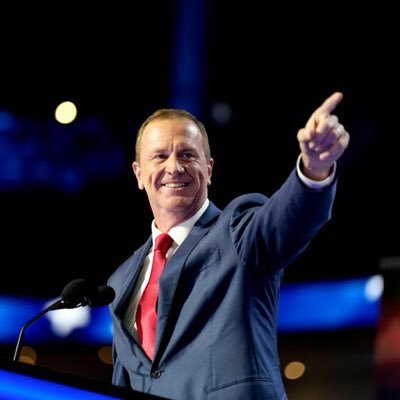
The political storm unleashed by Missouri Republican Senator Eric Schmitt over Hyderabad’s Chilkur Balaji Temple — popularly known as the “Visa Temple” — is rapidly evolving into something far larger than a social media controversy, increasingly exposing how the future of skilled migration, artificial intelligence, global technology supply chains and even the character of US-India relations may soon become deeply contested terrain within America’s emerging economic nationalism.
Schmitt’s remarks, in which he linked the temple to what he called a global “Visa Cartel” surrounding the H-1B visa ecosystem, arrived at a moment when the United States is entering a politically combustible phase of debate over legal immigration, particularly employment-linked migration that has historically underpinned the expansion of Silicon Valley, Wall Street technology infrastructure, healthcare systems and advanced engineering sectors. Yet unlike earlier immigration battles that focused overwhelmingly on border enforcement and undocumented migration, the current argument is steadily shifting toward highly skilled workers, foreign students, AI-linked talent pipelines and the role of multinational technology corporations in shaping labor markets.
In attacking programs such as H-1B, L-1, F-1 and Optional Practical Training (OPT), Schmitt effectively articulated a growing ideological position within sections of the Republican Party and the broader “America First” ecosystem — namely that legal skilled immigration is no longer viewed merely as a workforce supplement but increasingly as an instrument through which corporations arbitrage wages, externalize training costs and weaken domestic bargaining power in white-collar sectors once considered insulated from global competition.
His decision to invoke the Chilkur Balaji Temple transformed what might otherwise have remained a conventional policy argument into a wider cultural flashpoint. For millions of Indians, particularly from Hyderabad’s technology-driven middle class, the temple symbolizes aspiration, mobility and participation in the global knowledge economy. For decades, students, software engineers and healthcare professionals have visited the shrine before US visa interviews, turning the temple into a uniquely Indian reflection of how globalization reshaped middle-class ambition after the economic liberalization era of the 1990s.
But what Schmitt appeared to recognize — and weaponize politically — is that the symbolism of the “Visa Temple” also represents the extraordinary scale of India’s integration into America’s technology economy. Indian nationals today account for nearly three-fourths of H-1B approvals, dominate segments of the US software contracting ecosystem and increasingly occupy leadership positions across major American technology firms, financial institutions and AI research ecosystems. Hyderabad, Bengaluru, Pune, Gurugram and Chennai are no longer merely outsourcing centers; they are now deeply embedded extensions of the American digital economy itself.
That integration, however, is entering a period of political turbulence.
The convergence of large-scale technology layoffs in the United States, intensifying anxiety over artificial intelligence replacing white-collar employment, and the growing visibility of offshore AI capability-building in India has begun reshaping the American domestic conversation around immigration. In previous decades, the H-1B debate largely revolved around labor shortages and innovation needs. Increasingly, however, the argument is being reframed through the language of economic sovereignty, national capability retention and middle-class decline.
Schmitt’s repeated references to “billions flowing to India for AI training” indicate that the debate is now extending beyond traditional outsourcing concerns into the strategic domain of artificial intelligence itself. As American corporations aggressively expand AI engineering, data annotation, machine learning support and cloud infrastructure operations across India, a new political narrative is emerging within Washington that questions whether the United States is indirectly subsidizing the rise of competing global talent ecosystems while simultaneously weakening domestic workforce resilience.
That shift could carry significant long-term implications for Indian technology professionals and students.
While the H-1B program is unlikely to disappear given the structural dependence of American technology firms on global talent, pressure for tighter wage rules, stricter labor-market tests, higher salary thresholds and closer scrutiny of outsourcing-linked visa petitions is expected to intensify irrespective of which political formation dominates Washington. Immigration hawks increasingly argue that visa pathways must be redesigned to priorities “exceptional” talent rather than volume-based corporate hiring, a position that could gradually narrow opportunities for mid-level technology workers even if elite AI researchers and specialized engineers continue to remain in demand.
Equally important is the emerging scrutiny surrounding the OPT program, which many conservative lawmakers now view as an indirect employment channel operating outside traditional congressional oversight. Since Indian students constitute one of the fastest-growing international student groups in the United States, any tightening of post-study work pathways could reshape educational migration patterns, forcing Indian families to reconsider the economic logic of expensive American degrees.
The controversy also arrives at a delicate phase in US-India relations, where strategic convergence in defense, semiconductors, critical minerals and Indo-Pacific security increasingly coexists with economic friction over labor mobility, digital trade and technology flows. Washington views India as an indispensable geopolitical partner in balancing China, yet sections of the American political establishment simultaneously remain wary of the scale at which Indian talent networks have become embedded within US corporate structures.
That contradiction is likely to deepen as artificial intelligence transforms labor markets globally.
For India, the debate presents both a warning and an opportunity. The warning lies in the possibility that the era of relatively frictionless high-skilled migration to the United States may gradually narrow under domestic political pressure in America. The opportunity, however, lies in the fact that global resistance to migration could accelerate India’s own transition from a talent-exporting economy into a domestic innovation ecosystem capable of retaining high-end engineering and research talent.
Already, India’s expanding semiconductor ambitions, AI missions, digital public infrastructure ecosystem and growing startup economy suggest that the country may increasingly attempt to absorb more of its technology workforce domestically rather than relying overwhelmingly on overseas mobility as the principal ladder of middle-class advancement.
The emotional backlash against Schmitt’s remarks on social media therefore reflects something deeper than cultural outrage. It reflects anxiety over whether the long-standing India-US mobility compact — under which Indian talent fueled American innovation while gaining access to upward mobility and global incomes — is beginning to encounter structural political resistance in the United States.
In many ways, the “Visa Temple” controversy may ultimately be remembered less for a senator’s inflammatory rhetoric and more for what it revealed about the changing future of globalization itself: a future in which technology nationalism, AI-era labor insecurity and geopolitical competition are steadily replacing the older assumptions of open labor mobility that shaped the post-Cold War digital economy.
Related posts:
 India Highlights e-Migrate Model at UN Migration Review Forum
 New $250 Visa Integrity Fee to Increase U.S. Travel Costs for Foreign Nationals and Employers
 Thousands Attend Four-Day Annual Religious Event at Sri Venkateswara Temple in Pittsburgh, PA
 Immigration Experts Discuss Challenges Under Trump’s Second Term
