Join WhatsApp Channel

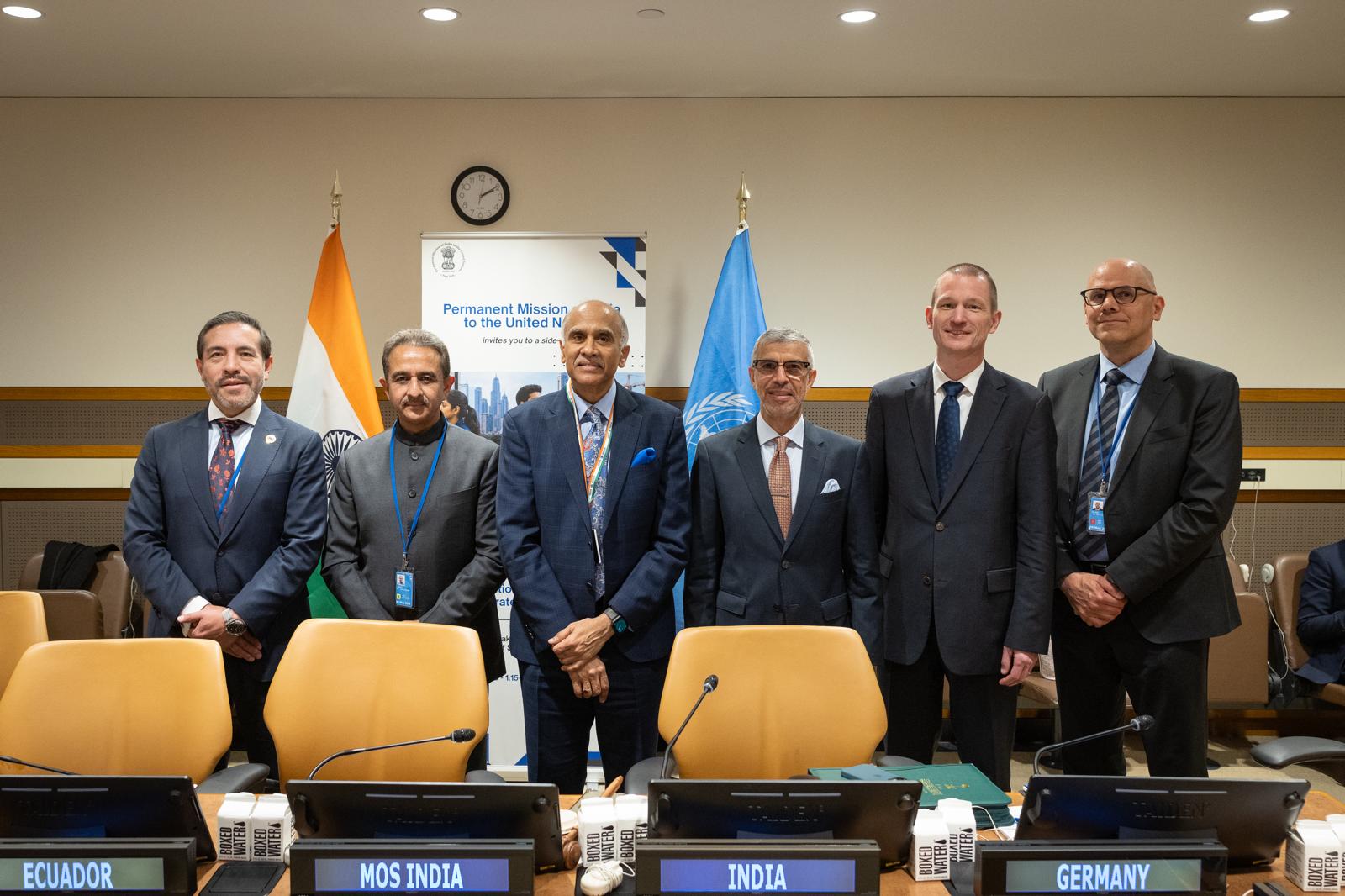
On the sidelines of the second International Migration Review Forum (IMRF), the Permanent Mission of India to the United Nations organized a side event on May 7, 2026, at the United Nations Headquarters on the theme, “Leveraging Digital Innovation in Migration Governance – The e-Migrate Experience of India.”
In his welcome remarks, Permanent Representative of India to the United Nations, Harish Parvathaneni reaffirmed India’s strong commitment to promoting safe and regular migration pathways. He emphasized the need for a clear distinction between migrants and refugees, particularly in the application of legal frameworks governing them.
Ambassador Harish also highlighted the use of India’s digital public infrastructure to develop large-scale practical solutions for migrants, citing the e-Migrate platform as an example. He conveyed India’s willingness to support partner countries interested in adopting open-source digital platforms for migrant welfare and migration management.
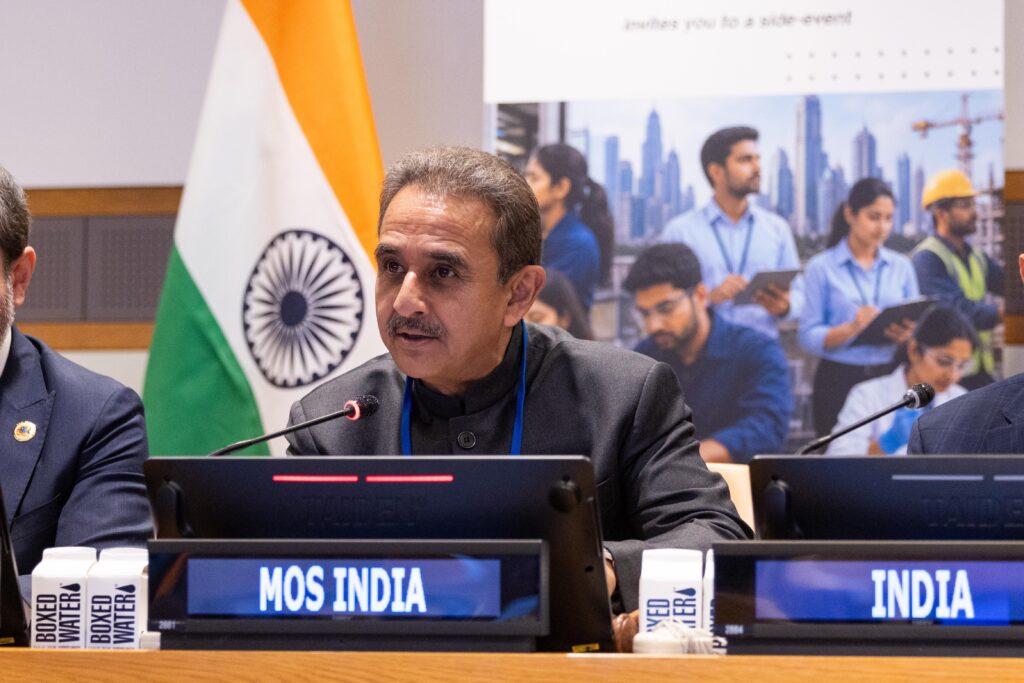
Delivering the keynote address, Minister of State for External Affairs of India, Kirti Vardhan Singh described the e-Migrate portal as a central component of India’s digital migration governance framework.
Minister Singh said the platform has strengthened “transparency, protecting migrant workers, and facilitating safe and regular migration” through integrated digital services, verified recruitment systems, multilingual support, and online grievance redressal mechanisms. He also underlined the use of AI-powered language translation tools to improve accessibility and inclusiveness for users.
According to Singh, the portal currently includes nearly 298,000 registered foreign employers and 2,457 active recruiting agents. He also highlighted the e-Migrate mobile application, which allows users to track applications, verify recruiting agents, and access grievance redressal services.
The keynote address was followed by a panel discussion featuring an exchange of best practices in migration and mobility governance.
Kim Eling, senior director at IOM, praised India’s leadership in digital migration governance. Saúl Pacurucu, vice minister of Human Mobility of Ecuador, discussed Ecuador’s experience with circular migration programs and digital consular services aimed at creating safe and formal labor mobility pathways.
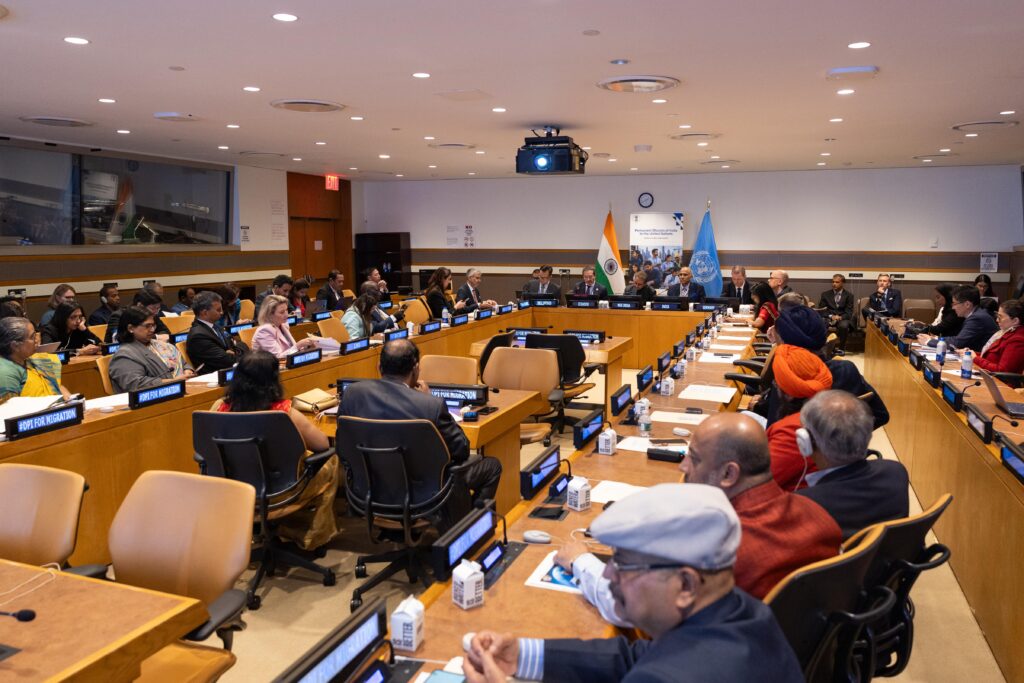
Levinson C. Alcantara, assistant secretary of the Department of Migrant Workers of the Philippines, outlined the Philippines’ end-to-end digital migration governance model, including online orientation programs, contract verification systems, and welfare support services for migrant workers.
Abdulaziz M. Alwasil, Permanent Representative of Saudi Arabia to the United Nations, highlighted Saudi Arabia’s labor governance reforms and integrated digital platforms such as Qiwa, which are designed to improve contractual transparency, labor mobility, and worker protection for the country’s large expatriate workforce.
Florian Laudi, commissioner for Multilateral Affairs of Germany,emphasized the expanding partnership between India and Germany in the areas of skilled migration, labor mobility, vocational training, and digital migration systems, noting the mutual benefits of migration cooperation between the two countries.
The IMRF serves as the principal platform for UN member states to review and discuss progress in implementing the Global Compact for Migration, the first intergovernmental agreement addressing all dimensions of international migration. Convened by the President of the General Assembly, the forum is held once every four years.
Related posts:
 Indian Rights Body Seeks Action as Workers Report Captivity in Thai Factory
 Digital from India: Leapfrogging Development Through Text-Enabled Citizen-Centric Governance
 India Engages with United States to Ensure Deportees are not “Mistreated”; Cracks Down on Illegal Migration
 NITI Aayog’s Roadmap Aims to Formalize India’s 490 Million Informal Workers—but Faces Steep Structural Hurdles