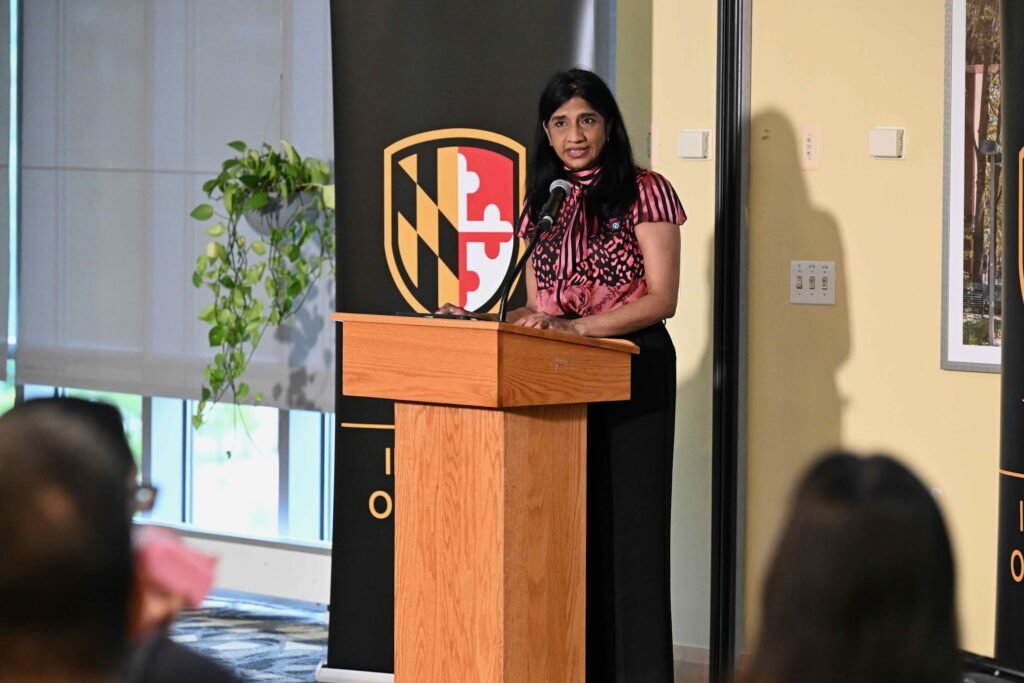
Lieutenant Governor of Maryland Aruna Miller said Asian American and Pacific Islander (AAPI) Heritage Month serves as both a celebration and a reminder of the sacrifices and contributions of earlier generations while addressing an event on May 6, 2026, at the University of Maryland, Baltimore County.
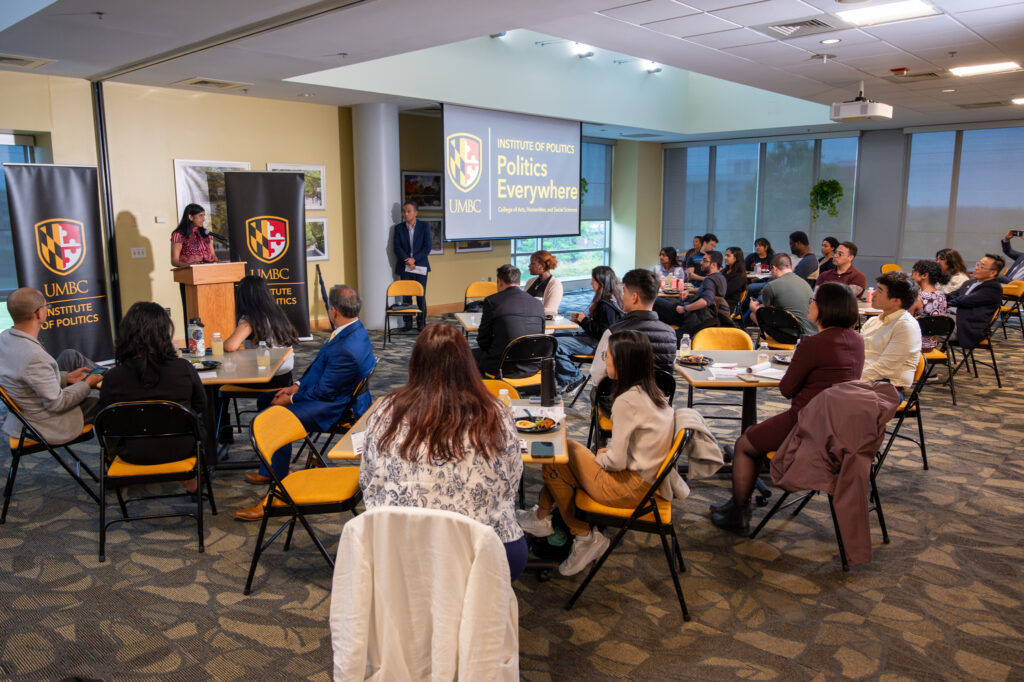
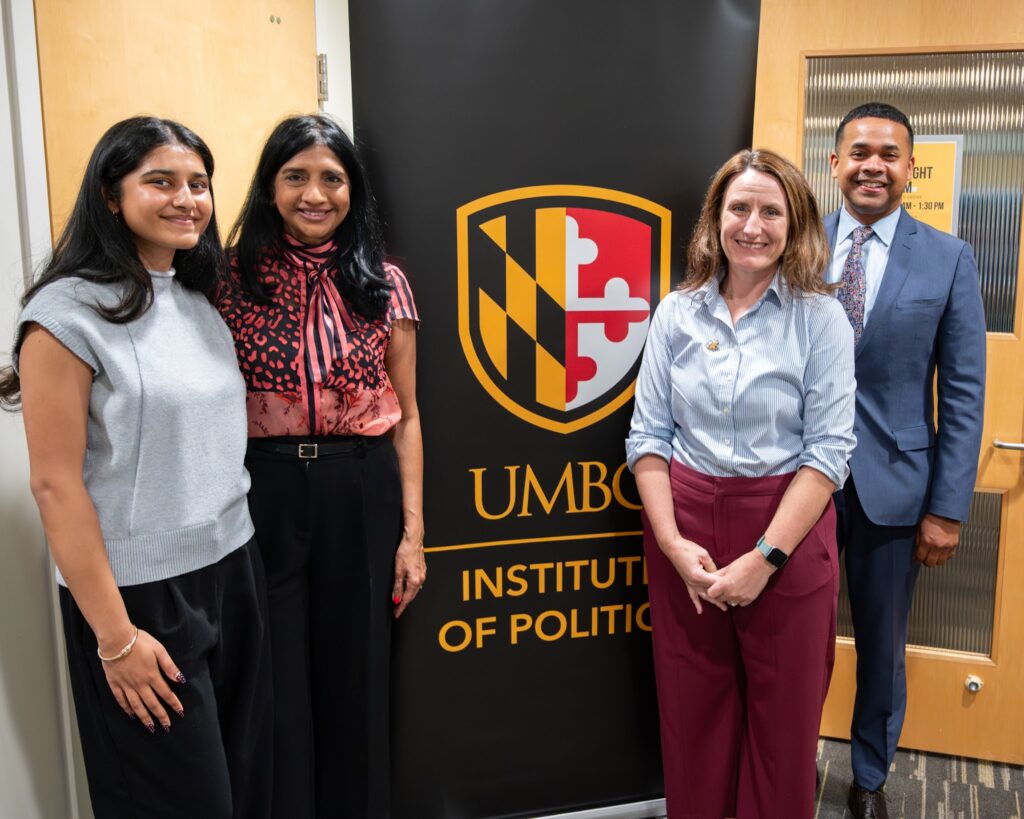
“AAPI Heritage Month isn’t just a celebration. It’s a reminder that we stand on the sacrifices and accomplishments of those before us—and that what we do everyday matters. How we live, how we lead, and how we show up. And how we add our rich heritage and our stories to the American story,” Miller said during her keynote address at the UMBC Institute of Politics event themed “Politics Everywhere: Understanding the AAPI Vote.”
Commending the diversity of the campus community, Miller noted that more than 20 percent of UMBC students identify as Asian American. “Wow. More than 20% of this campus identifies as an Asian American. That’s remarkable. You and I are lucky to be living in the most diverse state in the Mid-Atlantic,” she said.
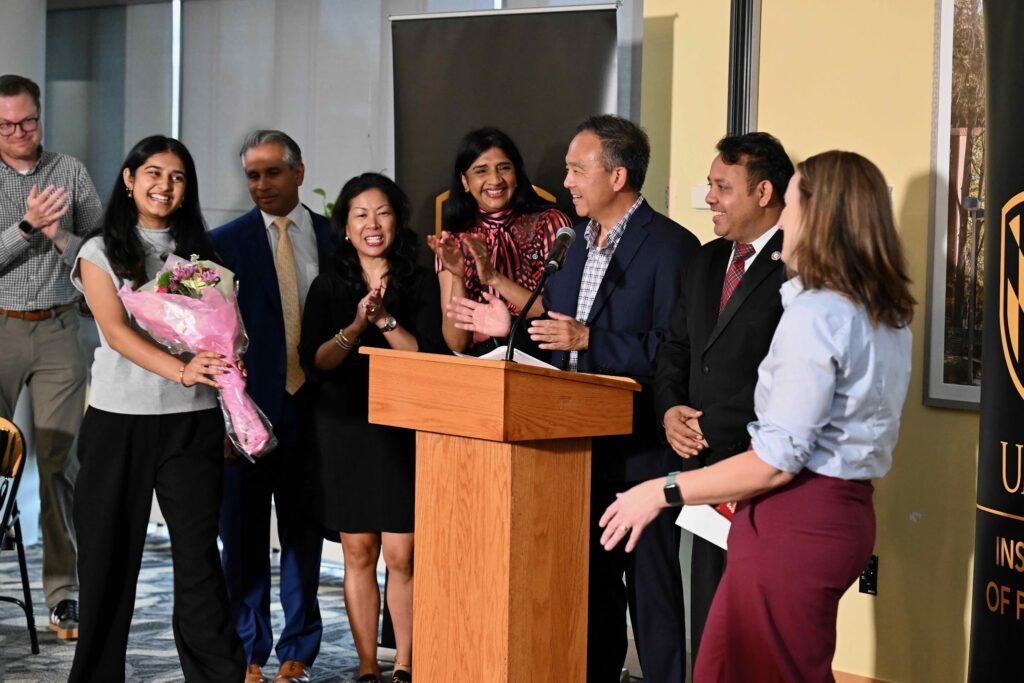
Highlighting the growing representation of Asian Americans in public office, Miller referenced members of the Maryland General Assembly, including Mark Chang, David Moon, Kris Valderrama, and Harry Bhandari, describing them as “barrier breakers and history makers.”
Advertisement
Miller emphasized Maryland’s demographic diversity, noting that more than half of the state’s population consists of people of color and that one in six residents is foreign-born. She also reflected on the history of discrimination faced by Asian Americans, citing measures such as the Chinese Exclusion Act and the internment of Japanese Americans during World War II.
“I bring this up not to rehash old wounds — but to give you an understanding of the journey walked by our community,” Miller said. “We didn’t all start at the same place. And our journey also included those who embraced the discomfort of being different than the comfort of fitting in.”
She noted that Asian Americans were barred from becoming U.S. citizens until 1952 and pointed to milestones in political representation, including the election of Dalip Singh Saund to Congress in 1956. Miller said there are now 22 AAPI members serving in Congress.
Recalling her own experiences, Miller said she was once told that she “didn’t look like a Lieutenant Governor.” She described such moments as familiar experiences for many minorities navigating spaces where they were not expected. “We know that feeling. And we show up anyway,” she added.
Miller also reflected on Maryland’s political history, noting that the state did not elect its first Asian American legislators until 1990, when David Valderrama joined the Maryland House of Delegates. She also highlighted Kumar Barve as the first Indian American state legislator in the United States. Today, Maryland has eight AAPI legislators in its 188-member General Assembly, she said.
Speaking about her own political journey, Miller said her family initially focused on education and assimilation rather than politics. “Growing up, my parents said I could be anything I wanted – a doctor or an engineer. We never discussed politics at the kitchen table,” she said.
She described becoming a U.S. citizen and voting for the first time in 2000 as a turning point. “My candidate lost, and I knew I had to get involved,” Miller said.
Reflecting on the 2022 gubernatorial campaign alongside Wes Moore, Miller said many doubted whether “two people of color on the same ticket” could win statewide office in Maryland. “They underestimated Maryland voters,” she said, noting that voters elected the state’s first Black governor and first Asian immigrant lieutenant governor.
Miller said Maryland is home to more than 500,000 AAPI residents, including nearly 288,000 eligible AAPI voters who make up more than 6.5 percent of the state electorate. However, she acknowledged that voter participation within the community remains uneven due to language barriers, lack of outreach, and underrepresentation.
“We are often still seen as ‘Foreigners’ in this country,” she said, warning that disengagement creates space for misinformation and manipulation targeting AAPI communities.
Miller said false and misleading political information has increasingly circulated on social media platforms such as WhatsApp, WeChat, and Telegram, often aimed at discouraging participation or creating division among voters.
“We’ve seen false claims about voting rules, eligibility, and election integrity. We’ve seen attempts to pit communities against one another,” she noted.
She also stressed that the AAPI electorate is not politically uniform, noting that Indian Americans are generally more likely to identify as Democrats, while Vietnamese Americans are more likely to identify as Republicans.
Addressing concerns over rising discrimination, Miller referenced recent comments directed at Maryland Delegate Chao Wu by fellow delegates Mark Fisher and Brian Chisholm during a podcast discussion. She said Wu’s “patriotism” was questioned and his “accent mocked.”
“You don’t get to wrap racism in a flag and call it patriotism. Not now. Not ever,” Miller said.
Encouraging civic engagement, Miller urged attendees to register and vote in every election, including local contests, and to volunteer on political campaigns. “And when the time comes — Run for office. The world needs you in the arena,” she said.
She encouraged students to embrace their identities and participate fully in civic life. “Your generation — is the most diverse, the most connected, and you know exactly what this country can actually be,” Miller told the audience.