Join WhatsApp Channel

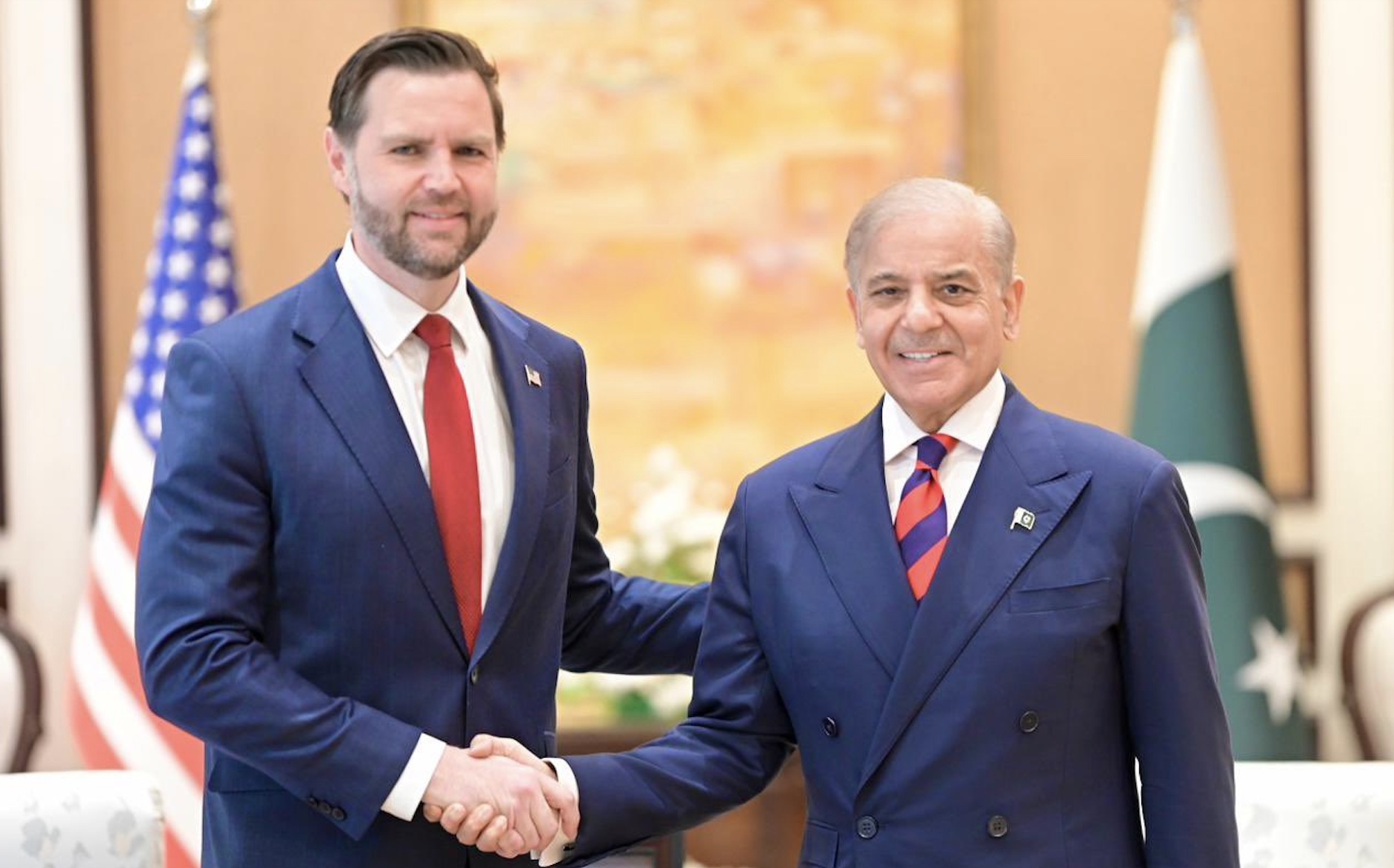
For all those getting bent out of shape that Vice President of the United States, J.D. Vance is returning empty handed from Islamabad after a marathon 21 hours of direct talks with an Iranian delegation, a little peek into history and other negotiations will offer some perspective on how some international processes work out.
The first event that comes to mind is that of the Paris Peace Accords that brought an end to the Vietnam War. It went on for four years starting in 1969 between Henry Kissinger and North Vietnam’s Le Duc Tho; all total of 68 meetings and 27 rounds.
The comparison may not even be relevant given that the historical time frames and context are different. Suffice only to make the point that for any two sides to be so divergent politically and civilizational, the fact that they got together for a meeting and that too lasting for nearly one day is itself a rare feat. Even before Vice President Vance set foot in Pakistan, only an amateur would have expected him to pull off a miracle given how vastly different the positions were on nuclear weapons program and the Strait of Hormuz.
“The simple fact is: We need to see an affirmative commitment that they will not seek a nuclear weapon and they will not seek the tools that would enable them to quickly achieve a nuclear weapon,” Vice President Vance said adding “That is the core goal of the president of the United States, and that’s what we’ve tried to achieve through these negotiations.”
He argued that the enrichment facilities that Tehran had have been destroyed. “But the simple question is, do we see a fundamental commitment of will for the Iranians not to develop a nuclear weapon. Not just now, not just two years from now, but for the long term. We haven’t seen that yet. We hope that we will,” the Vice President remarked at his presser in Islamabad.
At the end of the marathon session, a lot of questions on substantive issues remained and will continue to remain unanswered at least for the near term. And heading that list will be the conflicting versions on the status of the Strait of Hormuz, whether it is open at all and under whose supervision. Tehran would want to give the impression that the crucial waterway is open. under its control and of its right to collect a fee from tankers wanting to pass which is a breach of international law.
Drawing comparisons that the Suez and Panama Canals collect a fee is forgetting the clear lines drawn between a natural Strait and a dug up Canal under United Nations Conventions. The worst part of the Strait of Hormuz is that the waterways had been mined by Iran and now the hoopla over clearing the mines and who was going to do that.
The critical thing to watch from now on is not the spin or the political rhetoric that comes after the Islamabad meet; and this has started in full vigor. President Donald Trump keeps saying that he does not care the outcome for in his view the United States has already “won.”
The Iranian Foreign Ministry for its part maintained that the main topics of discussion included the nuclear program, Hormuz, war reparations, lifting of sanctions but that the “success of negotiations depends on the seriousness and good faith of the opposing side and on refraining from excessive demands and unlawful requests.” Also complicating factor getting into the Islamabad discussions was the unsettled situation in Lebanon, the pounding of Beirut and its neighborhood threatening even the start of talks. Tel Aviv is determined to do a Hamas on the Hezbollah in terms of wiping out this outfit, even as Iran seems to be keen on holding on to what is perhaps its last remaining proxy in the Middle East.
As the world waits for the next steps in bringing the conflict in the Middle East to a closure, there are some unsettling vibes that China may be getting ready to ship weapons to Iran and that Tehran is using the pause in the fighting to re-group and fortify. At the start of the Islamabad talks, there was news that Beijing had played a helpful, perhaps even a pivotal one, in nudging Tehran to the table. Now, intelligence agencies are saying that China may be getting ready to strengthen Iran’s air defence systems.
“If China does that, China is going to have big problems”, President Trump said in response to a question. With the American President scheduled to visit China in the middle of May, Iran could be a complicating issue, and for two reasons. Arms supply to Tehran will not be taken kindly in Washington. For that matter laying out the red carpet to President Trump while a close ally is being hammered will not sit well for President Xi Jinping especially at a time when Beijing is promoting itself as an alternative voice in the international system and drawing attention and support.
A conflict of some forty plus days has undoubtedly drained the international system especially in an economic sense. Politically too it is having an impact in the United States even if Republicans may not want to admit that. The war has taken a toll on President Trump’s personal popularity, not to speak of speak of rising prices impacting ordinary households. All of this is expected to make an impact in the Congressional Mid Terms of early November.
Disclaimer: The opinions and views expressed in this article/column are those of the author(s) and do not necessarily reflect the views or positions of South Asian Herald.