Join WhatsApp Channel

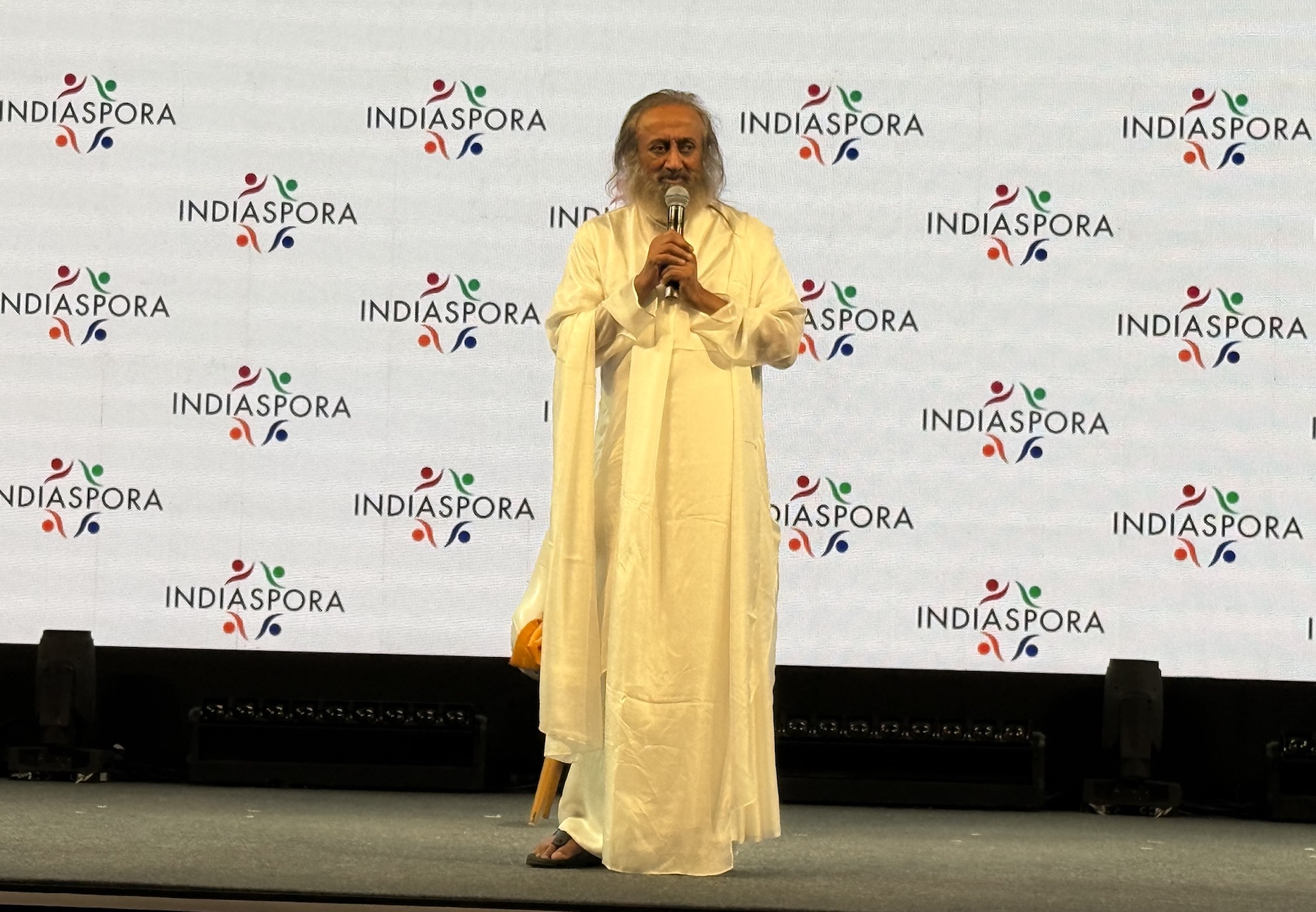
Global humanitarian and spiritual leader Gurudev Sri Sri Ravi Shankar, founder of the Art of Living Foundation, emphasized that what he described as “Absolute Intelligence” can help individuals connect more deeply with themselves, fostering creativity and overcoming loneliness.
Speaking at an evening plenary of the Indiaspora Forum 2026 on March 24 at the JW Marriott Hotel and Convention Centre in Bengaluru, Gurudev Ravi Shankar introduced the concept as a complement to Artificial Intelligence.
“It’s not just Artificial Intelligence, but Absolute Intelligence to connect with a source deep within us that can help us to bring out more creativity, enthusiasm, uplift the spirit around and get over this terrible sense of loneliness,” he explained.
Highlighting the growing global challenge of loneliness, he noted that nearly 47 percent of the population in the United States is affected. He also pointed to the establishment of a Loneliness Ministry in the United Kingdom and observed that the issue is gradually emerging in India as well.
“We need to find solutions for the current day problem of stress, depression, and loneliness,” he said, adding that what India can offer is beyond the “wildest imagination” of the world.
Gurudev Ravi Shankar also referred to the declaration of World Meditation Day on December 6, 2024, which saw participation from 192 nations. He recalled that the UN Secretary-General had requested him to conduct the program.
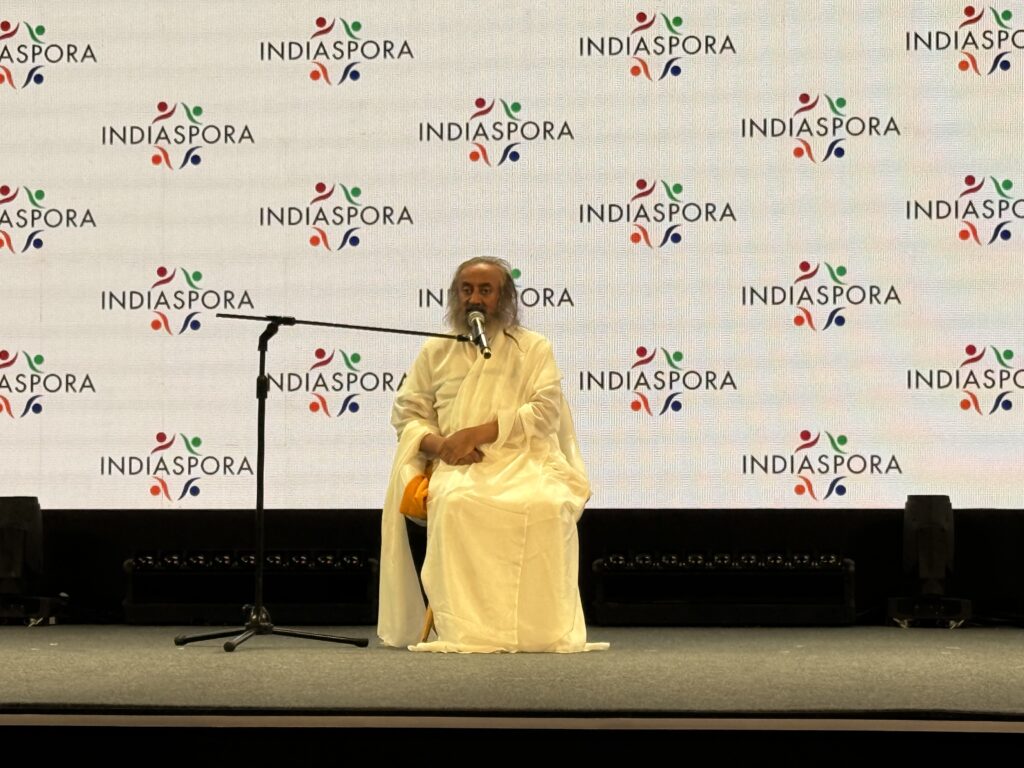
“This was initiated not by India,” he emphasized, noting that countries such as Mexico and Liechtenstein led the effort. India joined later, he said, adding that meditation techniques are part of India’s heritage. “We graciously took over and took the due credit since these are India’s these techniques.”
Discussing the global popularity of mindfulness, he described it as a derivative of meditation.
“Actually, mindfulness is just by product of meditation. There was a sense of aversion for meditation in the past, for a long time,” he said, noting that meditation traditions are deeply rooted in countries such as India, Japan, and China.
“I mean these countries are practicing meditation for thousands of years,” he added, suggesting that the term mindfulness gained traction partly to make these practices more widely acceptable. He noted that mindfulness often involves breathing exercises and basic relaxation techniques.
He also underscored the importance of presenting meditation in a secular and scientific manner to ensure broader global acceptance.
“We own a tradition or a system of which we have not been able to take credit for so far. So now is the time that we need to look into this,” he said, adding that these practices should be made accessible across cultures and civilizations.
Citing scientific research, Gurudev Ravi Shankar said that studies have identified over 100 benefits of meditation for human well-being. He referenced a study from the University of Oslo examining the impact of meditation on gene expression.
“These 300 genes, they become inactive in our system when we practice meditation, and similarly, it has an impact on the heart problem, cholesterol, blood sugar and so on,” Gurudev Ravi Shankar said.
Outlining India’s potential contributions to the world, he listed tourism, jewelry, cuisine, ayurveda, yoga and spirituality, and meditation as key areas.
On cuisine, he highlighted India’s diverse culinary heritage, noting that many regional dishes remain unfamiliar globally. He cited examples from Tamil Nadu, Hyderabad, and Tripura, each offering distinct food traditions.
Gurudev Ravi Shankar also expressed concern about the declining human attention span.
“Before our attention span was about 30 minutes for 40 minutes today, I understand it’s somewhere between 30 Seconds to 35 seconds,” he said. “So we are in a state of uncertainty and crisis around the world. You must have all discussed about it that this time, how can we steer our life to make it meaningful and take it where we want to go.”
Stressing the need for greater mental presence, he described meditation as essential for relaxation and clarity.
“Instead of getting into meditation, you get into a trip of imagination, and you get up more tired,” he said, cautioning that some applications promote unscientific relaxation techniques that may not be beneficial.
Discussion with Smriti Irani
In another evening plenary, India’s former cabinet minister, Smriti Irani participated in a discussion with Indiaspora’s Executive Vice President and Chief Community Engagement Officer, Shoba Vishwanathan.
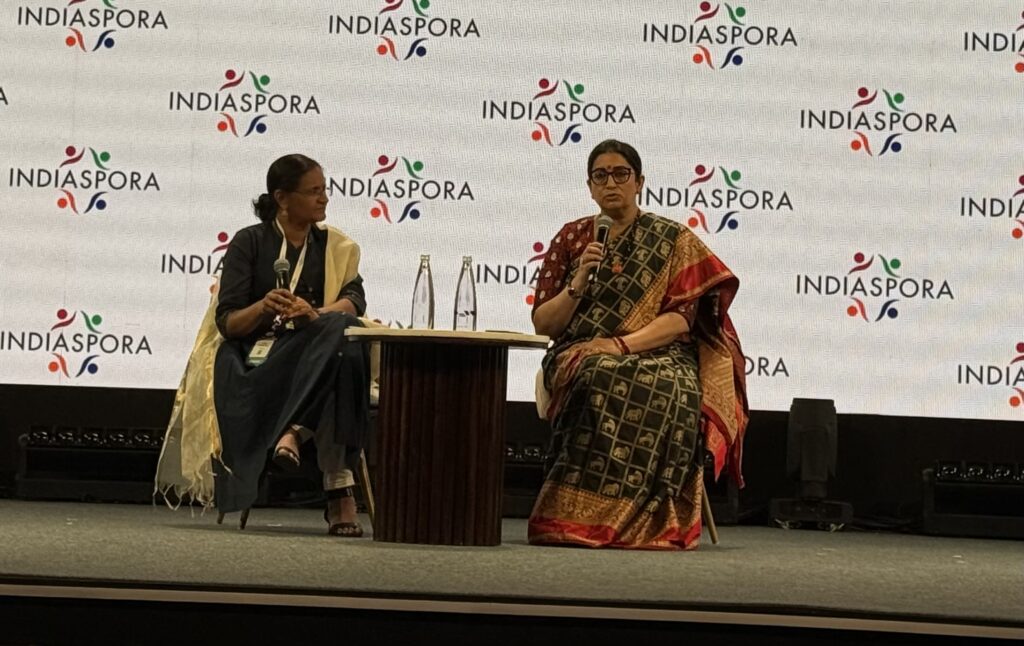
Irani noted that she launched a program targeting 100,000 women entrepreneurs across 300 Indian cities, partnering with the British Council and professional bodies to provide English skills and formalization support.
She also highlighted the collaboration with the National Stock Exchange, which aims to identify 200 women‑owned firms for valuation and potential listing, creating a pathway to the Indian stock market. The initiative is self‑funded by professionals, focusing on financial empowerment so women can afford legal and healthcare services, reflecting her commitment to holistic economic independence.
Irani also highlighted that women seek high‑pay jobs to secure financial freedom and invest 40 per cent of earnings in family health and education. She shared her experience as the first working daughter in the family, balancing career success with the responsibility to inspire other girls in her family.
She urged diaspora members to invest in small Indian businesses, especially women innovators, to bridge capital gaps. She also emphasized mentorship for women, encouraging the diaspora to spread supportive networks rather than seeking universal approval.
Understanding contract negotiation, according to Irani, empowers individuals to secure fair profits and avoid being short‑changed by profit‑driven companies.
Related posts:
 World Meditation Day: United Nations Highlights Meditation’s Role in Mental Well-Being and Global Peace
 India and Core Group Nations Celebrate Second World Meditation Day at United Nations
 Gurudev Sri Sri Ravi Shankar Foresees India-Pakistan Peace if Terrorism Ends, Calls for Global Harmony
 Gurudev Sri Sri Ravi Shankar Receives 2025 World Leader for Peace and Security Award