 Join WhatsApp Channel

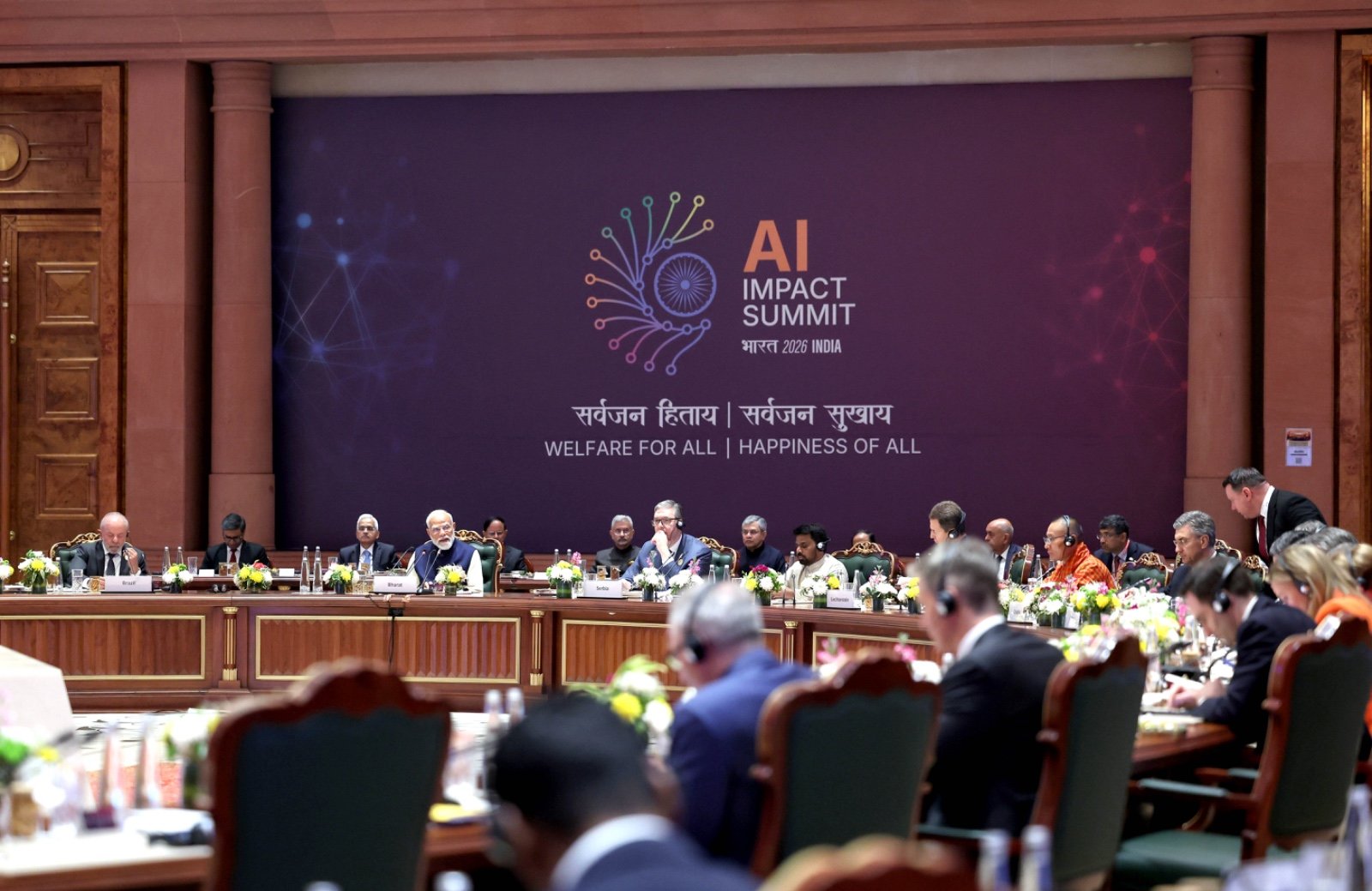
At a moment when artificial intelligence is racing ahead faster than regulators and societies can comfortably absorb, Prime Minister Narendra Modi used the Leaders’ Plenary Session of the India AI Impact Summit 2026 to press for a global reset — one that places human values, democratic access and Global South priorities at the center of the AI revolution.
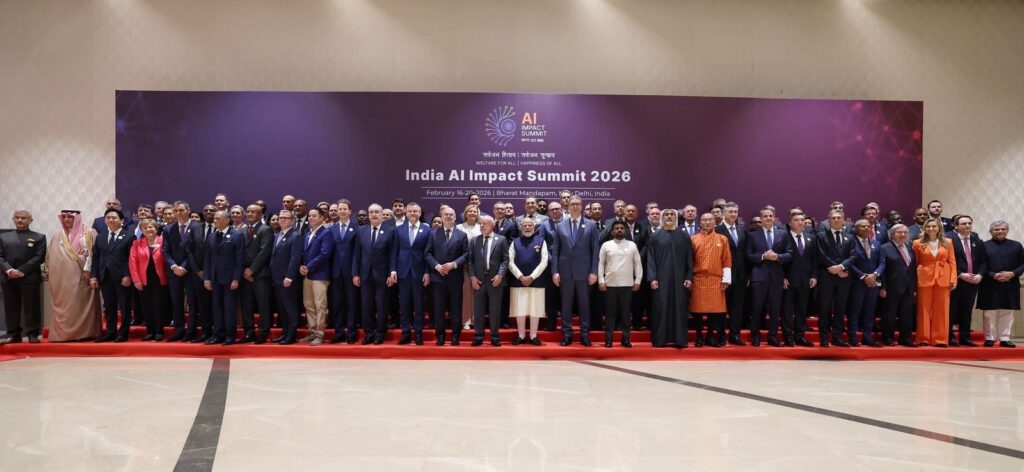
Addressing heads of state, technology founders, industry chiefs and policymakers gathered at Bharat Mandapam in New Delhi, the Prime Minister argued that the Summit must become a pivot point in shaping “a human-centric and sensitive global AI ecosystem.”
History, he said, shows that humanity has repeatedly turned disruption into opportunity. “This,” he suggested, “is another such moment.”
A Human-Centric Roadmap for AI
Framing AI as both a transformative force and a moral test, Modi invoked Lord Buddha’s maxim — “Right Action comes from Right Understanding” — to underline the urgency of thoughtful governance. Decisions taken now, he warned, will determine whether AI widens inequality or advances collective welfare.
Drawing parallels with the global response to COVID-19, he pointed to how cooperation on vaccines, data-sharing and supply chains demonstrated that collective action can overcome even systemic shocks. India’s own digital response, including its vaccination platform and the Unified Payments Interface (UPI), illustrated how technology can bridge divides rather than deepen them.
“Technology for India is not a medium of power but of service,” he said, emphasizing that digital public infrastructure built domestically is being shared globally. Artificial intelligence, he added, must follow the same ethos — empowering rather than dominating.
The Prime Minister was explicit: AI governance cannot be designed solely by advanced economies. The aspirations of the Global South must sit at the center of global rule-making. “AI must be accessible to all,” he said, cautioning that past technological revolutions often created new hierarchies instead of dismantling old ones.
Three Pillars of Ethical AI
Modi outlined three proposals to anchor ethical AI deployment globally:
First, a trusted global data framework.
AI training systems, he argued, must respect data sovereignty while ensuring secure and reliable inputs. Invoking the adage “garbage in, garbage out,” he warned that flawed or biased data will inevitably produce flawed outcomes.
Second, transparent safety rules.
He called for replacing opaque “black box” models with a “glass box” approach, where safety guardrails are visible and verifiable. Such transparency, he said, would reinforce accountability in business and policymaking alike.
Third, embedding human values into AI systems.
Referring to the well-known “paper clip problem” — a hypothetical scenario in which a machine single-mindedly optimizes a narrow goal at catastrophic cost — he cautioned that technological capability without ethical direction could exhaust global resources. “Technology is powerful,” he said, “but direction must always be determined by humans.”
In a pointed remark aimed at industry, Modi said ethics in AI must be “unlimited,” even if profit is not. Companies, he stressed, must align profit with purpose.
India’s AI Push: Scale and Sovereignty
Projecting India as both a laboratory and leader in inclusive AI, the Prime Minister detailed steps under the national AI Mission. India currently has access to 38,000 GPUs, with another 24,000 to be added within six months — a significant expansion of domestic compute capacity. Startups, he noted, are being provided world-class computing resources at affordable rates.

Through AIKosh, India’s national dataset platform, more than 7,500 datasets and 270 AI models have been shared as national resources — part of a strategy to democratize access to data and tools.
“Aspirational India,” Modi said, “has a major role in the global AI journey.” The vision, he concluded, is clear: AI must function as a shared resource for humanity’s welfare.
Tech Titans Weigh In
If the Prime Minister set the moral and geopolitical frame, global technology leaders sharpened the stakes.
Sam Altman, CEO of OpenAI, painted a future where “early versions of true superintelligence” could emerge within years. By 2028, he suggested, more of the world’s intellectual capacity might reside inside data centers than outside them. For Altman, democratization is the only safe path. Concentration of AI power, he implied, would be destabilizing.
Brad Smith, vice chair and President of Microsoft, framed AI as a decisive force in determining whether the global economic divide narrows or deepens. Infrastructure, skilling and linguistic diversity, he argued, will be critical to ensure AI benefits the Global South.
From the philanthropic sector, Ankur Vora of the Gates Foundation stressed that AI’s true test lies in measurable improvements in health, education and agriculture — especially in historically marginalized communities. “It’s not a matter of prediction,” he said. “It’s a choice.”
Julie Sweet, chair and CEO of Accenture, called AI the only viable engine for sustained global growth — provided leadership, standards and workforce transformation keep humans in the loop.
Meanwhile, industrial and enterprise leaders underscored scale and ambition. Mukesh Ambani, Chairman of Reliance Industries, described AI as central to India’s vision of becoming a developed nation by 2047, pledging investments in sovereign compute and green-powered data centers.
Demis Hassabis, CEO of DeepMind Technologies, warned that artificial general intelligence could surpass the Industrial Revolution in both scale and speed.
Vishal Sikka of Vianai Systems emphasized productivity gains but urged India to leapfrog existing models. And Rishad Premji, Executive Chairman of Wipro, reminded delegates that technology creates value only when deployed responsibly at scale.
The Defining Tension
Across sessions, a common thread emerged: AI’s trajectory is accelerating toward unprecedented capability, even as governance frameworks lag. The defining tension is no longer whether AI will transform society — it is whether that transformation will be inclusive or extractive.
India’s message at the Summit was unambiguous. AI must not entrench power in a handful of corporations or nations. It must not amplify bias or inequality. Instead, it should widen access to knowledge, productivity and opportunity.
As Modi concluded, when technology and trust move together, AI’s promise becomes visible — not as a force of disruption alone, but as a catalyst for shared human progress.
Related posts:
 Exclusive: United Nations Leadership to Join India-AI Impact Summit 2026 as Global South Shapes AI Governance Dialogue
 India-AI Impact Summit 2026 to Focus on “People, Planet, and Progress,” says Ambassador Vinay Kwatra
 In Conversation with Rajesh Mehta: Abhishek Singh, CEO, IndiaAI Mission on India’s Global AI Vision
 USISPF to Lead Major U.S. CEO Delegation at India AI Impact Summit 2026 in New Delhi
