Join WhatsApp Channel

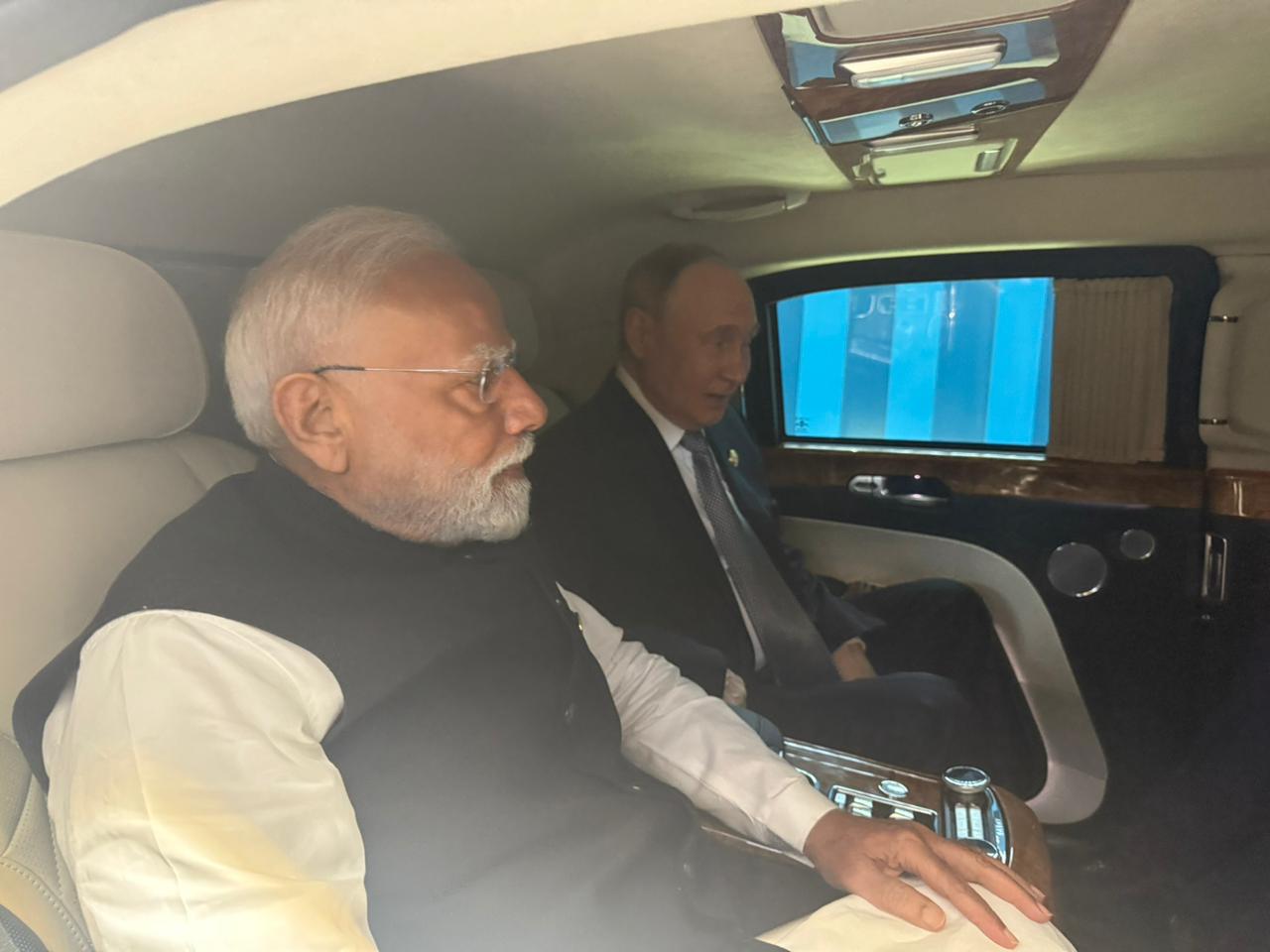
When Russian President Vladimir Putin lands in New Delhi on December 4 for the 23rd India–Russia Annual Summit, the optics will be unmistakable. For the first time since the Ukraine invasion, Moscow’s most consequential global partner outside China is offering the Kremlin a front-row diplomatic stage — and at a time when India’s ties with the United States have plunged to their lowest point in two decades.
The visit is more than ceremonial. For India, it is a stress test of Prime Minister Narendra Modi’s “sovereignty-first” foreign-policy doctrine. For Russia, it is economic oxygen. And for Washington and Beijing, it is a geopolitical litmus test for where India — the world’s fastest-growing major economy — leans in an increasingly fractured international order.
India–Russia Oil: The Backbone of a Strategic Partnership
Since mid-2022, Russian oil has become the financial engine of India–Russia ties. Western sanctions forced Russia to divert crude eastward, and India — seizing the market opportunity — transformed into Russia’s second-largest oil customer after China.
The Numbers Behind the Alliance:
- Russian oil now accounts for ~35% of India’s total crude imports.
- In FY 2024–25, India imported roughly 1.6–1.8 million barrels per day (mbpd) of Russian crude — up from just 30,000 barrels/day before the Ukraine war.
- Discounts averaged $10–$14 per barrel relative to Brent, saving India an estimated $12–$25 billion across 2023–2025.
- Bilateral trade ballooned from $13.1 billion (FY 2021–22) to $68.7 billion (FY 2024–25), 80% of it oil-driven.
For Moscow, India’s purchases filled the budgetary hole left by the collapse of European demand. Russian budget documents indicate that India’s purchases contributed roughly $28–$32 billion annually in export earnings since 2023 — a critical lifeline for financing the war economy.
The Sanctions Shock — and Why Putin Is Pressing Delhi Now
U.S. sanctions targeting Rosneft, Lukoil, and several shipping/insurance affiliates took effect on Nov. 21, 2025, forcing Indian refiners to sharply reduce December purchases.
- Five leading public and private refiners — including Reliance, BPCL, HPCL-Mittal, and MRPL — placed zero December orders for Russian crude.
- India’s expected Russian imports for December have fallen to under 400,000 bpd, the lowest since early 2022.
Putin aims to reverse this decline. Expect proposals for:
- New rupee–ruble clearing channels routed through non-sanctioned banks.
- Dedicated Russian tanker lines bypassing Western insurers.
- Long-term LNG and LPG contracts to stabilize volumes beyond crude.
- Joint investments in upstream Siberian fields to ensure secure Indian stakes.
Moscow’s goal is simple: restore India to 1.5 mbpd+ buying levels and lock in multi-year contracts that are sanction-resistant.
Delhi, however, must weigh economic logic against the cost of alienating Washington.
Defense Cooperation: High Technology, Low Signatures
Defense remains the symbolic heart of India–Russia relations. Russia supplies 65–70% of India’s legacy military hardware; over $60 billion in defense transactions have occurred since 2000.
What’s on the table — and what isn’t
The Modi government has made clear: “No new defense contracts will be signed during President Putin’s visit.” — Defense Secretary Rajesh Kumar Singh
The Pentagon will welcome the pause. NATO and EU capitals — already unnerved by India’s Russian oil purchases — see any new weapons deal as a political provocation.
But the absence of contracts doesn’t mean the absence of negotiations.
Key systems under discussion:
- S-400 additional regiments
- India has 5 on order (deliveries conclude 2026–27).
- Russia wants India to order 5 more; Delhi wants better payment structures.
- Su-57 Fifth-Generation Fighter Jet (Su-57E variant)
- Russia has offered unprecedented technology transfer and local assembly at HAL Nashik.
- Proposal: 36–40 aircraft initially, expanding to 120–140 through licensed production.
- AK-203 rifles, naval engines, spare parts
- India wants faster delivery timelines; Russia wants predictable payments.
Does the U.S. accept India’s “no new deals” posture?
The Pentagon will see it as a temporary confidence-building gesture — not a strategic shift. Officials remain concerned that:
- India still relies heavily on Russian spares.
- India may revive the Su-57 deal in 2026.
- Russia may use India to bypass technology denial regimes.
NATO and EU officials privately admit they have limited leverage: India’s military inventory remains Russian-origin and cannot be replaced overnight.
How Trump Will React: Pressure, Punishment, and Political Theater
U.S.–India relations are at a breaking point.
Trump’s 50% tariffs — 25% reciprocal + 25% penalty for Russian oil purchases — hit nearly $120 billion worth of Indian exports.
The White House views India’s discounted Russian oil arbitrage as a direct affront, especially since:
- Indian refiners re-exported refined Russian products to Europe, undermining Western sanctions.
- China imported Russian oil for domestic use, while India profited from global resale.
Putin’s visit will infuriate Trump, who is likely to respond through:
- Expanding the tariff list, particularly pharmaceuticals and textiles.
- Threatening CAATSA sanctions for any movement on S-400 or Su-57.
- Suspending India’s access to U.S. strategic technologies.
- Publicly pressuring India on the Russia relationship during the 2026 campaign cycle.
Washington’s political establishment — from the Pentagon to Congress — remains divided. Some fear pushing India toward Russia and China; others argue Modi must face consequences for enabling Russia’s sanctions evasion.
The China Angle: Opportunity Wrapped in Anxiety
Beijing views the Russia–India summit through a strategic dual lens.
Opportunities for China:
- Trump’s tariff war may push India into deeper BRICS integration, strengthening Beijing’s vision of a non-Western economic order.
- China benefits from Russia having multiple Asian partners, reducing Moscow’s over-dependence on Beijing.
China’s Concerns:
- If India acquires Su-57s or more S-400 systems, China’s Himalayan military calculus becomes more complicated.
- Russia’s growing security partnership with North Korea has already strained the Beijing–Moscow dynamic.
- India’s independent strategic ties with Russia undermine Chinese narratives that India is fully Western-aligned.
In Beijing’s eyes, India is hedging — and hedging successfully.
Modi’s Leverage: Speaking From a Position of Strength
Modi enters the summit with unusually strong cards:
- Russia needs India’s oil purchases more than ever.
- China wants India inside BRICS, not drifting toward Washington.
- The U.S. cannot afford a complete rupture with India, given the Indo-Pacific stakes.
This opens space for a three-pronged Indian strategy:
1. Use Putin’s visit to signal to Washington that India has “options.”
- Not as a threat, but as a reminder that coercive tariffs cannot dictate India’s foreign policy.
2. Secure better payment terms for Russian energy and defense supplies.
- India wants multi-year discount assurances and rupee-based settlements.
3. Reaffirm strategic autonomy as India’s core doctrine.
- India will not join any bloc — not America’s, not Russia’s, not China’s.
The Road Ahead: Redrawing the Geopolitical Map
When Modi and Putin sit down on December 4, they will not merely discuss oil flows or fighter jets. They will be negotiating India’s place in a divided world.
Likely outcomes of the summit:
- No new defense contracts — but accelerated work on Su-57 feasibility and S-400 delivery timelines.
- A new mechanism for sanction-proofed Russian oil exports, ensuring stable volumes.
- A joint statement signaling long-term energy partnership and strategic technology cooperation.
- A quiet but unmistakable message to Washington:
- India’s foreign policy is not for sale.
What it means for the future:
- India will deepen ties with Russia for energy and defense continuity.
- India will keep economic links open with China inside BRICS pathways.
- India will seek a correction in U.S. tariffs — but from a position of strategic confidence.
- The geopolitical world will see India neither aligning nor distancing — but calibrating power with precision.
As global alignments fracture, India is not choosing a side. It is choosing leverage.
Disclaimer: The opinions and views expressed in this article/column are those of the author(s) and do not necessarily reflect the views or positions of South Asian Herald.