 Join WhatsApp Channel

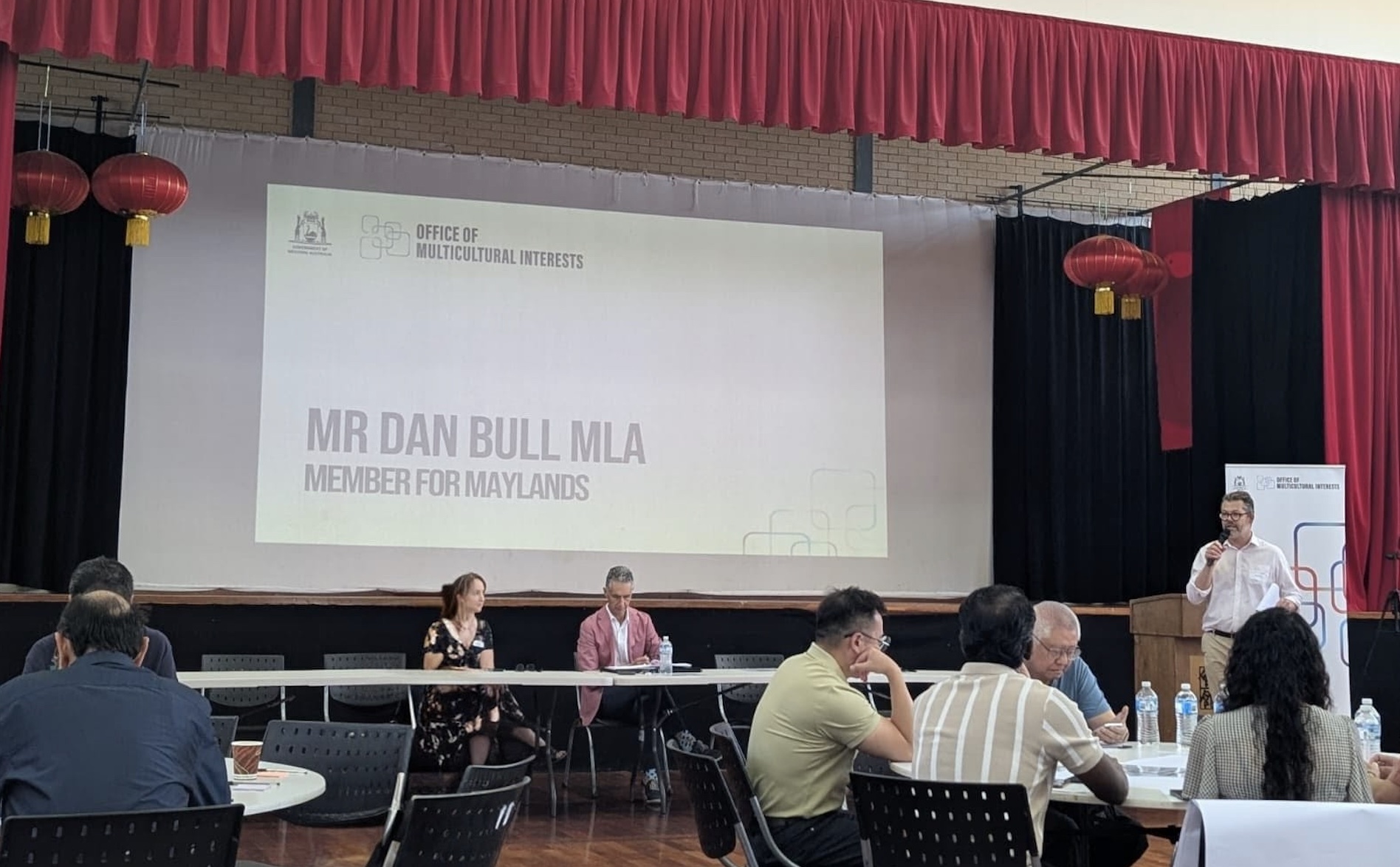
Western Australia (WA) has taken a significant step toward formally recognizing cultural, linguistic, and religious diversity, with final consultations for the proposed WA Multicultural Act closing on February 15, 2026.
The consultation process has been extensive, including forums, focus groups, stakeholder meetings, surveys, and regional workshops. It culminated in a public, face-to-face Culturally and Linguistically Diverse (CALD) Community Stakeholder Forum in Perth earlier this month, hosted by the Office of Multicultural Interests (OMI).
The forum, the second targeted consultation following a session in November 2025, brought together community leaders, government representatives, and key stakeholders to discuss how multiculturalism can be embedded into WA law for the first time.
Other consultation elements included engagement with local governments, regional workshops, written submissions, and an online survey. Feedback from these consultations will inform drafting instructions and regulatory proposals, with officials indicating a Cabinet submission is expected later in the 2025–26 financial year.
From Policy to Practice
At the consultation, Tony Buti, Minister for Multicultural Interests, emphasized the critical importance of the Act, noting that the “consultation phase,” which began in November 2025, “will continue until the proposed WA Multicultural Act is completed.” He described the Act as a “critical legal framework for recognizing multicultural communities in Western Australia.”
“Our goal is not just to speak about multiculturalism, but to practice it, to live in a harmonious society,” he said. He added, “Australia has faced challenges recently, and there are forces that seek to divide us. But our aim is unity, love, and peaceful coexistence.”
Western Australia in Context
Despite its diversity, WA remains without a legislated multicultural act, noted Dan Bull MLA, chair of the Ministerial Multicultural Advisory Council subcommittee, who facilitated the forum. In contrast, states such as New South Wales, Victoria, Queensland and South Australia already operate under multicultural legislation, while other jurisdictions rely on policy frameworks rather than statute. Internationally, Bull highlighted that Canada is the only country with a national multicultural act, the Canadian Multiculturalism Act of 1988.
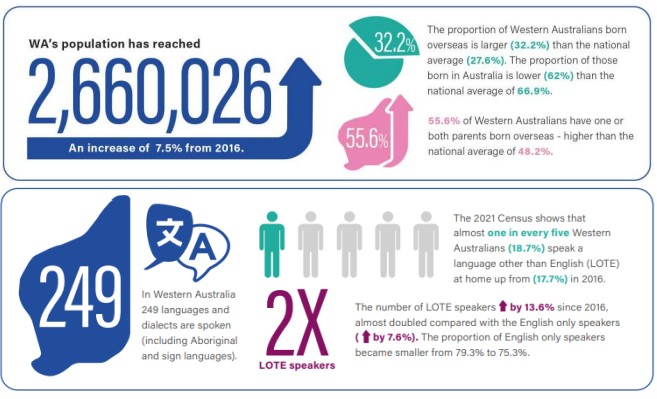
Western Australia’s demographics reflect global migration trends. According to data cited during the forum from the 2021 Census:
- More than 32 per cent of WA residents were born overseas.
- Over half have at least one parent born outside Australia.
- Communities across the state speak approximately 250 languages, including Aboriginal languages.
Dan Bull outlined that the journey toward a WA Multicultural Act began with the 1975 Racial Discrimination Act and continued through various policies and frameworks, including the WA Multicultural Policy Framework, Language Services Policy, and workforce diversity strategies.
He highlighted that a subcommittee of the Ministerial Multicultural Advisory Council guides the Act’s development, informed by a discussion paper released on 20 November 2025.
Why Western Australia is Considering a Multicultural Act
“This diversity is one of our greatest strengths, and the WA Government wants to ensure that it is properly recognized and supported,” the discussion paper notes. It states that the proposed Act would formally commit the State to inclusion and fairness, ensuring government decisions, services, and policies reflect values like respect, equity, participation, and belonging.
The paper also emphasizes the role of Aboriginal peoples, noting that First Peoples have a unique place in society and that their cultures and histories are central to WA’s identity. It recognizes that First Nations peoples and people from migrant and refugee backgrounds have different starting points, stating that the proposed Act “aims to support everyone in WA to take part in social, cultural, economic and political life,” enabling full participation and recognizing the value of cultural, linguistic and religious diversity.
Looking ahead to WA’s bicentenary in 2029, the discussion paper observes that the milestone “offers an opportunity to reaffirm a commitment to inclusion and equity” through a Multicultural Act, recognizing that over the past two hundred years, “people from many cultural backgrounds have shaped WA into the vibrant, diverse State it is today.”
Living the Story: Buti’s Journey from Immigrant Roots to Leadership
Buti’s remarks at the forum drew deeply on his own background and the lived experience of migration in Western Australia. Earlier, in an exclusive interview with South Asian Herald, he reflected on growing up in the state’s southwest town of Collie as the youngest child of Italian migrants.

Born in Collie, Buti said his mother was also born there to Italian parents, while his father arrived in Australia from Italy at the age of 21 without speaking a word of English. “They married, had four children, and worked incredibly hard in conditions most of us today can hardly imagine,” he said.
He recalled that childhood was often difficult. “It was tough as a child, subjected to quite a lot of racism because of my Italian heritage,” he said, noting that while attitudes have shifted over time, “there’s always a new immigrant group.”
Those early experiences shaped his belief that multiculturalism must be embedded structurally, not just rhetorically. “If we are serious about inclusion, it has to be reflected in how government works, not just what it says,” he said.
Buti said his motivation continues to be grounded in those early years. He described growing up in a working-class migrant environment where most Italians he knew were manual laborers, and professional careers felt distant. “As a 10-year-old, I would have loved to see someone who looked like me in a position of power,” he said. “Unless you see it, you often can’t aspire to it.”
He noted that WA’s Parliament now reflects some of that progress, with representatives from migrant backgrounds, including those of Indian and Italian descent, which he described as testament to multiculturalism in practice.
“Western Australia is a story of migration,” he said. “Our state has been built by successive waves of newcomers who have contributed to every facet of life, industries, institutions, education and culture. This Act will enshrine that recognition in law for the first time.”
Reflecting on what continues to drive him, Buti said he hopes “children from migrant backgrounds can see leadership as possible for themselves, regardless of ancestry.”
Looking Ahead
The consultation period will close on February 15, with feedback informing drafting instructions and regulatory proposals. Officials plan to submit a Cabinet proposal within the 2025–26 financial year.
Buti’s reflections underscore the Act’s broader purpose: not just to acknowledge diversity in words, but to embed multiculturalism as a living principle in the law, governance, and the everyday lives of all Western Australians.
Related posts:
 Celebrating 10 years of Diwali at the Western Australia Parliament House
 Australia and India Mark National Days with Flag Raising in Western Australia
 India’s 79th Independence Day Celebrated Across Australia, Highlighting Achievements and Strengthening Bilateral Ties
 OECD Sounds Alarm on Corporate Tax Exposure from Remote Work as Multinationals Brace for PE, PoEM and Compliance Shockwaves
