Join WhatsApp Channel

Since the 2000s, discussions surrounding mental health have become less stigmatized throughout the United States. A survey reports that 87% of adults believe that mental health struggles are nothing to be ashamed of, and 81% say they would be comfortable being friends with someone experiencing a mental health condition.
While these statistics reflect a shift toward a more accepting society, the age-old saying that “perhaps too much of something is as bad as too little” has prompted psychologists to question this very change.
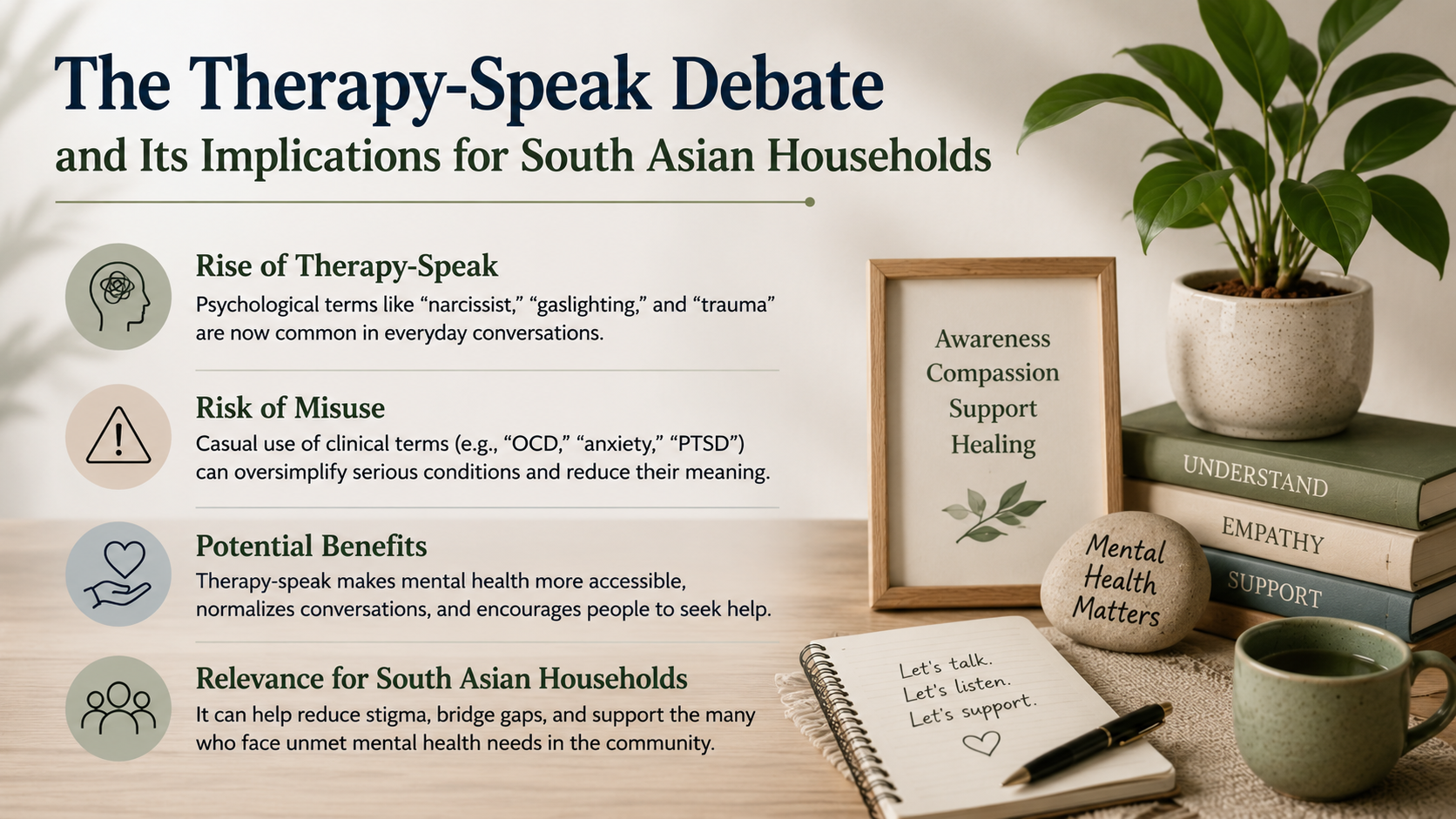
A phenomenon known as “therapy-speak” has emerged in recent years, referring to the use of psychological terms and phrases in everyday conversations. Terms such as “narcissist,” “gaslighting,” and “trauma” are frequently used beyond a therapist’s office. As a result, psychologists have begun debating whether the adoption of clinical language has benefited society or whether it has led to the misinterpretation of psychological concepts.
A large group of psychologists argues that the rise of therapy-speak has diluted the meaning of clinical terminology. One example is the misuse of the term “OCD” (Obsessive-Compulsive Disorder). Oftentimes, people lightheartedly describe others as “having OCD” when referring to their perfectionism or tidiness. However, the condition is far more complex.
As the National Institute of Mental Health explains, living with OCD follows a cycle of unwanted thoughts, emotional distress, compulsive behaviors, and interference with daily tasks. The casual use of the term, however, has led to the oversimplification of a serious chronic condition and has undermined the hardships it carries.
Similarly, the growing use of terms such as “anxiety,” “bipolar disorder,” and “PTSD” in everyday conversation has blurred the distinction between their clinical definitions and their colloquial meanings.
On the other hand, the American Psychological Association highlights the potential benefits of therapy-speak. The article claims that its widespread use has helped make mental health concepts more accessible and accepted in society. In the 1800s, for example, individuals experiencing symptoms associated with schizophrenia were often deemed “insane.”
Today, while most people may not completely understand the meaning of schizophrenia, the condition is discussed with more empathy. By allowing people to become more familiar with clinical language, therapy-speak helps normalize mental health, encouraging individuals to seek support more comfortably.
Within the South Asian community, therapy-speak can play a role in bridging gaps surrounding mental health. A study by the National Library of Medicine found that 48% of South Asians in Canada reported unmet mental health needs despite self-reporting high levels of stress. Similarly, research conducted by the South Asian Public Health Association found that one in five South Asians reports symptoms associated with mood or anxiety disorders. Based on these statistics, although mental health conditions are prevalent in the community, the stigma surrounding them continues to discourage people from seeking support.
In this case, therapy-speak can serve as a tool for reducing stigma by normalizing discussions surrounding emotional well-being. When used carefully, therapy-speak can bridge the gap between mental health conditions and the unmet support needs within the community.
Disclaimer: The opinions and views expressed in this article/column are those of the author(s) and do not necessarily reflect the views or positions of South Asian Herald.