Join WhatsApp Channel


The whole world is watching nervously at the Middle East, where the Trump administration is flexing its muscles over a nuclear deal that should be to the satisfaction of Washington. But there is a new game that is intensifying in East Asia that, for now, does not involve aircraft carriers and a fancy assortment of jet fighters.
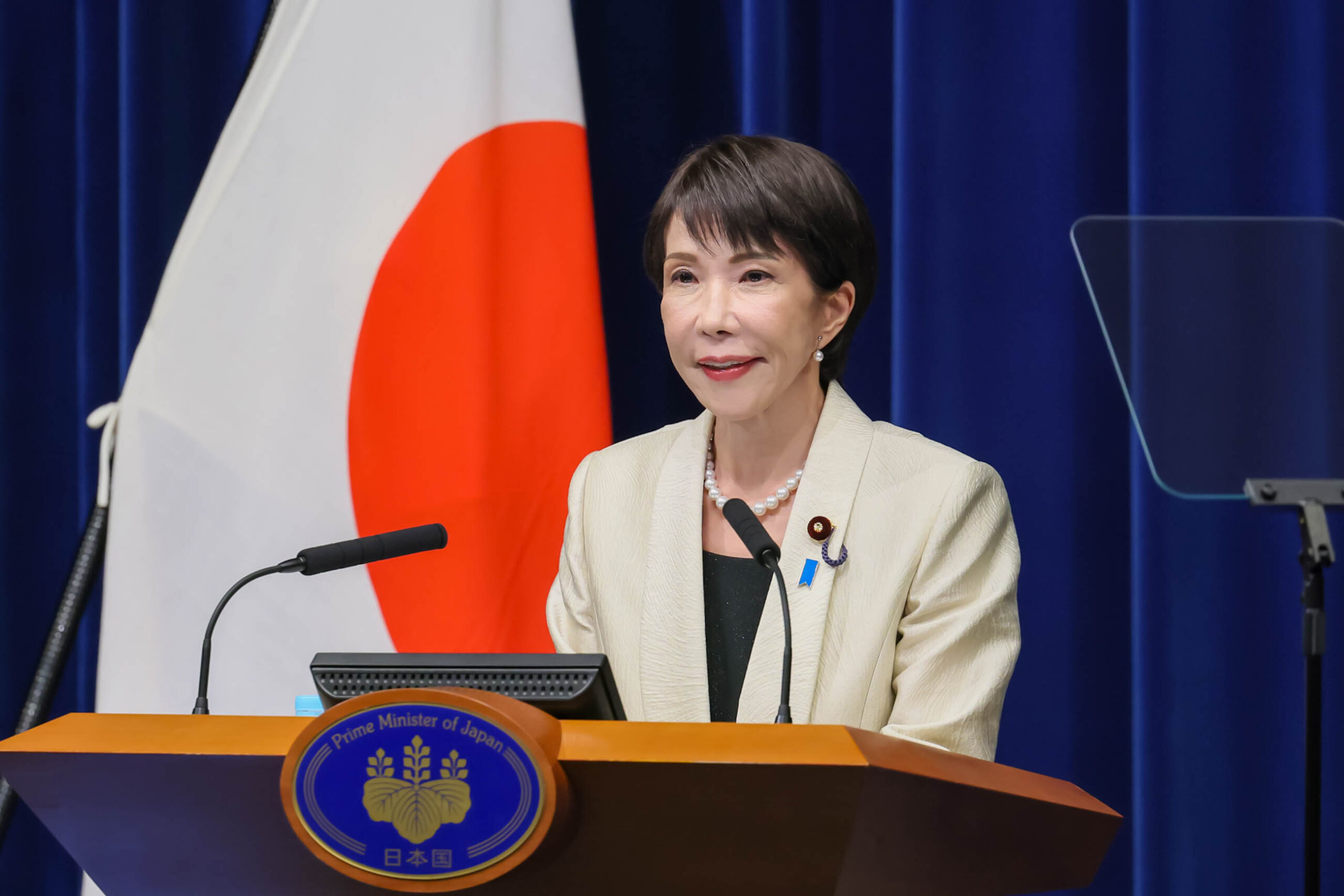
Miffed at the overwhelming win of Prime Minister Sanae Takaichi and perhaps sore that its disinformation campaign leading up to the Lower House elections did not work, China has started putting the squeeze on the export of rare earth minerals, citing concerns of “imperialistic” designs.
China should be the last one in Asia to be talking of some other nation showing “imperialistic” designs or, for that matter, selectively hiding behind history when it comes to Japan. No doubt Imperial Japan has had its miserable share of past colonialism, but post-Second World War Japan has been a respectable member of the comity of nations, in spite of frequent bursts of right-wing nationalism that have drawn condemnation from within the country and overseas. But for Beijing to look at the past and continue to hammer away at Tokyo somehow obscures the present-day realities of the Indo-Pacific.
Putting a hold on rare earths seems to be the new game in China’s economic and political diplomacy, and none of this would have taken off if President Donald Trump had not started his tariff war in February 2025, with one of the first targets being China, along with Canada and Mexico. From then on, Beijing has been quite calculative in this rare minerals game and has sought to pile pressure globally, especially on the United States and Japan, but for different reasons. If China looks at rare earths as a tit-for-tat for the Trump administration, for Japan it is because it wants to teach a lesson to Takaichi and Company for wading into the Taiwan issue, and needlessly at that.
To be fair to Beijing, it was Prime Minister Takaichi who set the ball rolling last November when she remarked that, should there be hostilities in Taiwan, Japan may have to be militarily involved—sentiments that certainly did not sit well in China. Forgetting the critical economic relations between the two nations, Beijing clamped down on tourism and started cautioning Chinese students studying, or planning along those lines, in Japan. And protesting Tokyo’s “erroneous” and “egregious” statements on Taiwan, China banned the export of dual-use items with military applications. Although not clearly spelt out, analysts believe that the dual-use items involve both battery metals and rare earths used for magnets, among other things.
And with a view to keeping up the pressure, China has recently gone on to restrict exports to some 40 Japanese entities, maintaining that they are contributing to “remilitarization”—20 on an export control list and another 20 on a watch list. The companies on the dual-use goods list include those involved in shipbuilding, production of aircraft engines, and maritime machinery. Beijing has banned foreign organizations and individuals from providing dual-use items originating from China to the identified 20 Japanese entities.
“All ongoing related activities must cease immediately,” China has said, going on to say that those on the watch list must also provide written guarantees that dual-use items will not be used by the Japanese military. The Commerce Ministry has maintained that the measures in place are aimed at curbing Japan’s re-militarization and nuclear ambitions and are only aimed at a small number of entities. “They will not affect normal economic and trade exchanges between China and Japan, and honest and law-abiding Japanese entities have absolutely nothing to worry about,” the Ministry added.
The aggressive push by China with respect to Japan may, in an immediate context, be related to Taiwan, but over the last several months Beijing has been pushing to secure its strategic investments and stranglehold and has managed several long-term agreements in Asia, Africa, and Latin America, clearly leaving the impression that Beijing wishes to remain unchallenged in holding on to about 90 percent of global rare resources.
And this has left the major Western nations scrambling for strategies, with the soon-to-be top powers not wishing to be left behind. The scramble for resources that impacts defense and hi-tech is leaving an uneasy footprint on the forthcoming global order that will not be the prerogative of either the Permanent Five of the United Nations Security Council or the less-than-frequently touted G-2, the United States and China.
Perhaps Beijing needs to step back and ponder why Prime Minister Takaichi is seeking to redefine her country’s defense posturing. For a start, President Xi Jinping can look at his own role in the South China Seas and the Indo-Pacific. Japan also has to bear in mind its neighborhood: nuclear powers like China, Russia, and North Korea; uncertainty over Taiwan; and a United States policy on Asia that, in the recent past—not necessarily under President Trump—cannot be taken for granted.
In the context of rare minerals, Japan will aggressively go after deep seabed mining in the Pacific, as it has already started; and in the realm of security and strategic planning, the Takaichi government will be pushing to scale up defense spending and rewriting the defensive/offensive rules of combat for its Self-Defense Force. And in all this, if the shrill voices of the nuclear debate emerge within Japan, it should not take a Nobel Laureate to figure out why.
Disclaimer: The opinions and views expressed in this article/column are those of the author(s) and do not necessarily reflect the views or positions of South Asian Herald.