India urged the United Nations Security Council on November 23 to protect Black Sea grain routes and end attacks on commercial vessels, warning that disruptions to food, fuel, and fertilizer supplies from the war in Ukraine are hitting countries across the Global South particularly hard.
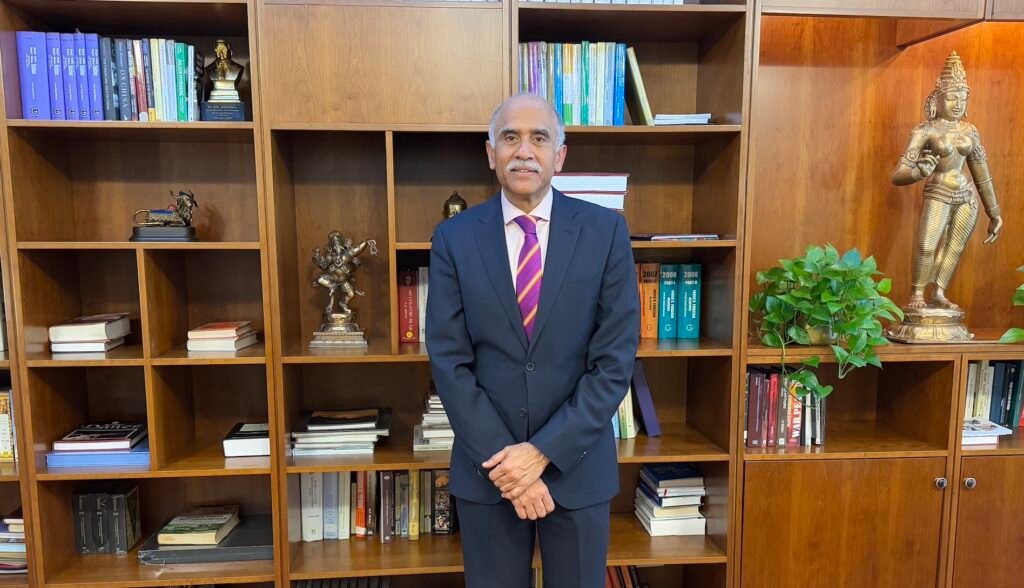
Ambassador Harish Parvathaneni, India’s permanent representative to the United Nations, said India was engaging directly with Russia and Ukraine on the safety of shipping and seafarers in the Black Sea and on keeping grain export corridors open.
Speaking at a Security Council briefing on protecting critical energy infrastructure and Black Sea food supply routes, he reiterated India’s readiness to contribute to efforts toward a peaceful resolution.
Harish said the war, now in its fifth year, was affecting countries far from the fighting because their economies depend on interconnected supply chains. He recalled Indian Prime Minister Narendra Modi’s call for the world to move from “endless war to the end of war.”
Advertisement
“Every day of the war pushes humanity backwards,” Harish said.
The Ambassador said armed conflict deepens food insecurity by disrupting farming, displacing communities, damaging infrastructure, and limiting humanitarian access. Those effects spread across borders when energy and fertilizer supplies tighten, transport is disrupted, and agricultural trade slows. He cited Security Council Resolution 2417, which recognizes the link between armed conflict and hunger, and called on the council to prioritize humanitarian access, the protection of civilian infrastructure, and freedom of navigation so aid and legitimate trade can continue.
Harish said India and the Black Sea region together account for nearly a fifth of global cereal production. Russia and Ukraine, he added, together account for almost a quarter of global exports of wheat, corn, and barley. Their role in international grain markets means that disruptions to farming, port access, or shipping can affect food supplies far beyond the region.
He pointed to India’s wheat shipments to Afghanistan, rice supplies to Sudan, and humanitarian aid to Palestinians as examples of its efforts to support vulnerable populations.
Harish said countries in the Global South are already contending with energy shortages as well as strains on food and fertilizer supplies. He cited Indian External Affairs Minister S. Jaishankar, who told a G20 foreign ministers’ meeting in October that fertilizer shortages stemmed in part from disruptions in the Black Sea, the Gulf, and the Red Sea. Harish also invoked the 1943 Bengal famine, which he said killed more than 3 million people, as a reminder of the toll wartime decisions can take on people far from the fighting.
Turning to the risks facing merchant crews, Harish said an Indian seafarer was killed when the MV Omorfi was attacked in the Black Sea on July 18. Three Indian nationals were aboard the MV Royad Mammadov when it came under attack in October, he said. He added that attacks on two other vessels, the MV Golden Leo and the MV AGN Ragnar, left four Indian seafarers dead and two missing. He thanked partner countries for helping repatriate crew members and care for those who were injured.
The Ambassador called for an end to attacks on commercial ships and their crews and for the swift restoration of safe passage through international waterways. He said India, a major source of seafarers, and Liberia, which has the world’s largest shipping registry, had launched the Group of Friends on Safety and Security of Shipping and Seafarers at the United Nations. The voluntary initiative supports the work of the International Maritime Organization and the International Labour Organization on the safety of merchant vessels and their crews.
Harish said India’s leadership continues to press for an early end to the conflict and an “enduring peace.” He described dialogue and diplomacy, safe commercial shipping, and uninterrupted grain and energy shipments as practical necessities for countries that depend on those supplies. He also recalled Modi’s statement that “this is not an era of war.”
“For the Global South, peace is not in the abstract,” Harish said. “It is achieved when hungry mouths are fed, when a ship reaches the port, and when a seafarer returns home safe.”