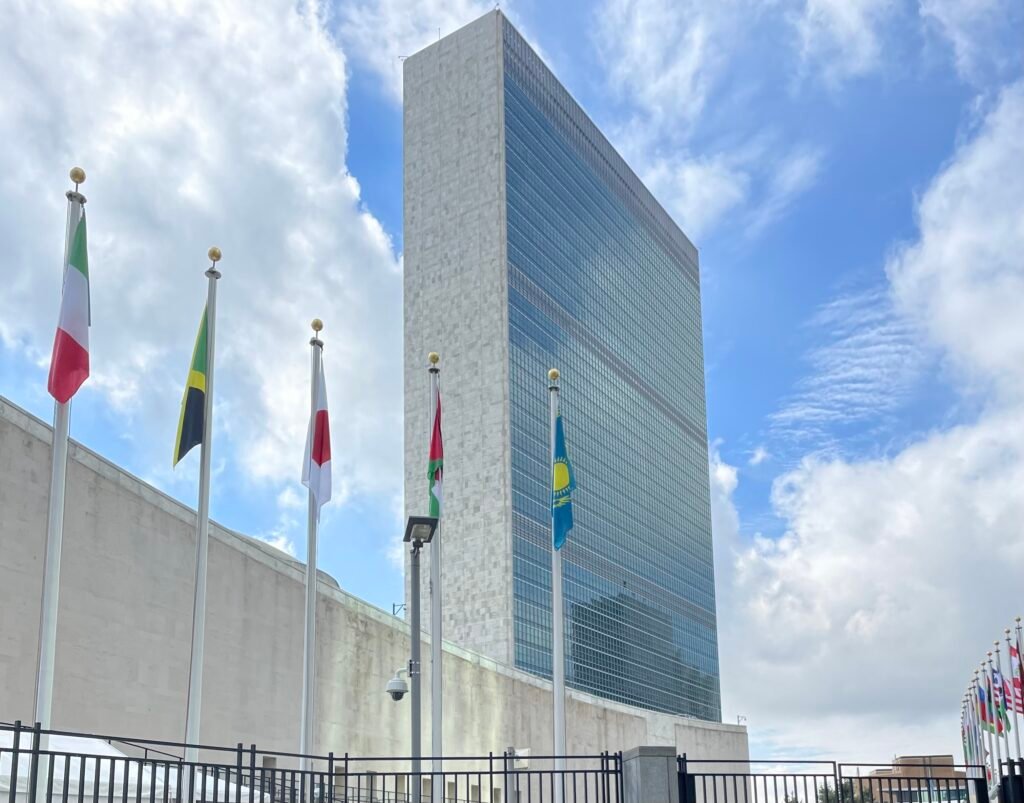
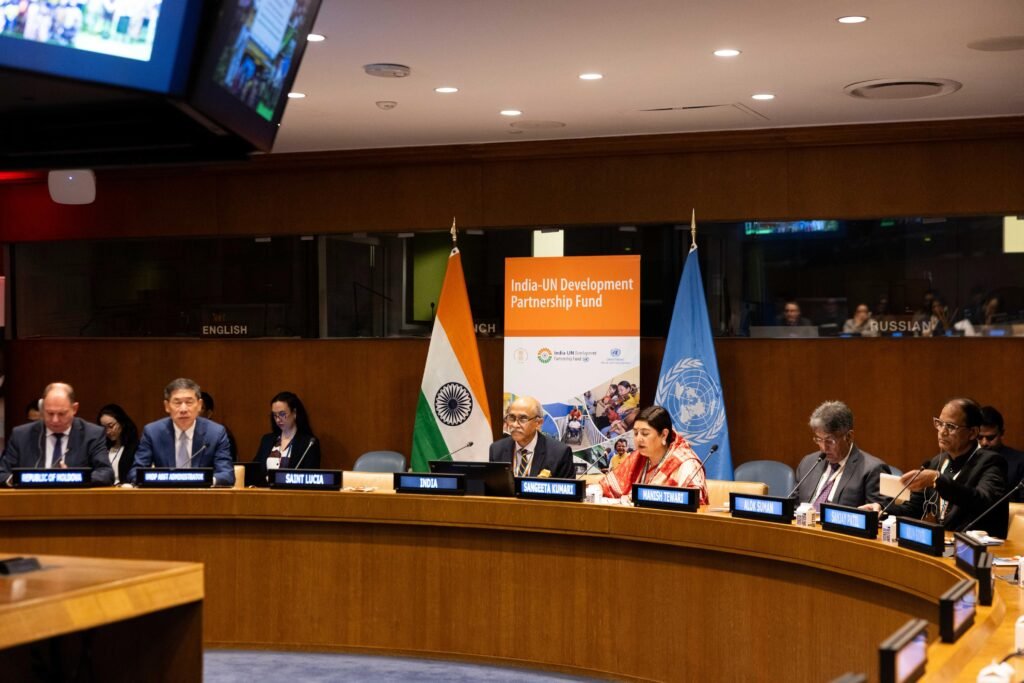
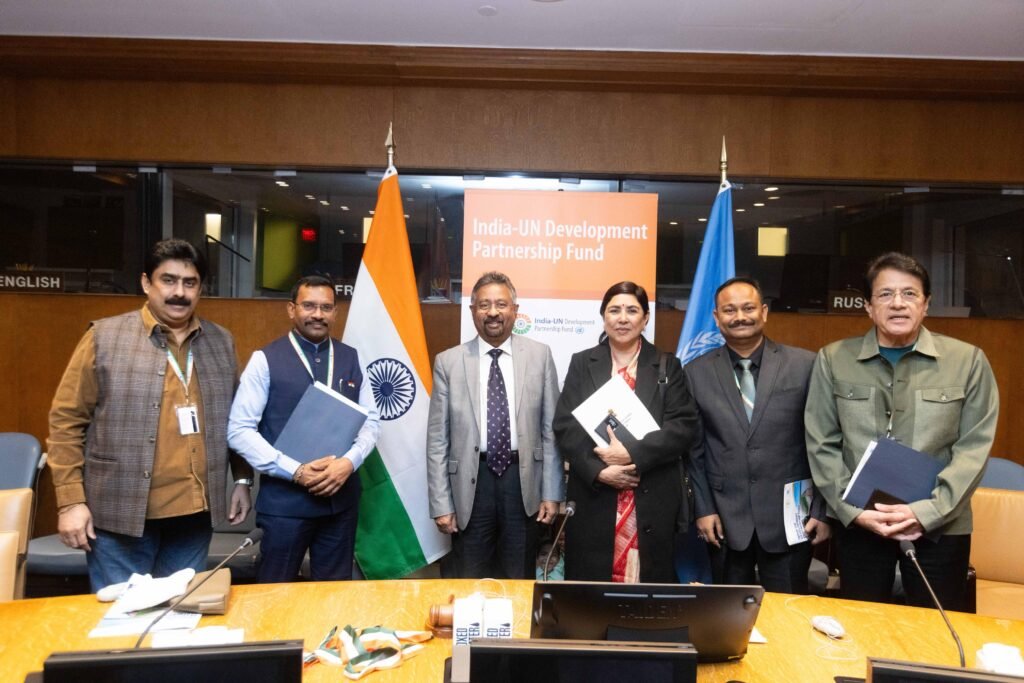
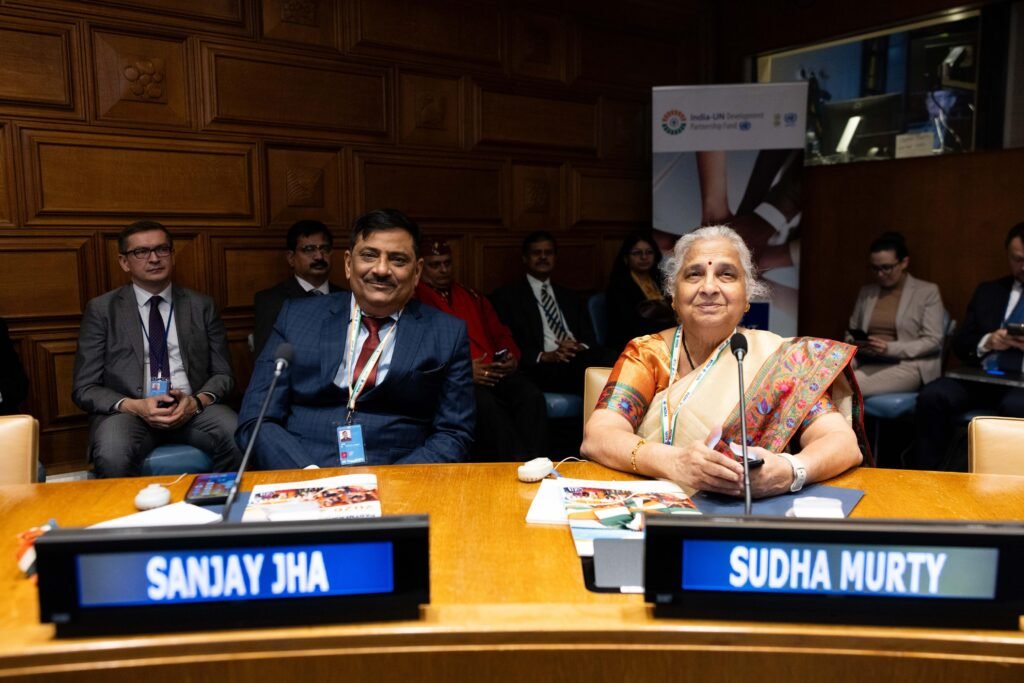
The India-UN Development Partnership Fund held its ninth annual event on October 22, 2026, at United Nations Headquarters in New York, bringing together a parliamentary delegation led by Sangeeta Kumari Singh Deo, representatives of UN member states, and senior UN agency officials to review its development initiatives.
India’s Permanent Representative to the United Nations, Ambassador Parvathaneni Harish, said the Fund’s work is guided by partner countries’ priorities, particularly the development needs of small island developing states, least developed countries, and landlocked developing countries.
Harish emphasized that projects are nationally driven, tailored to requests from participating countries, and aligned with the UN Sustainable Development Goals, which provide the foundation for the Fund’s implementation.
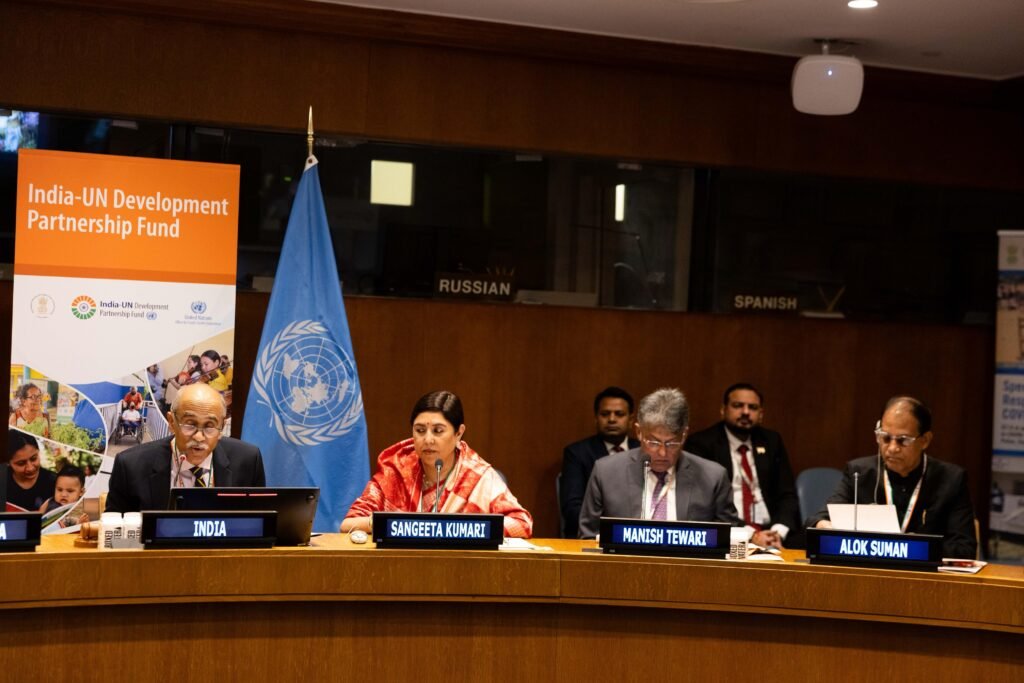
Singh Deo outlined the Indian government’s official development assistance programs, emphasizing the Fund’s demand-driven approach, mutual respect, national ownership, and the priorities of beneficiary countries. She said India’s ethos of “Vasudhaiva Kutumbakam” guides its efforts to support development across UN member states, particularly those facing structural and geographic challenges.
Advertisement
UN Development Programme Associate Administrator Xu Haoliang presented an overview of projects supported by India across the Global South and discussed his visit to Burkina Faso. The project in Burkina Faso was formally handed over on October 27, 2026.
The event also marked the release of the Fund’s 2026 Year-in-Review publication, which documented progress on ongoing initiatives and selected projects completed recently.
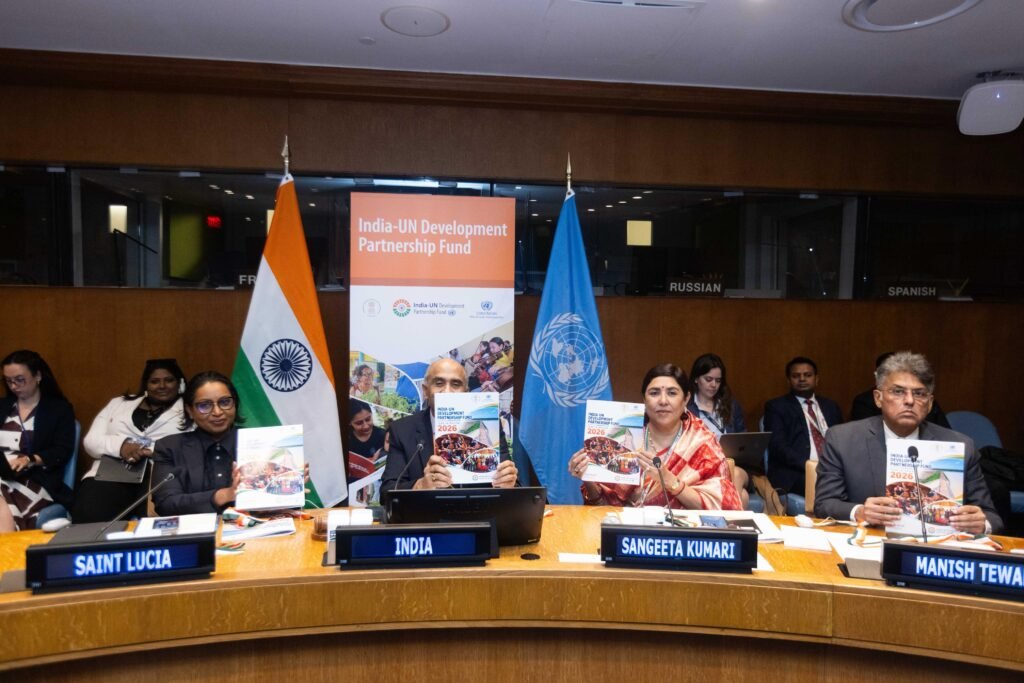
Representatives from participating countries discussed the Fund’s contributions to public health, food security, livelihoods, climate resilience, and other national priorities.
Sri Lanka’s Permanent Representative to the United Nations, Jayantha Jayasuriya, acknowledged India’s role as a first responder during natural disasters and thanked the country for its assistance during Sri Lanka’s economic crisis. He said that support demonstrated the value of partnership.
Lao PDR’s Permanent Representative, Thongphane Savanphet, cited the two countries’ longstanding bilateral relations and cooperation. He also acknowledged India’s assistance through the United Nations, the Association of Southeast Asian Nations, and Mekong-Ganga Cooperation, and expressed appreciation for an ongoing rice fortification project.
Dominica’s Permanent Representative, Philbert Aaron, conveyed gratitude from the prime minister and the people of Dominica for India’s assistance to Indigenous communities in the Kalinago Territory. He said President Sylvanie Burton, the country’s first female and Indigenous head of state, had affirmed the project’s importance.
Cuba’s Permanent Representative, Ernesto Soberón Guzmán, thanked India for its assistance amid what he characterized as an increasingly unjust and exclusionary international order. He also commended India’s leadership in the Global South.
Saint Lucia’s Permanent Representative, Menissa Rambally, speaking as a board member, emphasized the range of initiatives supported by the Fund. She said India’s assistance was instrumental in helping countries address economic and social development challenges.
Venezuela’s Chargé d’affaires praised the Fund as an example of South-South cooperation based on equality, consultation, and investment in areas identified as priorities by participating countries.
Moldova’s Permanent Representative, Gheorghe Leucă, commended India’s commitment to official development assistance, saying it sent an important message that “partnership built on solidarity, mutual respect and national priorities can continue to deliver tangible results.”
Tanzania’s Permanent Representative, Togolani Edriss Mavura, expressed appreciation for India’s continued support for sustainable development.
Mozambique’s Permanent Representative, Domingos Estevão Fernandes, called the Fund a concrete example of South-South cooperation grounded in national priorities and commended India’s efforts to advance that cooperation.
Rwanda’s Permanent Representative, Martin K. Ngoga, pointed to longstanding bilateral ties based on mutual respect, solidarity, and a shared commitment to development and international cooperation. He welcomed the Fund’s contribution to Rwanda’s priority of strengthening maternal and newborn healthcare.
Senegal’s Deputy Permanent Representative thanked India for supporting a demining project, identifying it as a leading government priority.
Tuvalu’s Permanent Representative, Tapugao Falefou, said the projects demonstrated the value of development cooperation that responds to national priorities and local needs. He expressed gratitude for India’s commitment to supporting developing countries through practical initiatives and partnerships.
Micronesia’s Permanent Representative, Jeem S. Lippwe, said assistance through the Fund had been transformative, citing its focus on sustainable development across multiple areas.
Timor-Leste’s Permanent Representative and Kiribati’s chargé d’affaires said the Fund had delivered tangible benefits to their communities. They credited its assistance with strengthening livelihoods, improving climate resilience, and supporting public health systems.
A counselor from Morocco, speaking on behalf of the presidency of the High-Level Committee on South-South Cooperation, commended India’s contribution as a model for such cooperation.
The director of the Pan American Health Organization, a UN implementing agency for Fund-supported projects, thanked India for its assistance and for trusting countries to determine their own priorities and the organization to help carry them out.
Discussing projects in Latin America and the Caribbean, the director said their value extended beyond immediate results to building the local capacity needed to sustain progress.
The director of the United Nations Office for South-South Cooperation, which manages the Fund, said member states’ accounts of its impact demonstrated the value of South-South cooperation and thanked India for establishing the initiative.
Officials from Brazil, Honduras, Paraguay, Mongolia, Mozambique, Sri Lanka, Nicaragua, Israel, Indonesia, Mauritius, Saudi Arabia, Saint Vincent and the Grenadines, Trinidad and Tobago, Togo, and other countries also attended.