
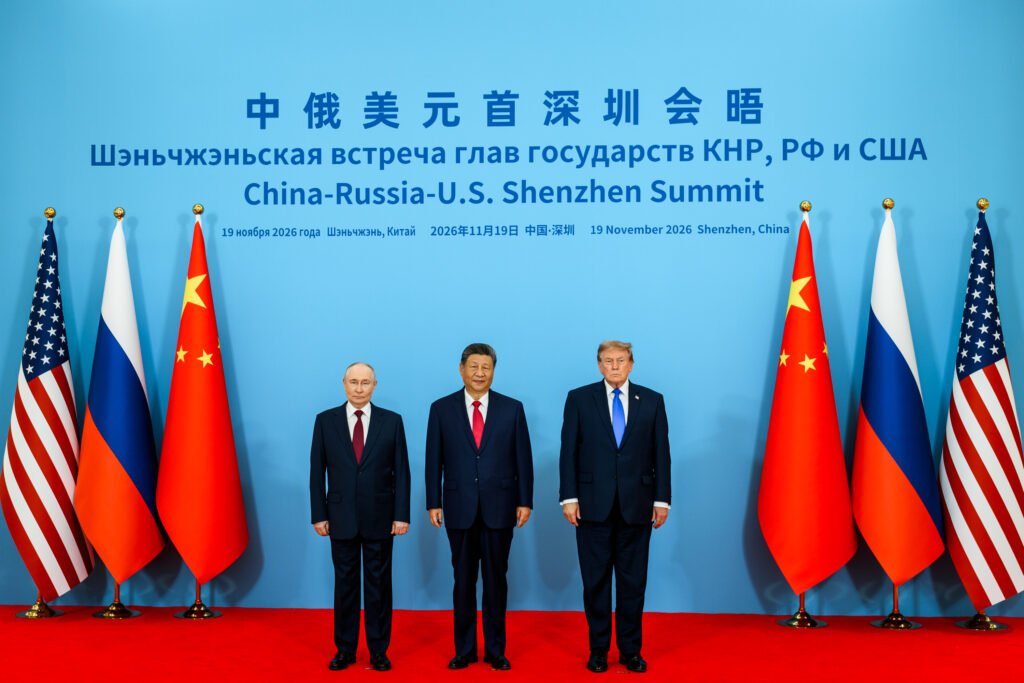
Having recently spent time in Shenzhen and Hong Kong, I had the opportunity to witness the atmosphere surrounding one of the most significant international diplomatic gatherings of 2026: the Asia-Pacific Economic Cooperation (APEC) summit hosted by China.
What made this gathering particularly remarkable was not simply the number of international leaders and business representatives who travelled to China. It was the presence of three of the world’s most influential leaders US President Donald Trump, Chinese President Xi Jinping and Russian President Vladimir Putin, at the same international gathering, followed by their unprecedented trilateral meeting in Shenzhen.
For me, this was an important reminder that even in a world marked by geopolitical competition, economic disagreements and international conflicts, diplomacy must continue to create opportunities for dialogue.
China’s Organization: An Impressive Hosting Effort
Advertisement
One of my strongest impressions during my time in Shenzhen was the scale of organization and preparation surrounding the event.
Hosting an international summit involving leaders, senior government officials, business delegations, international media and security teams from across the world is an enormous undertaking. It requires coordination across government departments, transport systems, accommodation, communications, security and international protocol.
China demonstrated considerable organizational capacity in bringing these elements together. The arrangements and the atmosphere surrounding the summit reflected careful preparation and a clear understanding of the responsibilities involved in hosting an event of this international importance.
Shenzhen itself provided an appropriate setting. The city has become one of China’s most recognizable centers of technological innovation, manufacturing, entrepreneurship and international commerce. Its transformation over recent decades makes it a powerful example of how long-term infrastructure development and economic ambition can reshape a city.
I was particularly impressed by the way the city presented itself to an international audience. The experience reinforced my view that successful diplomacy is not confined to the conference room. The quality of organization, hospitality, connectivity and the overall visitor experience also contributes to how international guests understand the host country.
A Historic Meeting of Three Major Powers
The most internationally significant moment was the meeting between Donald Trump, Xi Jinping and Vladimir Putin on November 19.
The three leaders had come together for the first-ever trilateral meeting between the United States, China and Russia. The meeting took place against a complicated international backdrop involving strategic competition, trade disagreements, nuclear security and conflicts affecting different regions of the world.
The significance of this meeting should not be measured only by whether it immediately resolved major international disagreements. Bringing leaders with different national interests and strategic priorities to the same table is itself an important diplomatic development.
The United States, China and Russia possess considerable influence over global security, international trade, energy markets and the wider geopolitical environment. Their ability to maintain communication is therefore important not only for their own citizens but also for countries across Asia, Africa, Europe and the Americas.
Dialogue does not require agreement on every issue. It requires the willingness to listen, communicate and explore areas where cooperation remains possible.
China as a Convenor of International Dialogue
China’s role as host placed it at the center of this important diplomatic moment.
President Xi Jinping welcomed leaders and representatives from APEC’s 21 member economies. The leaders’ meeting adopted the 2026 APEC Leaders’ Declaration by consensus, alongside outcome documents addressing trade, connectivity and innovation.
The wider APEC program also brought together political and business leaders to discuss regional economic cooperation, technology, artificial intelligence, connectivity, sustainable development and investment opportunities.
This is particularly important at a time when the global economy is experiencing changes in supply chains, technological competition and international trade relationships.
China’s hosting of the summit demonstrated its ability to convene a major international gathering and facilitate engagement between countries that do not always share the same political or economic outlook.
I believe this is a valuable contribution to international diplomacy. The international community needs more platforms where disagreements can be addressed through structured engagement rather than allowing differences to become permanent barriers.
The Importance of US–China Relations
Among the many relationships highlighted by the summit, the relationship between Washington and Beijing deserves particular attention.
The United States and China are two of the world’s largest economies. Their decisions on trade, technology, investment, manufacturing and supply chains have consequences for businesses and consumers across the globe.
Competition between them is a reality, but economic confrontation should not become the only defining feature of their relationship.
There are areas where cooperation is essential: artificial intelligence safety, climate change, public health, international trade, financial stability and the prevention of military escalation.
The meetings in Shenzhen provided an opportunity for both countries to maintain communication at the highest level. While major disagreements remain, sustained diplomatic engagement can help reduce uncertainty and create space for practical agreements.
For countries such as India, Brazil and other emerging economies, a stable relationship between the United States and China is particularly important. Their businesses depend on international markets, investment flows, technology partnerships and predictable global supply chains.
Opportunities for Asia, Africa and the Global South
APEC’s wider significance extends beyond the major powers.
The countries of Asia and the Pacific have become central to global manufacturing, technology, trade and investment. Their economic development is increasingly connected with Africa, the Middle East, Europe and Latin America.
For developing economies, international platforms such as APEC provide opportunities to exchange experience, develop partnerships and strengthen connectivity.
China’s experience in infrastructure, industrial development, logistics and technology offers subjects for serious international discussion. Other countries can learn from its achievements while developing solutions appropriate to their own national circumstances.
India, in particular, has an important role to play in the changing global economy. Its growing manufacturing capabilities, technology sector, skilled workforce and international partnerships make it an important participant in discussions about the future of trade and development.
I also see opportunities for stronger cooperation between Asia and Africa in renewable energy, agriculture, education, digital technology, healthcare and infrastructure.
The future of international relations should not be limited to competition among major powers. It should also create opportunities for smaller economies and developing countries to participate meaningfully in global prosperity.
Diplomacy Must Continue Beyond the Summit
It would be unrealistic to expect one international meeting to resolve every disagreement between major powers. The challenges involving trade, security, territorial disputes and regional conflicts require sustained negotiations and political commitment.
The value of the Shenzhen gathering lies in keeping communication open and demonstrating that international leaders can still come together despite their differences.
China deserves recognition for undertaking the responsibility of hosting such a significant international event and bringing major global leaders and delegations together. Its organizational effort, the setting in Shenzhen and the diplomatic engagement surrounding the summit made a strong impression on me as an observer who was present in the region.
However, the ultimate measure of success will be what follows: continued dialogue, practical cooperation, stronger economic relationships and tangible contributions to international peace and stability.
A Personal Reflection from Shenzhen and Hong Kong
My time in Shenzhen and Hong Kong reinforced my appreciation of how important international engagement has become in today’s interconnected world.
Cities are no longer simply centers of commerce or tourism. They are increasingly platforms for diplomacy, technology, investment and international cooperation.
The APEC gathering demonstrated how a major international event can bring together political leadership and business communities while placing a host city on the global stage.
As someone engaged in international policy dialogue and humanitarian diplomacy, I believe the world needs more opportunities for constructive engagement between countries, regardless of their political systems or strategic differences.
The presence of the American, Chinese and Russian presidents at the same gathering was a powerful reminder that diplomacy remains indispensable.
The world does not need every nation to agree on everything. It needs nations to remain willing to talk, negotiate and work together where their interests meet.
China’s APEC gathering in Shenzhen offered an important demonstration of that principle. Its lasting significance will depend on whether the conversations begun there translate into a more cooperative, stable and prosperous international environment.
Disclaimer: The opinions and views expressed in this article/column are those of the author(s) and do not necessarily reflect the views or positions of South Asian Herald.