Join WhatsApp Channel


India on Sunday said the United Nations human rights office of interfering in its internal affairs after it criticized mass detentions during protests in New Delhi, as demonstrators returned to the streets demanding the resignation of Chief Election Commissioner Gyanesh Kumar over alleged irregularities in voter lists.
The Ministry of External Affairs described the concerns raised by the Office of the UN High Commissioner for Human Rights (OHCHR) as “unwarranted” and an “unacceptable interference” in India’s internal affairs, defending the authorities’ handling of demonstrations that triggered widespread security restrictions and transport disruptions on October 10.
The diplomatic rebuke came a day after UN human rights spokesperson Thameen Al-Kheetan expressed concern over reports of mass detentions involving demonstrators, protest leaders, civil society activists, lawyers and journalists before and during large-scale protests in the capital.
India said its Constitution guarantees the right to peaceful assembly, supported by robust institutions, an independent judiciary and a free media. Citizens exercise that right subject to the requirements of public order and safety, the ministry said.
“The OHCHR’s concerns are therefore unwarranted and constitute an unacceptable interference in the internal affairs of India,” it said in a statement dated October 11.
The ministry also accused the UN office of applying selective standards, arguing that violent responses to protests in neighboring countries and law enforcement actions closer to its own headquarters had gone without comparable comment. Such “double standards,” it said, undermine the credibility of international institutions and erode faith in multilateralism.
The OHCHR, in its October 10 statement issued in Geneva, called on Indian authorities to ensure that the right to peaceful assembly was respected, that law enforcement personnel exercised restraint and that anyone arbitrarily detained was released immediately and unconditionally. It also urged the government to engage in meaningful dialogue with demonstrators.
The exchange has given an international dimension to a domestic political confrontation that has increasingly raised questions about the balance between public order, freedom of assembly and electoral accountability.
Protesters renew march as detentions continue
The Cockroach Janta Party (CJP), a youth-led group campaigning against alleged electoral-roll irregularities and the Special Intensive Revision (SIR) of voter lists, called for a fresh march to Jantar Mantar at about 10 a.m. on October 11.
The group is demanding Kumar’s resignation, alleging irregularities in the electoral process. Those allegations remain contested and should not be treated as established findings.
CJP leaders said the campaign would continue despite the detentions and restrictions imposed the previous day. The group urged supporters to demonstrate wherever police prevented them from proceeding.
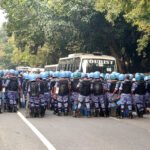
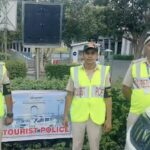
Heavy security remained in place across central Delhi on October 11, with barricades, traffic diversions and police deployments affecting movement at several locations. Further detentions were reported, including those of student activists in the Connaught Place area.
Estimates of the number detained during the October 10 operation varied widely. Police-linked estimates put the figure at around 1,000, while some other reports cited several thousand more. The figures could not be reconciled from the information available.
CJP founder Abhijeet Dipke and fellow leaders Ashutosh Ranka and Saurav Das, who were detained at Delhi airport on October 10 after arriving from Mumbai, were released after appearing before a Special Executive Magistrate at Delhi Cantonment police station. They furnished surety bonds of 50,000 rupees each and were directed to maintain peace and good behavior for one year, according to details of the proceedings.
Dipke left for Maharashtra to attend his grandmother’s last rites but said the protest would continue. YouTuber Dhruv Rathee was also reported to have been released.
Press organizations separately criticized the detention and alleged harassment of journalists covering the demonstrations, raising concerns about the ability of reporters to document police action and public protests.
Supreme Court intervenes over restrictions
The Supreme Court held a special sitting on October 11 to hear petitions concerning the restrictions imposed in Delhi, including allegations of noncompliance with an earlier order relating to public transportation and the handling of demonstrations.
A bench of Justices Joymalya Bagchi and V. Mohana directed authorities to ensure that people gathering peacefully were not illegally detained and that barricades across Delhi were removed. It also said Internet services could not be shut down and that metro and rail services should operate normally, while allowing reasonable restrictions where necessary under the law.
The government told the court that Internet services had been restored and metro operations were normal. A contempt petition named the Union Home Secretary, Delhi Police Commissioner and chairperson of the Delhi Metro Rail Corporation.
The intervention followed disruption on October 10, when restrictions, barricades and reported closures of metro stations and other transport services affected movement across the capital. The measures prompted questions about whether the response was proportionate to the public-order risks.
Opposition parties criticized the police action, with some describing it as an undeclared emergency and arguing that the detentions violated constitutional rights. Supporters of the authorities countered that security measures were necessary to prevent disruption and maintain public order.
Electoral accountability at the center
The dispute stems from allegations of irregularities in electoral rolls and the Election Commission’s SIR exercise, a process intended to scrutinize and update voter lists. Protesters argue that concerns about electoral integrity require accountability from the chief election commissioner.
The Election Commission is a constitutionally established body responsible for overseeing elections in India, the world’s most populous democracy. The accuracy of voter lists is central to the electoral process because it determines who can exercise the right to vote.
For an international audience, the confrontation highlights a broader democratic dilemma: how authorities can prevent disorder without unduly restricting peaceful political mobilization. India maintains that its constitutional safeguards and judicial remedies provide avenues for addressing grievances. The UN human rights office has emphasized that restrictions on peaceful assembly must satisfy tests of necessity and proportionality.
The Supreme Court’s intervention on October 11 provided a judicial avenue for challenging the restrictions, even as New Delhi rejected international scrutiny. The confrontation’s next phase will depend on how authorities handle further demonstrations, whether the protesters sustain their campaign and how the underlying electoral allegations are addressed.
The CJP has vowed to continue its agitation until Kumar resigns. With security measures still affecting parts of the capital and political positions sharply divided, the dispute has become a test of both the government’s management of public protests and the institutions responsible for maintaining confidence in India’s electoral process.