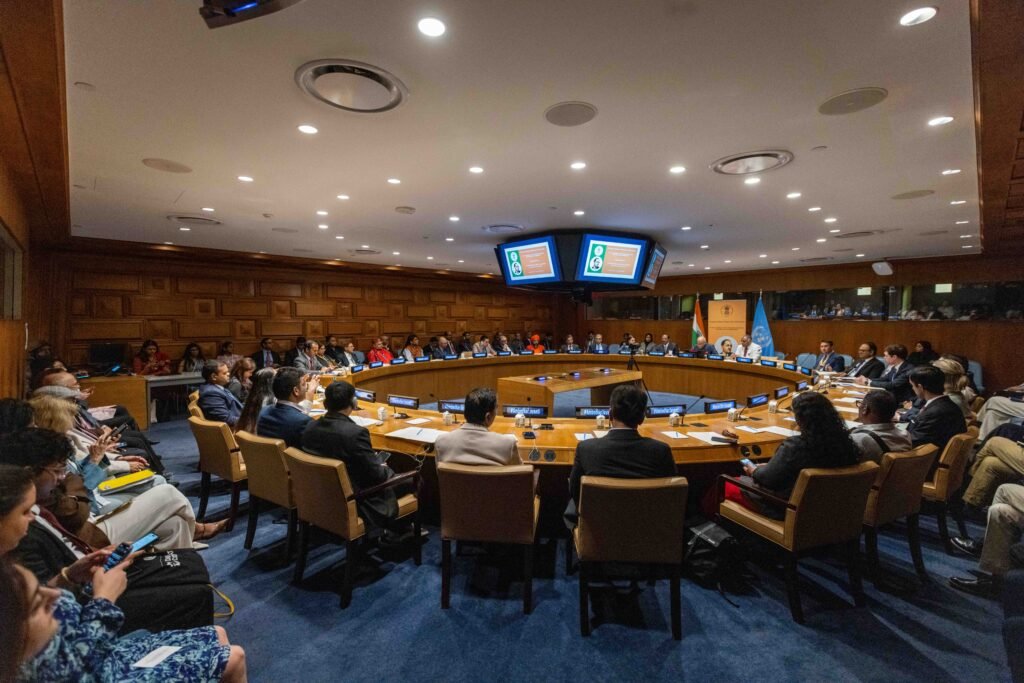
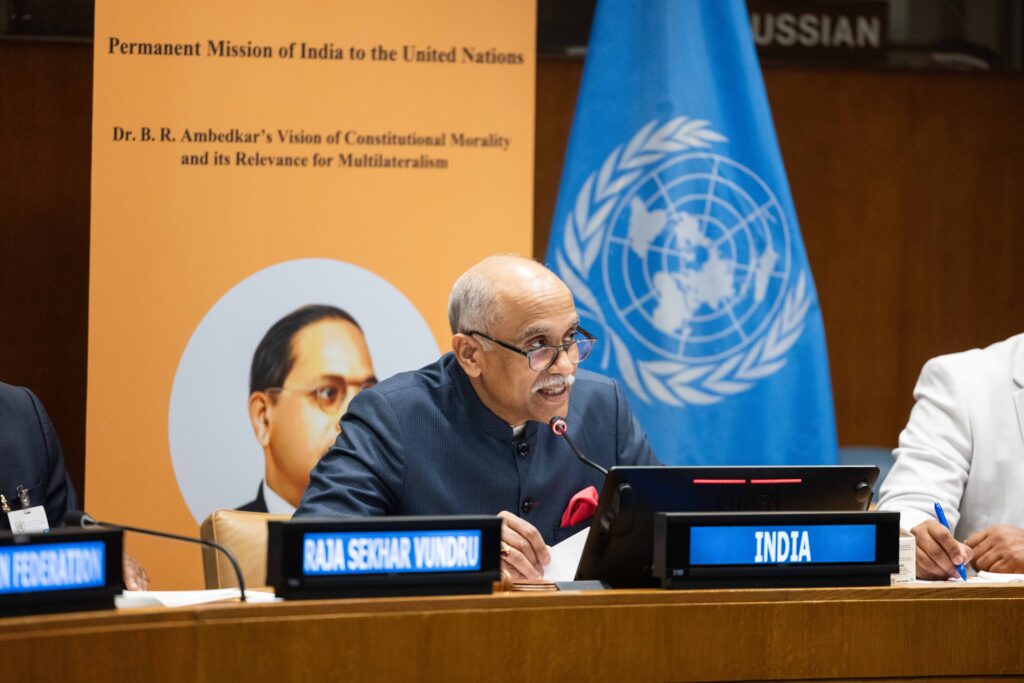
The Permanent Mission of India to the United Nations (PMI) hosted a commemorative event at United Nations Headquarters on April 14, 2026, to mark the 135th birth anniversary of Dr. B. R. Ambedkar. The event was held under the theme “Dr. B. R. Ambedkar’s Vision of Constitutional Morality and its Relevance for Multilateralism.”
In his welcome remarks, India’s Permanent Representative to the United Nations, Ambassador Harish Parvathaneni, highlighted Dr. Ambedkar’s “ardent advocacy” for instilling the spirit of “constitutional morality” among Indian citizens, describing it as both “significant and unique.”
He outlined the “striking characteristics” of India’s democracy and “constitutional values,” and pointed to “common strands” between the Constitution of India and the UN Charter.
Ambassador Harish noted that Dr. Ambedkar’s call to cultivate constitutional morality remains particularly relevant in a time marked by political fragmentation and ongoing conflicts. He said this principle could help strengthen multilateralism, support meaningful reforms within the United Nations, revitalize its principal organs, and make the institution more effective.
Advertisement
Delivering the keynote address, Raja Sekhar Vundru, a senior civil servant and noted Ambedkar scholar, said that as someone who witnessed both World Wars and the founding of the United Nations, Dr. Ambedkar understood the importance of multilateralism. He added that Dr. Ambedkar was “instrumental” in shaping the core principles of the Indian Constitution.
Vundru noted that the foundational commitment to maintaining international peace, as reflected in the UN Charter, is also embedded in the Indian Constitution. He emphasized that Dr. Ambedkar underscored the importance of constitutional morality and argued that there is a strong case for fostering international constitutional morality grounded in multilateralism and the principles of the UN Charter.
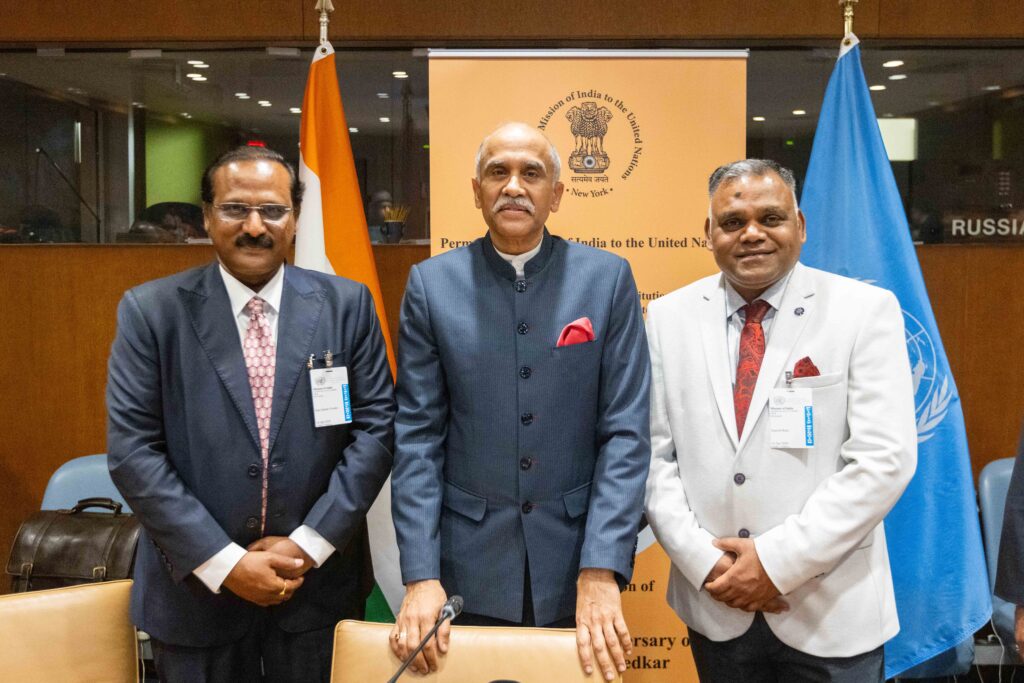
Guest speaker Santosh Raut, Visiting Professor at Harvard Divinity School, reflected on Dr. Ambedkar’s life as a moral example, stating that he did not merely overcome suffering but transformed it into insight and purpose. He noted that Dr. Ambedkar viewed the Constitution as a tool for social and economic transformation.
Raut also discussed the continued relevance of Dr. Ambedkar’s ideas in the contemporary global context, particularly in relation to multilateralism. He described morality as the force that enables the practical realization of the principles embedded in foundational texts such as the UN Charter.
The event underscored that Dr. Ambedkar’s vision of “constitutional morality, social equality, and empowerment” remains deeply relevant and continues to guide efforts toward “inclusion, democracy, and equality.”
Members of the diplomatic corps, academia, and the wider community attended the event.