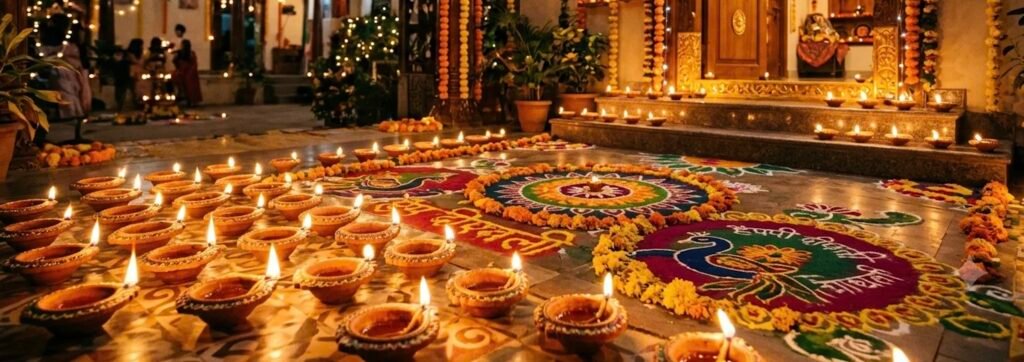
Diwali, or Deepavali, is celebrated across India and globally as the festival of lights, symbolizing the spiritual victory of light over darkness, knowledge over ignorance, and good over evil. Beyond its deep spiritual roots, economists and business analysts widely recognize the festival as a crucial period for the Indian economy, driving massive retail consumption, trade, and commercial activity across various sectors.
At the same time, a sharp, polarized debate has taken center stage regarding the intersection of cultural traditions, national stability, and the limits of democratic dissent. Unfortunately, this year’s Diwali in Delhi and across several state capitals, where the traditional lighting of Diyas normally unites households, is shadowed by a series of high-stakes political demonstrations. Political parties operating under the I.N.D.I. Alliance banner, alongside localized fringe groups seeking to tap into youth movements, have presented fundamentally opposing narratives about the current health of the world’s largest democracy.
At the heart of the friction is whether mass street mobilizations during critical cultural periods serve as a vital expression of democratic accountability or an artificial, externally fueled attempt to disrupt a rising nation’s economic momentum.
The Festive Economy vs. Political Mass Mobilization
Advertisement
The week-long Diwali period, from Dhanteras to Bhai Dooj, represents the most significant celebration and commercial window for India’s retail economy. For millions of small shopkeepers, wholesale traders, and local artisans, the revenue generated around and during this single week often sustains livelihoods for months.
The ruling Bharatiya Janata Party (BJP) and its nationalist support base view the massive street protests by the opposition parties during this critical period as an existential threat to public order and economic stability. Proponents argue that any call to topple the government, demand for the Election Commissioner to resign, and allegations of electoral malpractice (often summarized as “vote chori”) amount to calculated economic disruption and public disorder. They maintain that these demonstrations threaten to create public anarchy, dampen consumer confidence, and inflict severe losses on businesses at the exact moment India is showcasing its dynamic economic growth.
Conversely, the Indian National Congress and its political allies in the I.N.D.I. Alliance view these demonstrations through an entirely different lens. They defend their right to mass assembly, arguing that political dissent cannot be paused for commercial gains. Amid these tensions, political analysts had strongly advised opposition leadership against holding mass rallies on November 1, warning against invoking the painful memories of the 1984 anti-Sikh riots that devastated Delhi and northern India.
Nevertheless, opposition leaders contend that questioning democratic institutions, demanding systemic transparency, and rallying public support are protected constitutional rights. From this perspective, the government’s focus on festive timing is seen as an attempt to delegitimize valid public grievances regarding inflation, youth unemployment, and the preservation of democratic norms.
This has sparked a broader debate: while the right to peaceful public demonstration is essential to democracy, critics argue that the weeks leading to major national festivities require a more constructive approach. Both the government and the opposition must have had healthy discussions to avoid a Diwali period of dissent and demonstrations.
The Question of Leadership and Foreign Influences
The debate further intensifies over the leadership tactics of Rahul Gandhi in guiding the opposition parties and the alleged undercurrents driving the anti-India political narrative.
Nationalist commentators argue that the current political turmoil represents a desperate attempt by the oldest political establishment, the Indian National Congress, to regain its footing. Critics assert that its leadership has repeatedly failed to convert campaign narratives into electoral success. Rather, it has led to the fragmentation and demise of the party’s traditional base. They argue that the current attempts have failed to create a wave among younger voters, generating artificial unrest similar to the sudden political transitions witnessed in neighboring South Asian countries like Bangladesh and Nepal. However, commentators note that I.N.D.I. Alliance leaders fail to appreciate that today’s India is a highly mature, stable democracy structurally distinct from its neighbors.
Furthermore, ruling party supporters allege that the demonstrations are propped up by misguided leadership with negligible political standing. Additionally, a steady influx of foreign funding and external “toolkits”, directed by global networks and foreign interests, is suspected, aimed at curbing India’s economic and political global rise.
The opposition strongly rejects the claim that its campaign is being manufactured and fueled by external forces. They dismiss claims of foreign intervention or foreign-backed destabilization as a standard diversionary tactic by the ruling party to avoid addressing core domestic issues. Opposition strategists maintain that their political momentum is purely organic, fueled by a genuine coalition of citizens, civil society groups, and a younger generation seeking stronger institutional checks and balances.
Geopolitical Dimensions and the Road to 2047
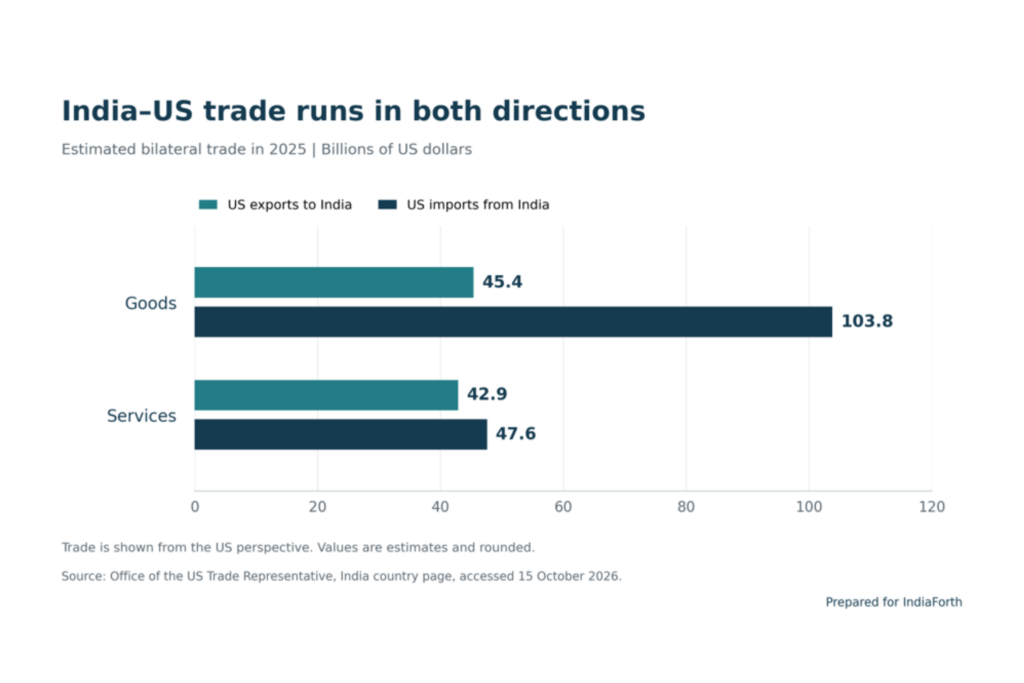
The internal political dissent carries distinct geopolitical implications for India’s critical strategic partnerships. Some international observers suggest that persistent domestic tensions and sharp external commentaries test the resilience of bilateral ties between New Delhi and Washington. However, foreign policy analysts widely agree that the US-India relationship, built on deep technology sharing, defense integration, and shared regional security goals, remains highly resilient and generally insulated from cyclical domestic political debates in either nation.
Ultimately, the deep divide surrounding this year’s Diwali highlights two clashing visions for the future of Bharat as it works toward becoming a fully developed nation (Viksit Bharat) by 2047.
The nationalist perspective argues that achieving superpower status requires a unified, stable, and highly focused political climate in an emerging India. Furthermore, they maintain that economic growth and cultural resurgence, anchored in the values of Sanatan Dharma, must take precedence over constant, disruptive street politics. The counter-narrative asserts that a nation’s development cannot be measured solely by GDP or commercial milestones; it must also include a robust, free-spoken political environment where the right to challenge the state and its institutions remains intact.
What remains to be seen is whether the post-festive period will bring political consensus or deeper polarization for India’s democratic trajectory. Rooted in Dharmic values, the stable and dynamic democracy of the new Bharat under Modi stands resilient against attempts at anarchy and disruption. Today, India is well positioned to secure its path toward sustainable global development from one Diwali to the next.
Disclaimer: The opinions and views expressed in this article/column are those of the author(s) and do not necessarily reflect the views or positions of South Asian Herald.