Maldivian President Dr. Mohammed Muizzu’s call for fairer climate finance at COP31 in Antalya, Turkey, comes at a particularly relevant time for Sri Lanka. With Colombo still grappling with the aftermath of recent flooding and the country recovering from the devastation caused by Cyclone Ditwah, the growing cost of extreme weather is becoming increasingly difficult to ignore. For Sri Lanka, the challenge is not only to protect lives, livelihoods and infrastructure from future disasters, but also to find ways of financing these efforts without adding further pressure to an already fragile economic recovery.
On November 6, 2026, heavy rain brought parts of Colombo to a standstill. Roads disappeared beneath floodwater, motorists were stranded, shops struggled to protect their goods and sections of the National Hospital were inundated. For thousands of people trying to get home from work, run a business or reach essential services, the disruption was immediate. The flooding also exposed problems that have troubled the capital for years. Blocked canals, inadequate drainage, unauthorized construction and the steady loss of open spaces have made it increasingly difficult for rainwater to escape. Following the floods, the Colombo Municipal Council identified 60 locations requiring urgent intervention. For a shopkeeper whose stock has been damaged, or a worker who loses a day’s income because transport has stopped, these are not abstract infrastructure problems. They have real financial consequences.
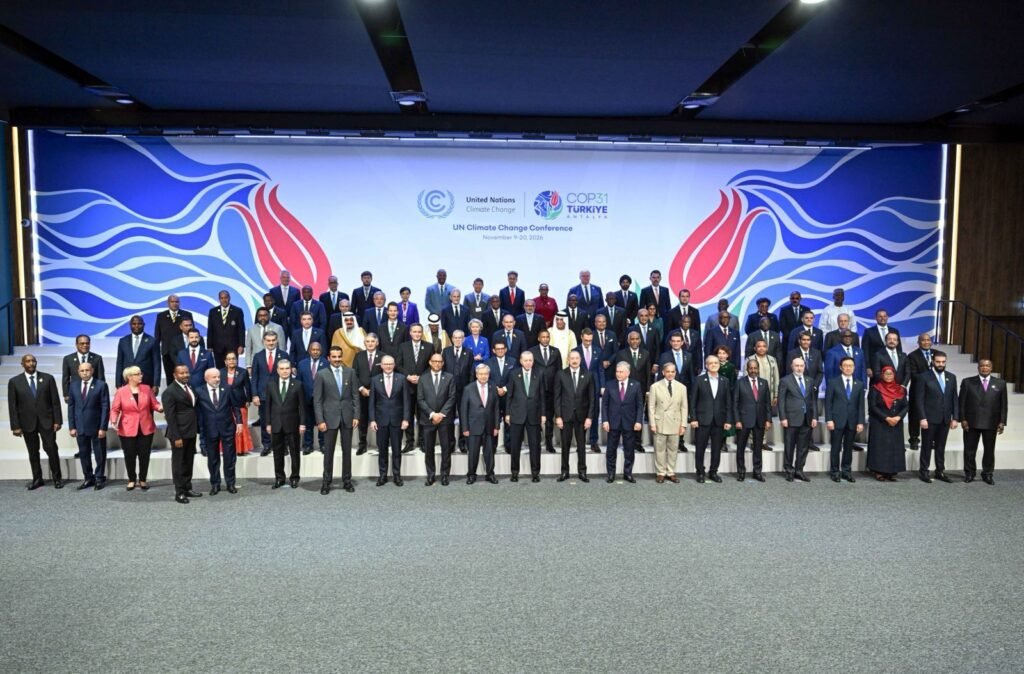
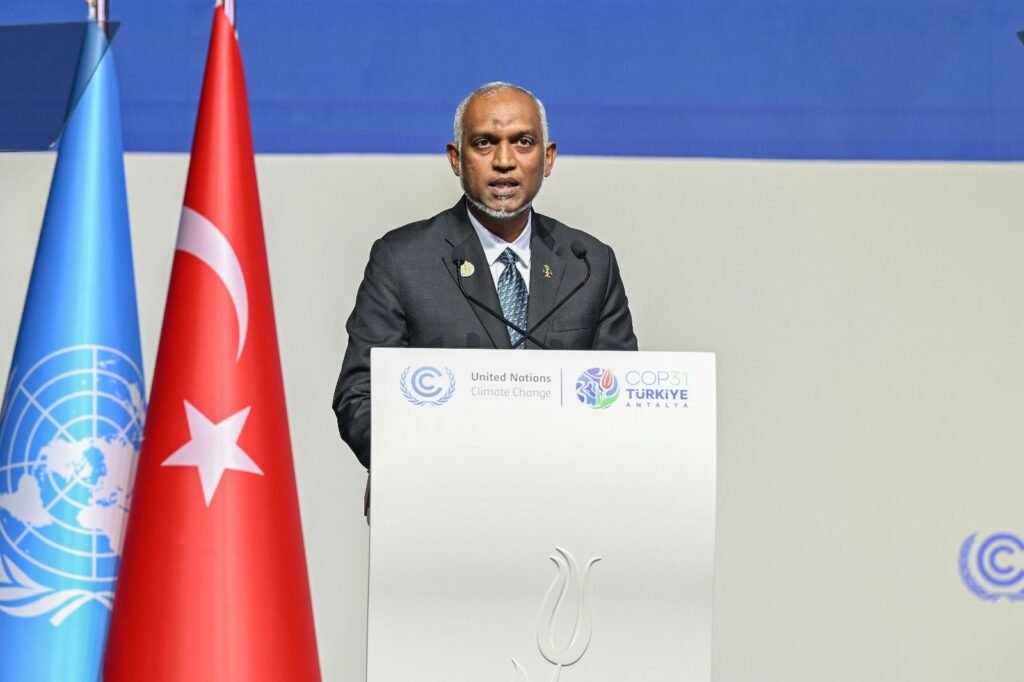
The events in Colombo provide a timely backdrop to the intervention made by Dr. Muizzu at COP31 in Antalya, Turkey on November 11, 2026. Dr. Muizzu questioned why countries highly vulnerable to climate impacts should be expected to borrow heavily to protect themselves against a crisis they have contributed relatively little to creating. “We cannot be expected to borrow our way out of a crisis we did little to create,” he told delegates. His appeal for more predictable grants and fairer international financing arrangements speaks directly to Sri Lanka’s circumstances. Having endured a severe economic crisis, the country must now find ways to protect its development gains against disasters that can erase years of investment in a matter of hours.
When the Cost Goes Beyond the Damage
Advertisement
The destruction caused by Cyclone Ditwah in November 2025 demonstrates how quickly a natural disaster can become a national economic problem. The World Bank’s initial rapid assessment estimated direct physical damage at US$4.1 billion, equivalent to approximately 4% of Sri Lanka’s GDP. This figure did not include lost income, disrupted production or the full cost of recovery and reconstruction. In the transport sector alone, the World Bank subsequently estimated recovery requirements of US$1.31 billion following extensive damage to provincial and rural roads and bridges. Behind these figures are communities whose everyday lives depend on functioning infrastructure.
When a rural road is washed away, a farmer may be unable to transport vegetables to market. A small business may lose customers because deliveries cannot get through. Children may miss school, while patients face longer journeys to reach medical care. The damage to the road is visible. The wider economic losses are often harder to measure. In September 2026, the World Bank approved US$110 million to repair and reconstruct 600 kilometers of cyclone-damaged roads. The project includes improved drainage, landslide protection and updated engineering standards to help the infrastructure withstand future extreme weather. This approach recognizes that simply restoring what existed before a disaster may leave communities exposed to the same risks. Although the precise contribution of climate change to Cyclone Ditwah remains uncertain, rising global temperatures can intensify heavy rainfall associated with severe storms. For Sri Lanka, where floods and landslides already cause substantial damage, building greater resilience is becoming an essential part of development planning.
Why Prevention Deserves Greater Financial Support
One of the strongest points in Dr. Muizzu’s argument concerns how the international financial system values investments that prevent future losses. A renewable energy project can earn revenue by selling electricity. A flood protection scheme strengthened embankment or improved drainage network generally does not generate income in the same way. Yet the benefits can be considerable. Consider Colombo’s recent flooding. Better drainage properly maintained canals, and protected water-retention areas could reduce the disruption caused by intense rainfall. Businesses would be less likely to lose trading days, households would face fewer repair bills and public services could continue operating. The value of these investments lies in the damage they help avoid.
That creates a financing challenge. Governments are often expected to borrow for infrastructure projects even when the benefits are widely shared and cannot be recovered through user charges. For countries already managing substantial debt obligations, this can make essential adaptation investments difficult to finance. Dr. Muizzu’s call for greater grant support is therefore particularly relevant to projects that protect public welfare without generating direct commercial returns. Concessional loans, with affordable interest rates and long repayment periods, can also play a useful role where borrowing remains sustainable. Private investment may be appropriate for projects capable of generating reliable revenue. What matters is choosing financing arrangements suited to the project, rather than treating all climate investments as commercial opportunities.
Different Countries, Familiar Concerns
The Maldives faces an especially difficult future because of its geography. At COP31, Dr. Muizzu noted that approximately 80% of Maldivian islands stand less than one meter above sea level, while nearly half the population lives within 100 meters of the coastline. Protecting shorelines is consequently central to the country’s economic security and the future of its communities. Earlier this year, Dr. Muizzu reported that six coastal protection projects had been completed in 2025, with another 62 at various stages of implementation.
Sri Lanka’s circumstances are different, but coastal communities face their own pressures. Around a quarter of the population lives within one kilometer of the coastline. Fishing settlements, tourism facilities, agricultural land and freshwater supplies are exposed to coastal erosion, flooding and saltwater intrusion. For a fishing family, the loss of a landing site or damage to a home can threaten a livelihood built over generations. For coastal businesses, repeated flooding can make investment and recovery increasingly difficult. The concern is not only about protecting physical assets. It is also about preserving communities and the economic activities that sustain them.
The Widening Gap in Climate Finance
The scale of the global adaptation challenge adds urgency to Dr. Muizzu’s appeal. According to the United Nations Environment Programme’s 2026 Adaptation Gap Report, developing countries will require an estimated US$305 billion annually for adaptation by 2035. Even if the COP30 aspiration to triple international public adaptation finance by that year is achieved, UNEP estimates that the resulting funding would meet only 20% to 29% of developing countries’ needs. This leaves governments facing difficult choices about which investments to prioritize and which risks they can afford to address. It also highlights the need to distinguish between different forms of climate finance. Mitigation funding supports efforts to reduce greenhouse gas emissions. Adaptation finance helps communities prepare for and manage climate impacts. Loss and damage financing addresses harm that cannot be avoided. All three are necessary, but progress in reducing emissions does not remove the need to protect people already experiencing environmental threats. For Sri Lanka, the immediate challenge is particularly visible in damaged roads, flood-prone neighborhoods, vulnerable coastal settlements and communities exposed to landslides.
Getting the Money to Where it is Needed
Even when international climate funds are available, securing support is not always straightforward. Funding applications require detailed project proposals, feasibility studies, technical assessments and financial planning. Institutions must demonstrate that projects are properly designed, environmentally sound and capable of delivering lasting benefits. These requirements are important, but preparing credible proposals takes time, money and specialist expertise. Sri Lanka has taken steps to improve its access to international climate finance. DFCC Bank has been accredited to seek funding directly from the Green Climate Fund since 2023. The Maldives achieved a similar milestone in October 2026, when Maldives Finance and Leasing Company became its first nationally accredited institution. Such accreditation allows national institutions to submit funding proposals without depending entirely on international intermediaries. It can also strengthen local involvement in deciding which projects deserve priority. However, accreditation does not guarantee approval. This is why technical assistance for project preparation deserves greater attention. A community may urgently need flood protection, but without the institutional capacity to develop a convincing proposal, that need may never translate into an approved investment. Sri Lanka’s National Climate Finance Strategy for 2025 to 2030 offers a framework for addressing some of these challenges. Developed with support from UNDP and the United Kingdom, the strategy seeks to incorporate climate priorities into fiscal planning and investment decisions while identifying additional sources of finance. Its success will depend on how effectively national priorities are translated into practical projects, supported by coordination between government agencies, financial institutions and development partners.
Looking Beyond National Income
Dr. Muizzu has also questioned the reliance on income indicators when determining countries’ eligibility for concessional financing. Speaking at COP31 on November 12, 2026, he argued that income alone does not adequately reflect the vulnerabilities facing small states such as the Maldives. The concern has relevance for Sri Lanka. A country’s income classification may indicate its broad level of economic development, but it says relatively little about the damage a major flood, cyclone or landslide could cause. Nor does it fully reflect the pressure that repeated disasters place on public budgets. A country may be making progress in rebuilding its economy while remaining highly exposed to events capable of reversing those gains. Giving greater consideration to climate vulnerability in international financing decisions could help address this imbalance. Such recognition should not mean weaker accountability. Projects must still meet appropriate standards for procurement, environmental protection, technical design and long-term maintenance. The challenge is to make climate finance more accessible without compromising the quality of the investments it supports.
Preparedness Can Make the Difference
Colombo’s recent floods also underline the importance of measures that do not necessarily require large construction projects. Timely warnings, reliable communication and clear emergency procedures can help people protect themselves and their belongings before conditions deteriorate. At COP31, Dr. Muizzu highlighted improved forecasting and community preparedness as essential components of climate resilience. Sri Lanka is taking steps in this direction. In November, an EU-supported initiative was announced to pilot disaster preparedness measures in Badulla and Matara. The programme will work with local authorities, schools and communities to improve warning communication, prepare response plans and conduct simulation exercises. These measures can be especially valuable in areas where residents have limited time to respond to flash floods or landslides. An early warning is useful only when it reaches people in time and they know what action to take. Equally important is maintaining existing infrastructure. Colombo’s flooding demonstrated how blocked waterways and weaknesses in urban planning can worsen the effects of intense rainfall. Addressing such problems requires sustained attention, not only emergency clean-up operations after each disaster.
What this Means for Sri Lanka
Dr. Muizzu’s appeal carries an important message for Sri Lanka as it seeks to strengthen climate resilience while safeguarding its economic recovery. Rebuilding after Cyclone Ditwah, improving Colombo’s flood management and protecting vulnerable coastal communities will require both international support and sound domestic planning. Better land-use policies, regular infrastructure maintenance and stronger institutional coordination are equally essential to reducing future losses. Sri Lanka must also make a stronger case for climate financing that recognizes the wider economic and social benefits of adaptation, supported by an appropriate mix of grants, concessional loans and investment. While the Maldives faces the threat of rising seas, Sri Lanka must contend with recurring floods, damaged infrastructure and disrupted livelihoods. Both countries share an interest in financing arrangements that reflect their vulnerabilities. Ultimately, the success of climate finance should be measured not merely by funds mobilized, but by the communities, livelihoods and development gains it helps protect.
Disclaimer: The opinions and views expressed in this article/column are those of the author(s) and do not necessarily reflect the views or positions of South Asian Herald.