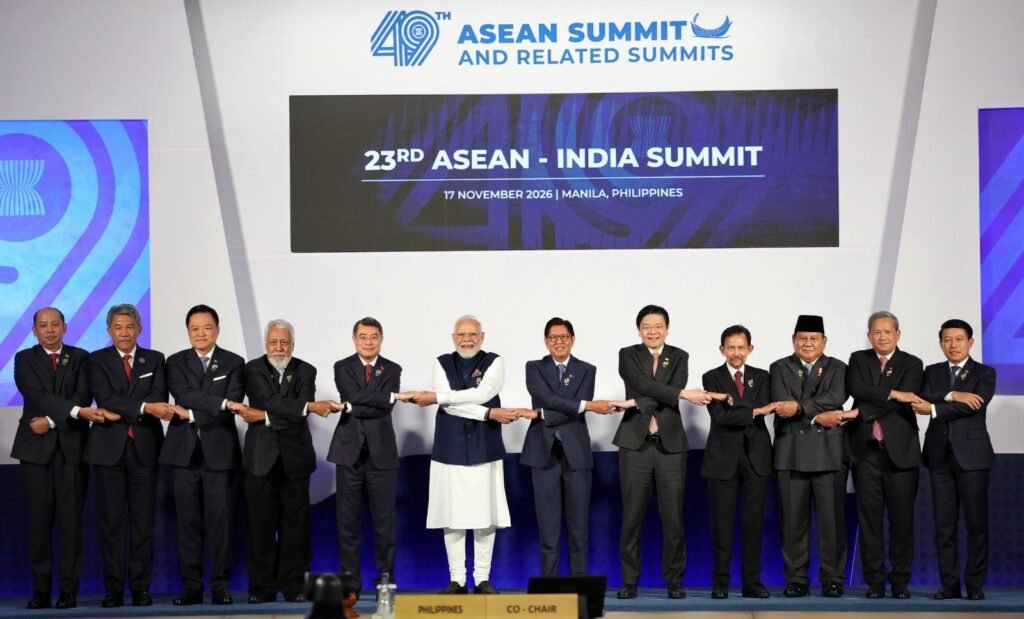
This past week was notable for summitry – first there was the Association of South East Asian Nations (ASEAN) leaders meeting – an annual affair. Then there was the East Asia Summit that brings together the ASEAN countries and others like Australia, India, US, Russia, China, Japan, New Zealand and South Korea. That too is an annual feature.
There was the ASEAN-India summit and a delayed meeting of the leaders of the QUAD countries – i.e., Australia, India, Japan and the US – on the margins of the ASEAN summit. Add to that the numerous bilateral interactions and handshakes. All of them are important in their own right.
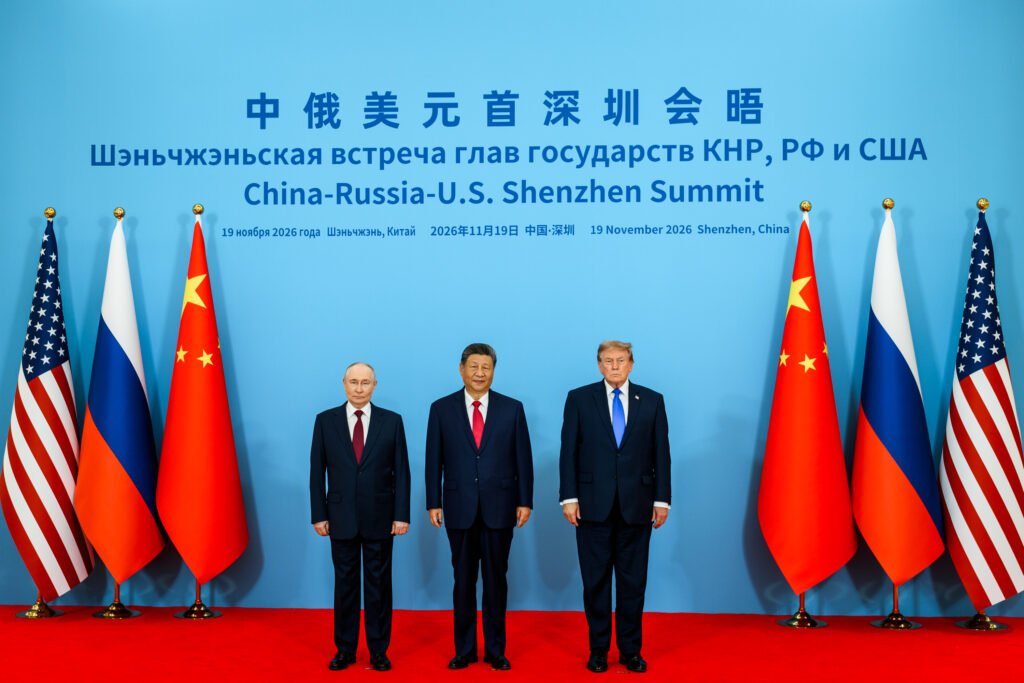
But despite the glamour, glitter and ceremony attached to them, they all paled into insignificance (sadly) with the much-anticipated US-China-Russia trilateral summit shaping up in Shenzhen, in China’s coastal Guangdong province. The summit of the so called “G3” made even the Asia Pacific Economic Cooperation (APEC) conference that China was hosting seem lackluster by comparison.
Analysts’ commentaries have mostly spoken of how the Shenzhen G3 meet was not a repeat of the 1945 Yalta moment. That, the consensus seems to be, was a very different moment in history when then U.S. President Franklin D. Roosevelt, then British Prime Minister Winston Churchill and Soviet leader Joseph Stalin met in Crimea to plan the post-war reorganization of Germany and Europe.
Advertisement
The world of today has given countries the agency to reject what the US, China and Russia may want to impose on others, seems the general consensus. The G3 countries met as competitors; two of the three leaders at the table in Shenzhen started wars that they are now unsure how to stop. The Yalta conference was followed by a period of cooperation among the Allied Powers but the Cold War followed soon after. In the case of the Shenzhen summit, Donald Trump, Vladimir Putin and Xi Jinping met as rivalries and tensions among them are intensifying.
However, one can’t deny that the world is at an inflexion point, with the old order – set at Yalta—now broken and a new one expected to take its place. At Yalta, Roosevelt and Churchill seemed more closely aligned than Stalin. At Shenzhen, it seemed that it was Russia and China who were closer to each other than to the US. And who’s to say whether the next Cold War wont’ be triggered by the tech competition between US and China?
So how does this impact India? Very significantly. India has to keep its eyes open for new friends and partners who can ally with it on specific issues and commonalities. Days when you could count on friends on a long-term basis and on issues across the board are likely gone.
At Shenzhen, the picture that seemed to emerge was that of the G3, perhaps followed by a rung of so-called middle powers and then others. In this context, the best New Delhi can do is to double down on its multi-alignment strategy – forging newer and multiple coalitions as time and issues demand. The constant lookout of partners with aligning interests will be challenging. And require considerable dexterity in diplomacy.
Disclaimer: The opinions and views expressed in this article/column are those of the author(s) and do not necessarily reflect the views or positions of South Asian Herald.