Join WhatsApp Channel

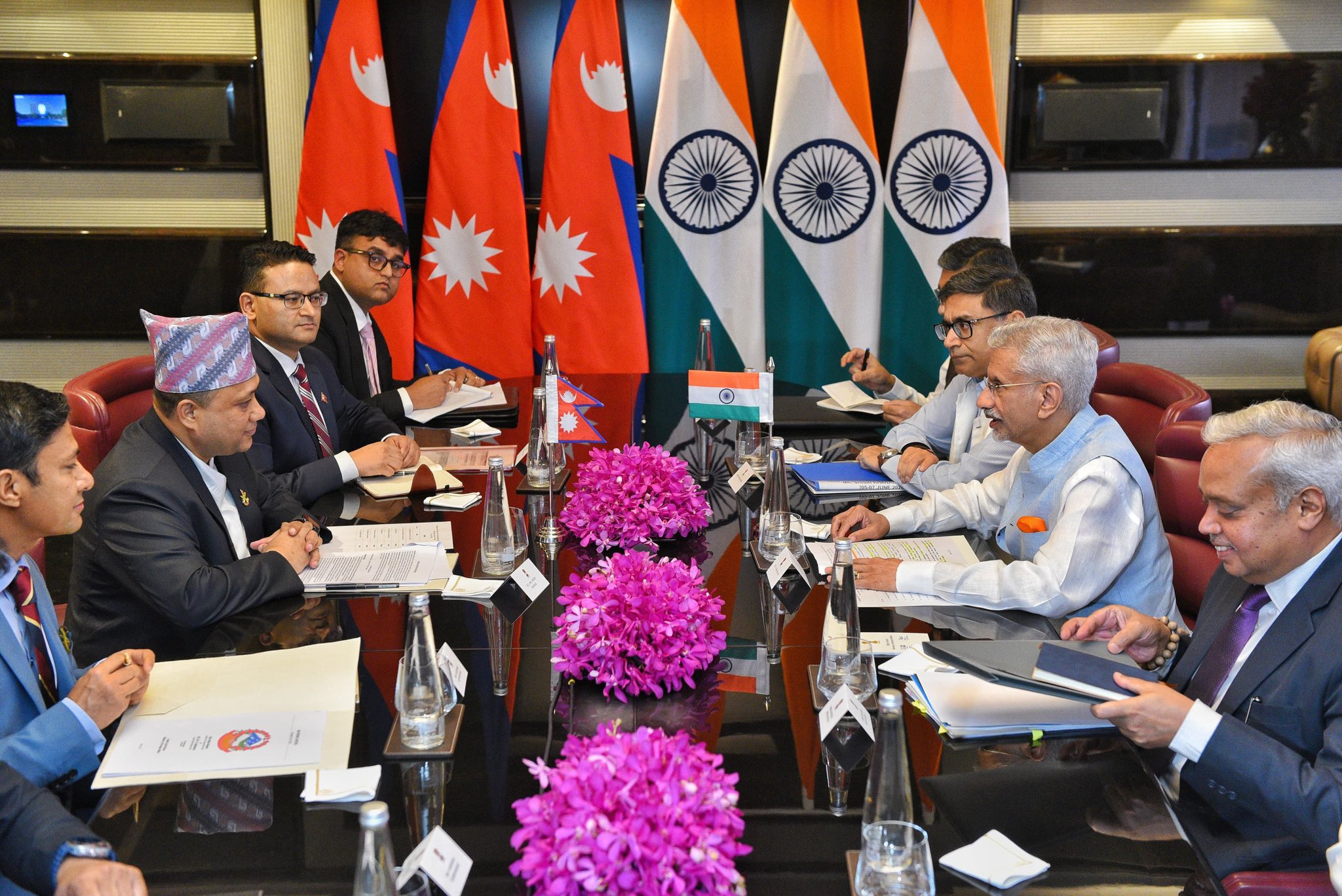
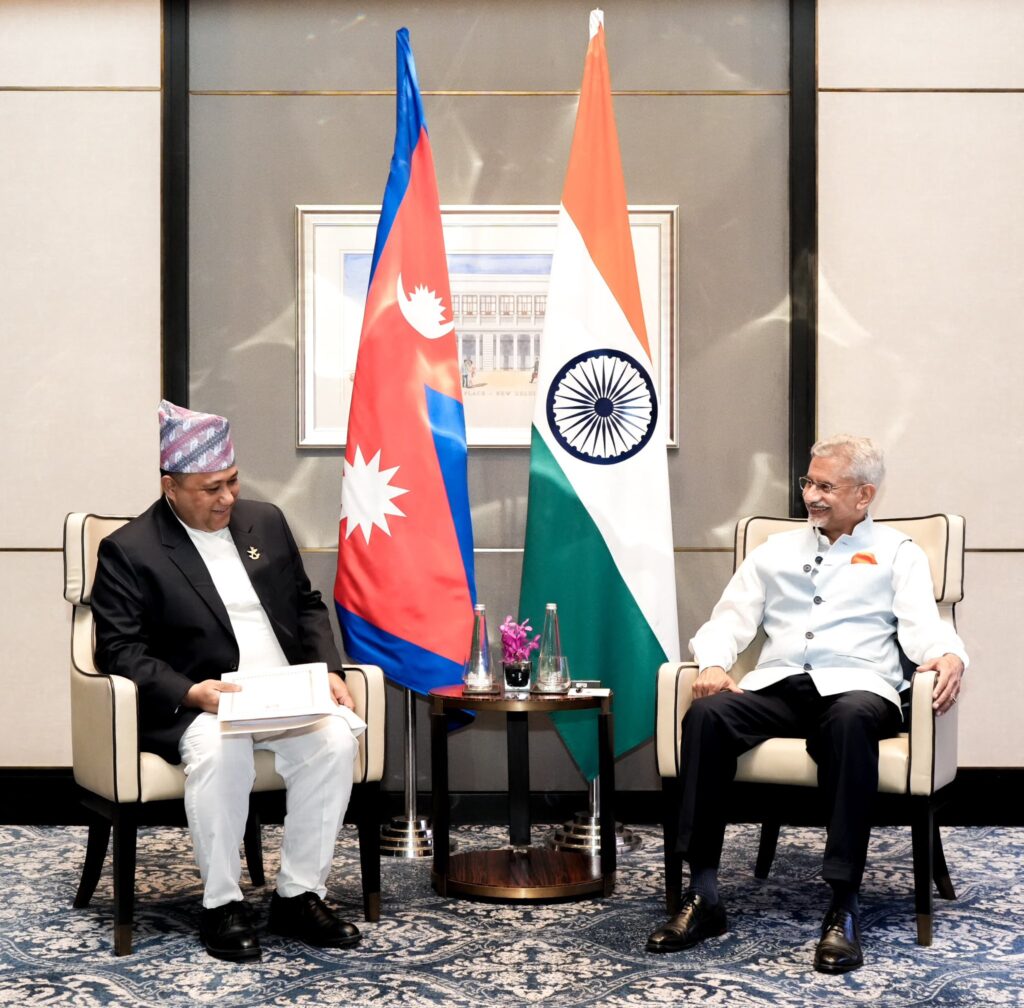
The bilateral meeting between Nepal’s Foreign Minister Shisir Khanal and India’s External Affairs Minister S. Jaishankar in New Delhi marks another important milestone in the evolving partnership between Nepal and India. The discussions reflected not only the historical and cultural closeness between the two neighbors but also their shared vision for a future built on connectivity, economic growth, digital innovation and people-centric development.
For decades, Nepal and India have maintained one of South Asia’s most unique relationships. Open borders, deep cultural affinities, religious connections, family ties and extensive economic exchanges have created a relationship that goes far beyond conventional diplomacy. The latest ministerial dialogue demonstrates how both countries are working to adapt this traditional friendship to meet contemporary challenges and opportunities.
One of the most significant announcements was the operationalization of Person-to-Person (P2P) cross-border digital payment transactions under the agreement between Nepal Clearing House Limited (NCHL) and India’s National Payments Corporation of India (NPCI). This initiative has the potential to transform financial interactions between citizens, tourists, students and businesses on both sides of the border. By making digital transactions faster, safer and more accessible, the two countries are taking a major step toward greater economic integration.
Equally important was the handover of 84 post-earthquake reconstruction projects, including 72 health sector facilities and 12 cultural sector projects built with Indian development assistance. These projects symbolize India’s long-standing commitment to supporting Nepal’s recovery and development efforts following the devastating earthquakes. Beyond infrastructure, such cooperation strengthens trust and demonstrates the practical value of development partnerships.
The signing of a Memorandum of Understanding between Kathmandu University’s Centre for Digital Public Infrastructure and Artificial Intelligence and India’s Digital India Bhashini Division represents another forward-looking initiative. The collaboration on a “Voice First” language translation platform reflects the growing importance of digital public infrastructure and artificial intelligence in enhancing accessibility, education and public service delivery. It also highlights how Nepal and India are expanding cooperation into emerging technologies that will shape the future of governance and communication.
The meeting also reviewed progress in trade, connectivity, energy and water resources management. These sectors remain central pillars of bilateral cooperation. Cross-border railway projects, integrated check posts, petroleum pipelines and electricity transmission infrastructure have significantly enhanced connectivity in recent years. Nepal’s growing hydropower exports to India have opened new possibilities for regional energy security and economic prosperity.
Energy cooperation, in particular, has emerged as a transformative area. Nepal’s vast hydropower potential, combined with India’s growing energy demand, creates a natural partnership that can benefit both countries. Continued investments in transmission lines and power trade agreements are helping turn this vision into reality.
People-to-people ties continue to remain the strongest foundation of Nepal–India relations. Millions of citizens travel freely across the border for work, education, tourism, pilgrimage and family visits. The ministers’ emphasis on strengthening these connections, including through sports and cultural exchanges, underscores the enduring human dimension of the relationship.
At a time when South Asia faces economic uncertainties, climate challenges and geopolitical shifts, the Nepal–India partnership demonstrates the value of pragmatic cooperation rooted in mutual respect and shared interests. The discussions in New Delhi indicate that both governments are committed to broadening collaboration across traditional and emerging sectors.
As Foreign Minister Khanal concludes his visit, the outcomes of the meeting send a clear message: Nepal and India are not only preserving their historic friendship but also actively shaping a modern partnership focused on development, digital innovation, connectivity and regional stability. The challenge ahead will be to ensure timely implementation of announced initiatives so that citizens in both countries can experience the tangible benefits of this growing cooperation.
The future of Nepal–India relations lie in transforming geographic proximity into economic opportunity, cultural affinity into stronger people-to-people engagement and technological collaboration into shared prosperity. The latest ministerial dialogue has provided a strong foundation for achieving these goals. This version is suitable for publication in newspapers, policy journals, embassy newsletters, or diaspora media platforms.
Related posts:
 Nepal’s Election as a Geopolitical Test
 Nepal’s Gen-Z Takes Politics From the Streets to the Ballot Box
 Nepal’s Envoy to UN Highlights Democratic Transition, Gen Z Protests, and Global Crises at UNGA 80
 Nepal-America International Film Festival Announces 2025 Lineup Featuring 30 Films from 14 Countries