Join WhatsApp Channel

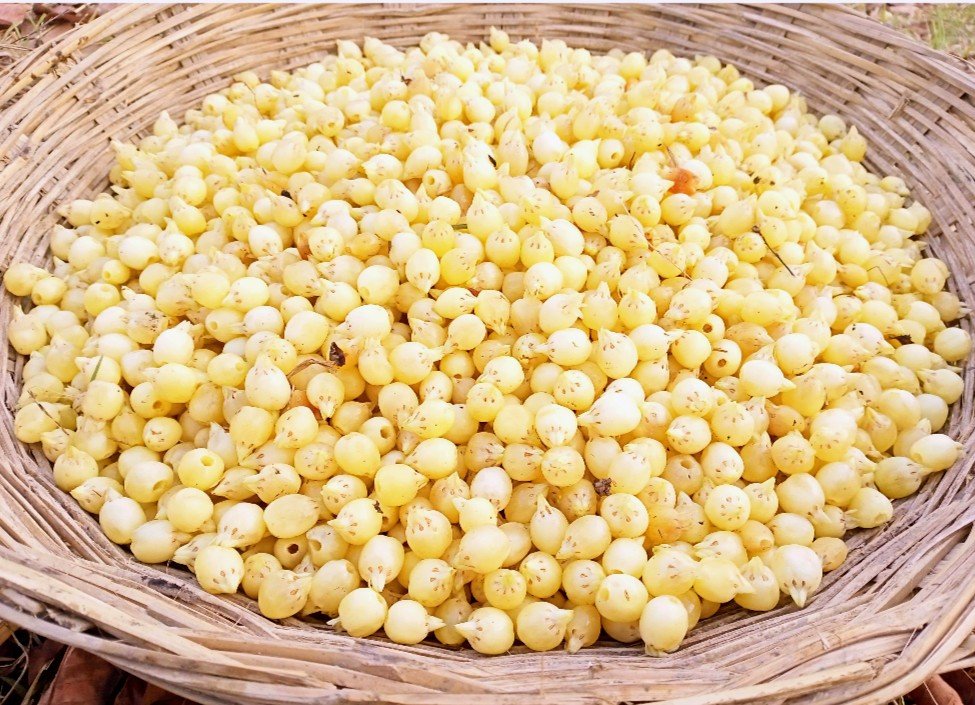
In the heart of Jharkhand’s lush forests, where the Sal and Bamboo stand tall, there exists a tree that has sustained communities for generations. The Mahua tree—known scientifically as Madhuca longifolia—is a living library of tribal wisdom, a pharmacy, a pantry, and a source of livelihood all wrapped into one. Yet, ask most people outside these forests about Mahua, and they’ll likely mention one thing: alcohol.
This narrow view is something that troubles Deepak Oraon, a community elder from the Chotanagpur region, who has spent his life beneath the shade of these trees. “It’s like judging an entire book by a single page,” he says, his fingers tracing the rough bark of a Mahua trunk. “For my people—the Munda, the Oraon, the Kharia—this tree has been everything. But the world only sees the bottle.”
His frustration is understandable. For centuries, tribal communities have fermented the nectar-sweet flowers of the Mahua to create a traditional beverage that features prominently in social gatherings, rituals, and even the creation myths passed down through generations. But this age-old practice became a liability when colonial administrators viewed it as a threat to social order. The Mhowra Act of 1892 pushed production underground, and the stigma has proven remarkably stubborn.
Even today, in Jharkhand, the sale of Mahua liquor remains illegal while neighboring states like Odisha permit it. The social judgment runs deep. Deepak recalls conversations with women from nearby villages who felt ashamed to sell Mahua products, enduring taunts and being labelled as engaging in “lowly” work. “The government never cared for it and wanted it gone.” But those who have looked beyond the bottle have discovered something remarkable.
The Tree That Gives and Gives
Nisha Kumari, a nutrition researcher who has studied forest foods across eastern India, believes Mahua represents one of the most underutilized resources in the subcontinent. “When I first examined the nutritional profile of Mahua flowers, I was stunned,” she says, pulling out a worn notebook filled with data. “We’re talking about fifty-two percent invert sugar, proteins, calcium, potassium, iron—these aren’t just wild edibles. These are functional foods.”
The flowers, which carpet the forest floor during the lean agricultural season from March to May, have long been a vital resource for women in particular. “They wake before dawn, walking miles to collect what has fallen overnight,” Nisha explains. “It’s backbreaking work, but it puts food on the table when crops are still growing.”
Beyond nutrition lies a deeper layer of traditional knowledge that modern science is only beginning to validate. For tribal communities, Mahua has served as a first line of defense against illness. “When my grandmother gave me Mahua-infused milk for a cold, I never questioned it,” Deepak remembers with a smile. For new mothers struggling with low milk production, Mahua preparations were the go-to remedy—a time-honored practice that no one in the village thought twice about.
The leaves, the flowers, the bark, the seeds—every part of the tree finds use in traditional medicine. An infusion of the bark treats diarrhea and diabetes. The flowers act as a cooling agent and astringent. The oil from the seeds soothes skin conditions. And then there are the more specific applications: bronchitis, fevers, headaches, rheumatism.
“The outsider calls it folklore,” Nisha says, tapping her notebook. “The scientist calls it pharmacology.”
When Tradition Meets Laboratory
The convergence of ancient wisdom and modern research has yielded fascinating results. Nisha ticks off the findings on her fingers like a list of revelations. “Flavonoids, saponins, tannins, terpenoids—these are the compounds that make Mahua special,” she explains. “And the research community has been busy.”
One study that particularly captures the irony of Mahua’s dual identity involves its hepatoprotective properties. In one experiment, scientists gave lab rats paracetamol to trigger liver injury and subsequently treated them with Mahua flower derivatives, Nisha explains. The liver enzymes normalized. The cells regenerated. The same flower that produces alcohol contains compounds that protect the liver from damage.
The list of documented pharmacological activities grows longer each year. The bark extract shows promise as an antidiabetic agent, lowering blood sugar levels. Seed saponins demonstrate anti-inflammatory effects. Antimicrobial properties have been observed against pathogens like E. coli. Wound healing capabilities have been documented. And most tantalizingly, preliminary research hints at anticancer potential.
By 2026, a comprehensive review reaffirmed Mahua’s therapeutic possibilities for treating gastrointestinal disorders and diabetes. “This isn’t a tree,” Nisha declares emphatically.
“This is a pharmacy growing wild in our forests.”
The Women Who Are Rewriting the Story
Puniya Xalxo from Sosai village embodies the changing relationship between communities and the Mahua tree. Years ago, she sold Mahua liquor by the roadside and endured the whispers and side-eyes. Today, she’s part of a quiet revolution.
“In our villages, we realized we had a choice,” Deepak explains. “We could continue producing the liquor, with all its stigma and legal troubles, or we could find another path.”
That path has led to Mahua laddoos—nutritious sweet snacks made from the flowers, along with jellies, pickles, and other value-added products. A company called Latifolia Enterprises now employs thousands of women doing exactly this. They wake early, collect the fallen flowers, and transform them into healthy food products that are finding markets beyond the village.
“These laddoos aren’t just fighting malnutrition in our communities,” Deepak notes, his voice rising with pride. The same products are also helping communities move away from the destructive grip of alcohol dependence. The same woman who was once embarrassed to sell Mahua liquor now carries a laddoo as a symbol of dignity and empowerment.
The Forest Dilemma
But not all challenges are social. Deepak’s expression grows serious when the conversation turns to environmental practices. “There are old ways that are destroying our future,” he admits, referring to the practice of setting forest fires to clear leaves before collecting Mahua flowers. “It’s lazy and destructive. The fire kills new saplings, damages the soil, and makes it harder for the forest to regenerate.”
Change is coming, however. In villages around Pakur, communities are adopting fire-free collection methods. Instead of fire, they use brooms to carefully gather the flowers. They make compost from the leaves instead of burning them. “This is the way forward,” Deepak insists. “If we want Mahua to thrive—for its medicine, its food, its economic power—we must treat the forest with respect.”
A Reassessment of Value
The irony of India’s relationship with Mahua isn’t lost on observers. Deepak recalls a conversation with an English anthropologist who tasted Mahua and expressed bewilderment. “He couldn’t understand why Indians would prefer foreign wines and scotch when something so fresh and rejuvenating grow right here,” Deepak says, laughing. “He made an excellent point.”
States like Madhya Pradesh and Chhattisgarh are beginning to legalize Mahua liquor as a heritage product, acknowledging its cultural significance. The legal landscape is shifting, even if slowly. But for those who live intimately with the tree, the most important transformation has already begun.
“People are starting to see beyond the bottle,” Deepak says, looking up at the canopy. “They’re seeing food, medicine, livelihood, and a sustainable future all wrapped into one. That’s what Mahua has always been to us. It’s what we’ve been trying to tell the world.”
Looking Forward
The Mahua tree stands at a crossroads. Its potential as a source of novel drugs, nutritional supplements, and sustainable livelihoods is becoming clearer by the day. Yet the old stigmas persist, and environmental threats loom.
“The gift is there,” Deepak reflects, his hand resting on the Mahua trunk as if drawing strength from it. “The question is whether we’re wise enough to receive it properly. If we protect this tree, it will protect us. That’s been the contract between forests and people for as long as anyone remembers. It’s time the rest of the world understood that.”
In the shade of the Mahua, where generations of Oraon, Munda, and Kharia people have gathered, a conversation continues—about tradition and science, about stigma and dignity, about survival and sustainability. And at the center of it all stands a tree that has always been more than anyone assumed.
(The bottle was never the full story. It was just where most people stopped reading.)
Disclaimer: The opinions and views expressed in this article/column are those of the author(s) and do not necessarily reflect the views or positions of South Asian Herald.
Related posts:
 Travelogue: Where Mountains Speak Through Pines
 India Reports Rising Forest Cover, but Experts Warn Gains May Mask Degradation
 Emmy-Nominated ‘Destination Oak Tree Road’ Chronicles Indian-American Legacy in New Jersey
 Zohran Mamdani Announces Leadership Appointments Including Nisha Agarwal as Commissioner of MOPD