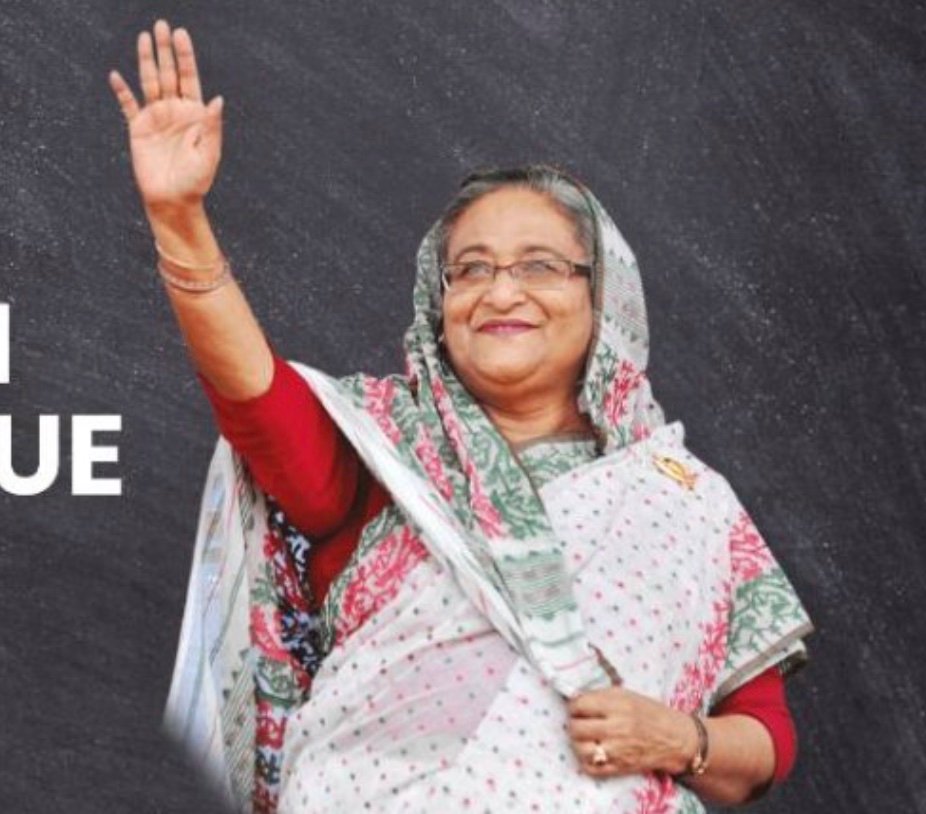
Former Bangladesh Prime Minister Sheikh Hasina has urged the US to pay greater attention to what she described as a worsening human rights situation in Bangladesh, calling for free elections, independent courts and protection for political opposition.
Speaking from Washington, DC, Hasina said Bangladesh should be judged by universal principles, including constitutional governance, due process, freedom of expression and equal protection under the law.
“I do not ask the US to choose Sheikh Hasina or the Awami League. I ask the US to choose democracy. I do not ask for interference but for support of non-interference,” she said, urging Washington to support free and inclusive elections.
The former prime minister, daughter of Bangladesh’s founding leader Sheikh Mujibur Rahman, argued that political disagreements should not lead to the exclusion of entire parties.
Advertisement
“Democracy cannot survive when dissent becomes a pretext to exclude entire political parties or silence millions of citizens,” she said. Supporters of the Awami League, she added, were Bangladeshi citizens whose place in political life should be respected, just as the rights of those who opposed her government must be protected.
“The future of Bangladesh must be built on reconciliation, not revenge.”
Hasina acknowledged questions surrounding her government, the events of 2024 and their aftermath, saying she was prepared to address them. Allegations against anyone, including herself, should be resolved through fair legal proceedings rather than political declarations, she said.
“Justice demands fairness for victims of violence, families who suffered loss, those unlawfully detained, and the accused who deserve a fair defense. There can be no lasting peace without justice, and no justice without due process.”
She called for a political environment where elections were decided by voters rather than violence, journalists could report without fear, young people could criticize freely and economic opportunities depended on merit rather than political connections.
Hasina also highlighted Bangladesh’s strategic position between South and Southeast Asia and its importance in the Bay of Bengal and the Indo-Pacific. The country’s economic links with the US, including livelihoods dependent on the American market, made its stability important to both sides, she said.
She called for stronger trade and investment ties with Washington, greater cooperation in education and technology, and closer security collaboration. At the same time, Bangladesh should maintain constructive relations with the US, India, China, Japan and Europe.
“Bangladesh should never become a battleground for great-power rivalry but rather a bridge between regions,” she said.
Hasina defended her government’s development record, citing progress in infrastructure, electricity access, digital connectivity, poverty reduction and Bangladesh’s international standing. However, she said economic progress could not come at the expense of political freedoms.
“Development must never justify restricting democracy, nor should democracy become an excuse to undermine development,” she said. “Bangladesh needs both democracy and development; freedom and security; justice and reconciliation; strong institutions rather than strong individuals.”
She also praised Bangladeshi-Americans for their contributions as entrepreneurs, professionals, academics, workers and community leaders, describing the community as a vital link between the two countries.
Hasina urged Washington to support Bangladesh’s constitutional institutions without dictating who should govern the country, and said her priorities included independent courts, press freedom, political association, minority protections, due process, economic openness and peaceful political competition.
“I ask that Bangladeshis determine their government through free, inclusive political processes,” she said.