Join WhatsApp Channel


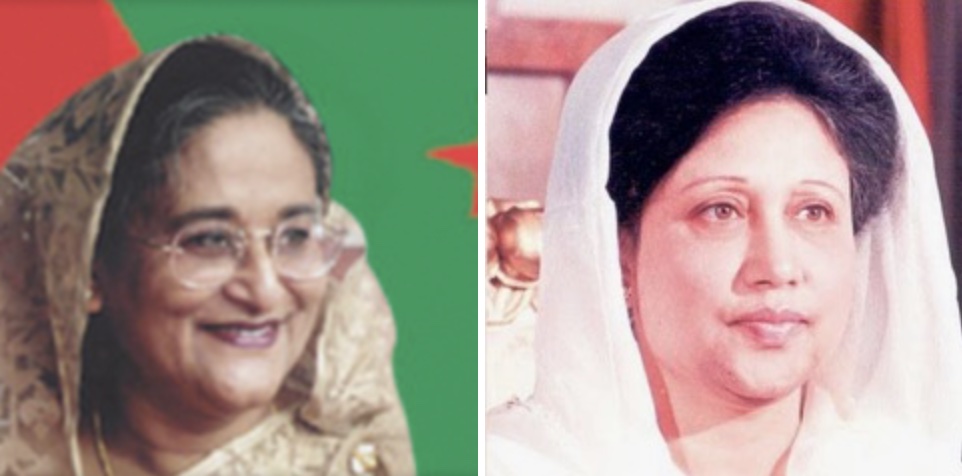
Bangladesh has entered 2026 without the two women, who monopolized its politics for three decades. Khaleda Zia died on December 30th at 80; Sheikh Hasina lives in Indian exile, sentenced to death in absentia after her security forces massacred student protesters in August 2024.
Their simultaneous exit—one biological, one political—has created a vacuum that could either liberate or fracture South Asia’s most densely populated nation.
The symmetry of their fates was almost theatrical. Both were widowed by assassination: Hasina’s father, Sheikh Mujibur Rahman, Bangladesh’s founding leader, was murdered in 1975; Khaleda’s husband, President Ziaur Rahman, in 1981. Neither sought power initially; tragedy thrust politics upon them. But once anointed as martyrs’ heirs, each came to view the other as an existential threat. Bangladesh became their chessboard, its institutions mere pieces in an endless vendetta.
Their brief cooperation in 1990—toppling military dictator Hussain Muhammad Ershad—proved the exception. For the next three decades, power alternated between them in a zero-sum rotation masquerading as democracy. Courts were weaponized, parliaments boycotted, elections contested not at ballot boxes but in the streets. Each accused the other of corruption and authoritarianism. Both were correct.
Yet this toxic duopoly delivered results. Under Hasina, GDP grew consistently, infrastructure expanded, and Bangladesh evolved from a humanitarian catastrophe into a lower-middle-income success story. Under Khaleda, parliamentary democracy was restored and foreign investment encouraged. The problem was never competence—it was trust. Every gain was undermined by the certainty that the next election would trigger recrimination, imprisonment, or worse.
The System Breaks
That brittle equilibrium shattered last August. Student protests against economic inequality and authoritarian overreach spread rapidly. Hasina’s response—lethal force—backfired spectacularly. Dozens died. The state fractured. She fled to India, where she remains politically radioactive: useful to New Delhi as a hedge but too damaged to rehabilitate.
Into the breach stepped Muhammad Yunus, the Nobel laureate microfinance pioneer, leading an interim government tasked with organizing credible elections. His appointment was domestically palatable but internationally revealing. Yunus is Western-educated, globally connected, and deeply respected in Washington—precisely the profile that fuels conspiracy theories in Dhaka about American orchestration of Hasina’s fall.
The evidence for U.S. involvement remains circumstantial: visa restrictions on Bangladeshi officials, public criticism of democratic backsliding, rhetorical support for protesters. But in a region conditioned by Cold War meddling, perception matters more than proof. Hasina’s supporters are convinced; India is wary; China is watching.
The Dynastic Default
The February 2026 elections will not produce institutional renewal. Instead, they will likely install Tarique Rahman, Khaleda’s son and the BNP’s acting chairman, as prime minister. Rahman spent 17 years in exile, tried and convicted in absentia during Hasina’s rule on corruption charges the Supreme Court later dismissed. He returned to Dhaka in December, cleared but not cleansed.
For BNP supporters, Rahman represents continuity without paralysis—a chance to restore electoral competition without reopening old wounds. For skeptics, he is dynasty in a cheaper suit, burdened by his mother’s legacy and untested by governance. The uncomfortable truth is that he is the only national leader with organizational reach and electoral momentum. The Awami League, leaderless and tainted by Hasina’s authoritarian excesses, faces electoral annihilation.
This is not renewal; it is replacement. Bangladesh is not escaping dynastic politics—it is trading one dynasty for another. The deeper question is whether Rahman can transcend his inheritance. Early signals suggest calculation rather than vision: he speaks of institutional reform but offers few specifics; he promises foreign policy pragmatism but faces inherited constraints.
The Geopolitical Trap
Rahman’s most immediate challenge will be external. India views Hasina’s fall as a strategic loss. She suppressed anti-India insurgents, expanded cross-border connectivity, and kept Islamist forces marginalized. Her exile has left New Delhi exposed and anxious. India wants assurances that a BNP government will not reverse course, but it cannot demand them openly without appearing imperial.
China, characteristically pragmatic, has fewer concerns. Beijing invested heavily in Bangladeshi infrastructure under both Begums, cultivating ties with all players while committing to none. A BNP victory would likely rebalance Dhaka’s foreign policy—reducing Indian overdependence while maintaining Chinese projects—an outcome Beijing would welcome.
The United States remains the wild card. Washington’s criticism of Hasina intensified before her fall, fueling allegations of regime-change ambitions. American officials deny involvement, but denials are cheap. The interim government’s Western-friendly profile reinforces suspicions. If Rahman wins, he will face pressure to demonstrate democratic credentials Washington can defend—while avoiding provocations that alienate India or China.
This triangular diplomacy offers little room for error. Rahman inherits a country trapped between a resentful neighbor, an opportunistic investor, and a distant superpower suddenly attentive to Bangladeshi democracy. Missteps could invite external meddling; overcaution could paralyze governance.
What Comes Next
The likeliest scenario is muddled continuity. Rahman wins narrowly, forms a fragile coalition, and governs cautiously—pursuing incremental reforms while managing competing foreign pressures. Democratic institutions remain weak but functional. Economic growth resumes but inequality persists. Bangladesh muddles through, as it has for decades.
The darker alternative is institutional collapse. A disputed election triggers street violence. The military intervenes, either overtly or through a puppet civilian government. Bangladesh reverts to authoritarianism—this time without even the fig leaf of dynastic legitimacy. India and China compete for influence; America lectures from afar.
The optimistic scenario—genuine institutional renewal, power dispersed beyond personalities, politics rooted in policy rather than vendetta—requires more than an election. It demands constitutional reform, judicial independence, civil service professionalization, and media freedom. None of this is on Rahman’s agenda, and none of it can be imposed from outside.
The Unfinished Promise
Khaleda Zia’s death and Sheikh Hasina’s exile have closed Bangladesh’s most destructive political chapter. For three decades, the country lived under the shadow of two women whose personal tragedies calcified into national paralysis. Their rivalry brought both democratic revival and democratic decay—elections without legitimacy, growth without equity, stability without trust.
The vacuum they leave is dangerous but not determinative. Bangladesh could fill it with stronger institutions, broader political participation, and genuine accountability. More likely, it will fill it with another dynasty, another strongman, or—most dangerously—another general.
History offers no guarantees. But for the first time in decades, Bangladesh’s future is no longer hostage to the past. Whether that freedom produces renewal or chaos will be determined not in February’s election, but in the years that follow—when the performance must finally match the promise, and when dynasty must give way to democracy, or else to something far worse.
Disclaimer: The opinions and views expressed in this article/column are those of the author(s) and do not necessarily reflect the views or positions of South Asian Herald.
Related posts:
 Why Political Uncertainty in Bangladesh Demands India’s Attention
 Legendary Musician A R Rahman Records Exclusive Performance in Support of Vice President Kamala Harris for US President
 Record 214 Candidates in Alberta By-Election Push Elections Canada to Use Write-In Ballot
 The Fall of Sheikh Hasina: Death Sentence Shakes South Asia