Join WhatsApp Channel

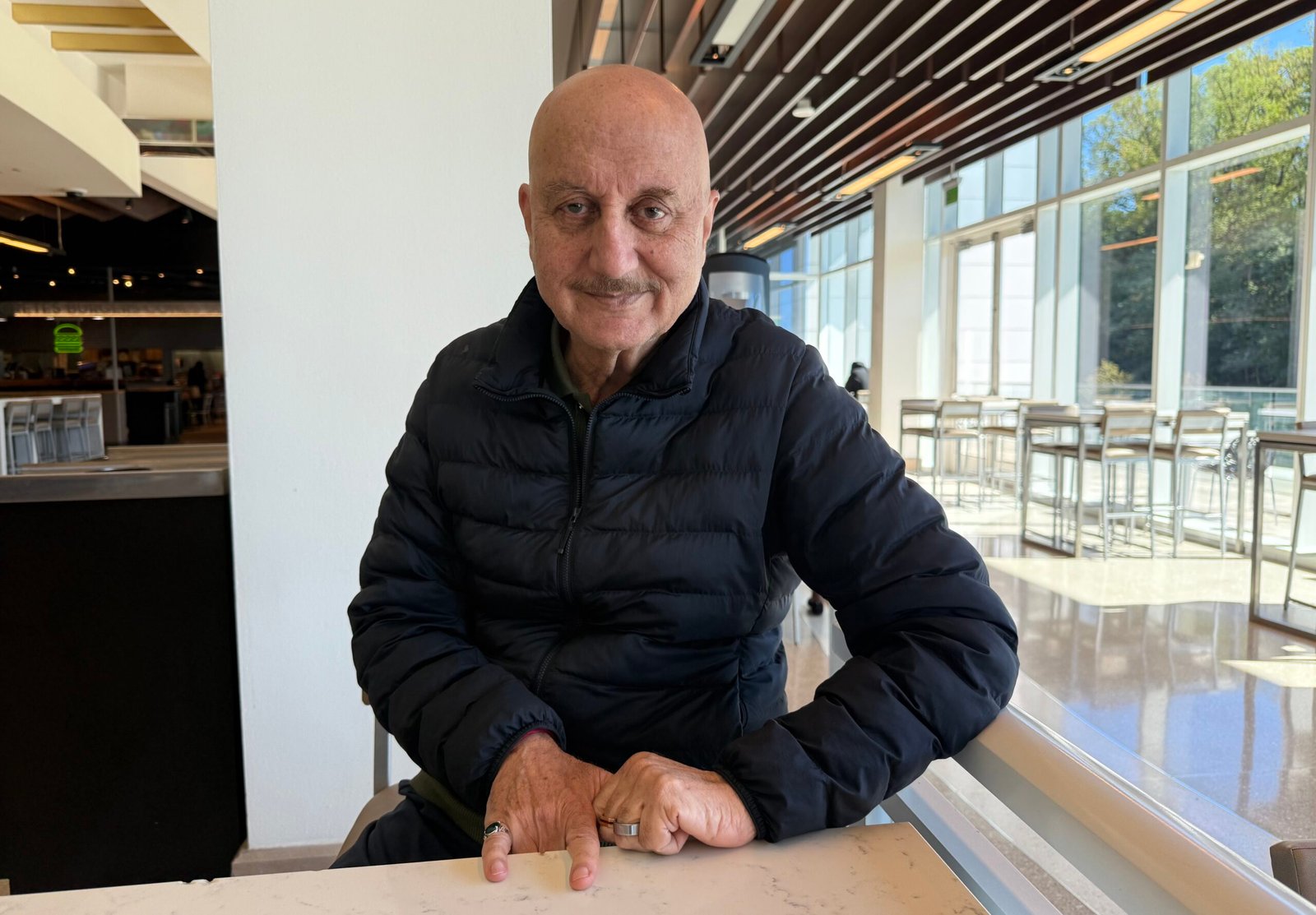
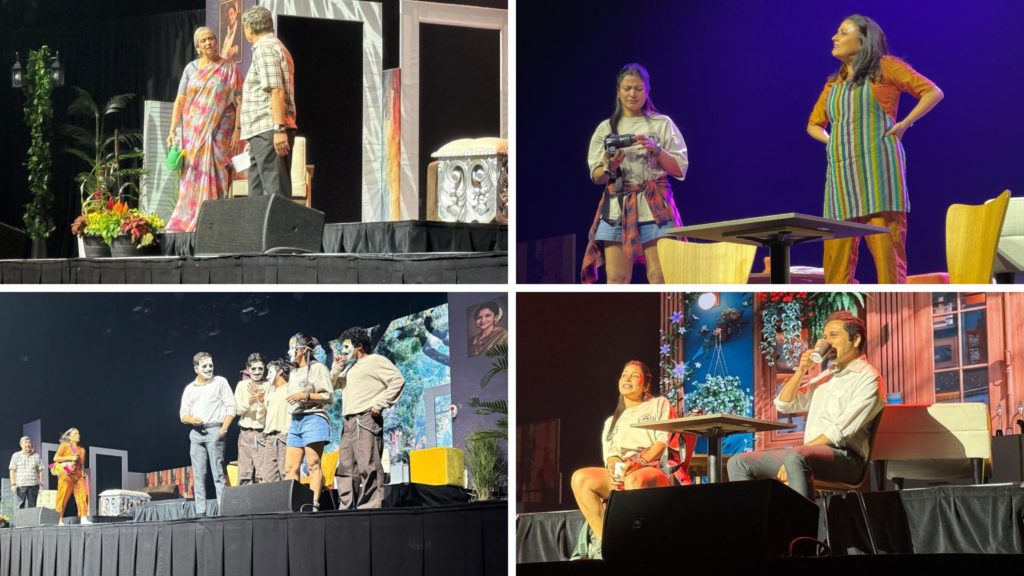
For Padma Bhushan Anupam Kher, Jaane Pehchaane Anjane brings together humor, music and a subject that resonates across generations: loneliness.
During the play’s U.S. and Canada tour, the veteran actor, director, and producer spoke with South Asian Herald in an exclusive interview on October 7, 2026, ahead of his performance at MGM National Harbor in Maryland. During the interview he discussed about the play’s reception, his collaboration with Swaroop Sampat and the emotional connection many first-generation Indian Americans retain with India.
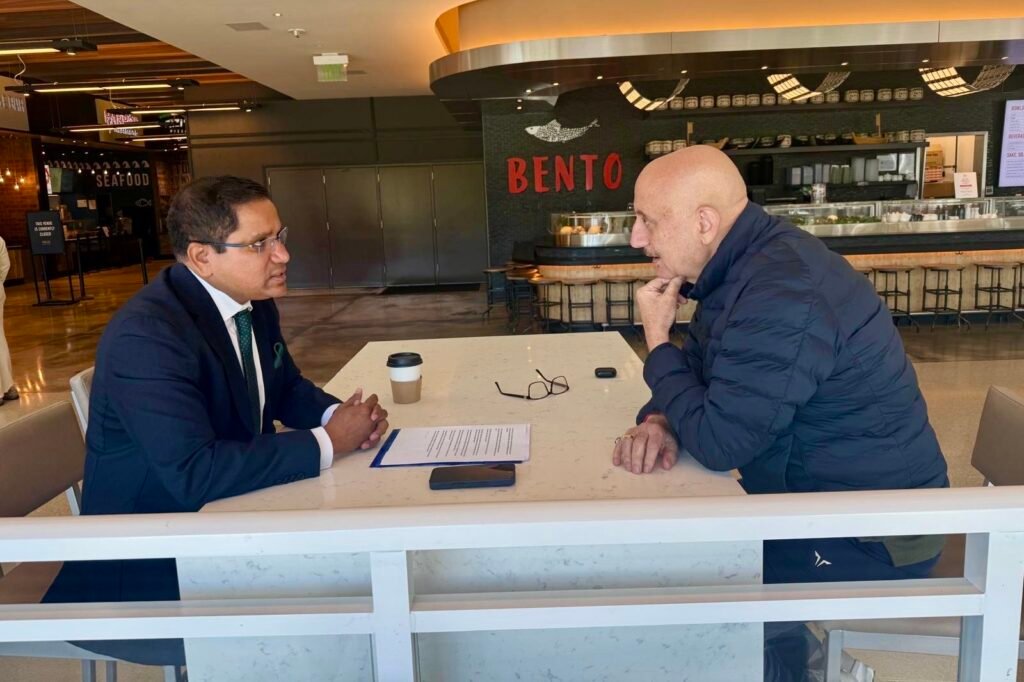
In this conversation, Kher also reflected on his friendship with Robert De Niro, the personal significance of Tanvi The Great and his plans to direct and star in Saaransh 2. Discussing his upcoming films, experiences in Hollywood and hopes for India, he maintained the sense of wonder that, he says, continues to shape his life and work.
How has the U.S. and Canada tour of Jaane Pehchaane Anjane been so far? How are you feeling about your performance at MGM National Harbor in Maryland?
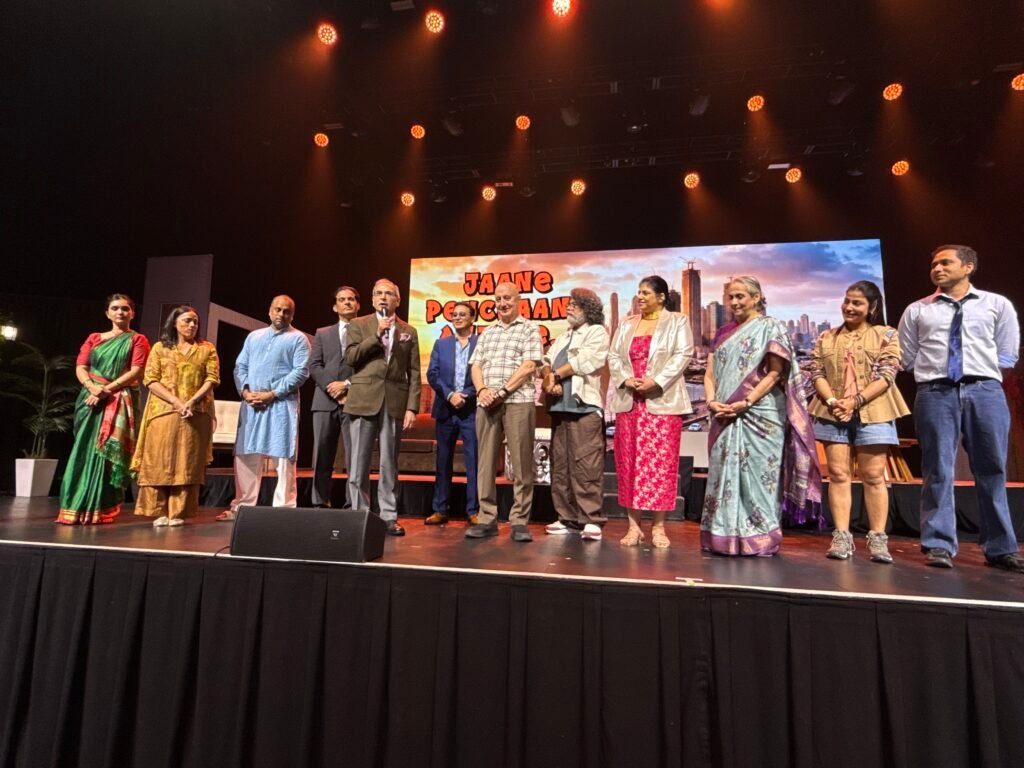
Let me use a term we use in cinema: a smash hit. It has been a smash hit. We have had sold-out shows, full houses and an amazing response. The play is so impactful that even after the show, people keep talking about it for weeks and weeks.
The response on social media has been phenomenal because the play deals with a very common issue today, loneliness, but does so with a sense of humor. Humor is very important when people come to enjoy a show. When you can lace an important message with humor, it can work very well.
On a personal note, I have received so many citations, proclamations and commendations. For that, I am thankful to Indian cinema. I am a product of Indian cinema.
I am very excited to perform at MGM National Harbor. I like the ambience here. I am also very happy that the audience likes one of the songs I sing in the play. Anu Malik ji has composed the music, and we are very happy overall.
The play explores loneliness, companionship, and relationships across generations. Which theme connects most with Indian American audiences, and why?
Well, I think it connects more with first-generation Indian Americans because they were born and grew up in India. Their memories of India are still alive.
First-generation Indian Americans have amazing nostalgic memories. When I meet them, their longing for India is very visible in their eyes and in their hearts. So the play will resonate with them.
Swaroop ji’s character also lives in America, so there is a direct connection for audiences. People love cinema. They love Bollywood songs. The play has all those elements. In a way, I would say it is a Broadway kind of play.
What does working with Swaroop Sampat bring out in you as an actor that audiences may not see in your films?
Genuineness. Swaroop ji had not worked for the last 22 years. When we were casting, I told my director, Gajendra Ahire, “I think we should take Swaroop ji.” He pointed out that she had not worked for a long time, and Swaroop ji herself was very, very apprehensive.
In cinema, you can go back and do another take. In theater, there are no retakes. Having said that, I think Swaroop ji’s growth has been fantastic.
You can really see the genuineness that comes across, and I get that from her. She does not approach this as a veteran actress, although she is a veteran in terms of years. For someone who feels vulnerable herself, she has done a remarkable job.
You recently visited Robert De Niro at his home in New York. How have your conversations about acting changed since Silver Linings Playbook? Have you talked about working together again?
Well, it is my wish to work with him again and again. He is Robert De Niro; he does not need to do that. I have kept our relationship at the level of personal friendship. I do not want to gain anything professionally from him. Honestly, if I get to work with him again, that would be unbelievable.
He came to the premiere of Tanvi The Great in New York. He also visited my acting school when he came to Goa, taking a special aircraft to come and see me.
When someone invites you into their home, I think that is the greatest sign of respect. I had the privilege of going to his house, and then we went out for Italian food nearby. To be able to walk through the streets of New York with Robert De Niro is like a dream sequence.
As a third-year student at the National School of Drama, I wrote a research paper on two of his earlier films, Main Street and Taxi Driver. Fifty years later, I am walking through New York with the same man.
I always say anything can happen. I am about to work on my 555th film, but the boy in me still has a sense of wonder about life. In that sense, my friendship with Robert De Niro is one of the greatest wonders God has granted me.
You announced your 555th film on August 31 but kept the details private. What can you share with South Asian Herald now? What drew you to this project?
I have already signed the film and done the makeup test. I think it is an important film, and the director does not want me to talk about it until it is done. Shooting for my 555th film will begin in November.
I am also excited because, after this tour, I am going to Sweden to do a Swedish film. I will arrive in Sweden on October 15 for my 556th film. That is going to be very exciting.
What would you like to direct next after Tanvi The Great?
I have already finalized it. I am directing Saaransh 2. My first film was Saaransh, and Saaransh 2 has been written by Mahesh Bhatt ji and his writing team. I will direct it and act in it.

In the first Saaransh, I was 28 years old and played a 65-year-old man. I am 71 now, and I will be playing a man who is young in spirit and is the film’s action hero.
What have autistic viewers and their families told you after Tanvi The Great that has stayed with you?
I think making Tanvi The Great has been the most enriching experience for me, both personally and as a human being.
I was so proud of the UAE government when it said that autistic people should be called “people of determination.” That is what Tanvi is all about, in the film and in real life. She is my niece.
I have never received so much praise for anything I have done. The film is now on Amazon Prime and JioHotstar. When it was released, it did not receive an amazing response at the box office, but the response I have received from people who watched it has been unbelievable.
The film is about goodness. It is ironic that we now see goodness only in autistic people because they do not know how to manipulate. If even 5 percent of the people who watch it change their attitude toward life and believe in goodness, I think the film has done its job.
What has been your most difficult conversation about The Kashmir Files, and what did you learn from it?
Every conversation with people who do not believe, or who pretend not to believe, that those events happened is difficult. Initially, I used to get angry. Now I have learned to ignore them because they are miserable people. They do not want to acknowledge the misery or tragedy that a section of our fellow Indians went through.
But I am glad the film was received so amazingly and reached such a wide audience. Now people know what happened in Kashmir in 1990.
Having worked in both India and Hollywood, what barriers do Indian actors still face in Hollywood? What would you like to see change?
I am a trained actor, and that is very important. I am a gold medalist from drama school, so I adapted to international approaches to performance. I did a series called New Amsterdam and was here for three years.

I do not think Indian actors need to adopt a Hollywood style of acting, dialect or diction. They need to be Indian actors in Hollywood films. That will be easier because the roles offered to us will be those of a brown man. We cannot play a foreigner, so we should accept that and play a brown man, because that has a strength of its own.
When I work in international films, I bring the Indian in me: Indian compassion, Indian talent and Indian strength. That is what is needed from me, and that is what I do.
Would you consider making a film about Indian immigrant parents and their American-born children? What story would you want to tell?
I recently did a film called Shiv Shastri Balboa. It is a great subject. Every first-generation immigrant’s story is like a biopic: how they came by ship, hid along the way, crossed the border and so on. I would love to make that film.
How do you assess India’s progress toward achieving its Viksit Bharat vision?
India is the future of the world. I think we are culturally very powerful people. It is part of who we are. That is why we could survive 1,000 years of foreign rule and still preserve the ethos of India. That is what is important.
Our greatest strengths are tolerance and compassion toward other people, and the world should learn those qualities from us. We should also learn professionalism in certain respects.
I have lived mostly in India and worked almost everywhere in the world. India has a kind of genuineness that is hard to find anywhere else. At the same time, every country has its flaws.
If I had to describe India in one sentence, I would say, “It is the most compassionate and forgiving country in the world.” We have never attacked anybody in our entire existence. So, East or West, India is the best.
(This interview has been edited for length, brevity and clarity)
Related posts:
 Tanvi—The Great Makes it To List of Best Movies on Persons With Disabilities
 India’s Transfer Pricing Safe Harbor Rules: What U.S. and Global Businesses Should Know
 Netflix’s $82.7 Billion Warner Bros. Deal Marks Hollywood’s Definitive Power Shift
 FIA-New England to Host India Day Parade on August 9