Join WhatsApp Channel

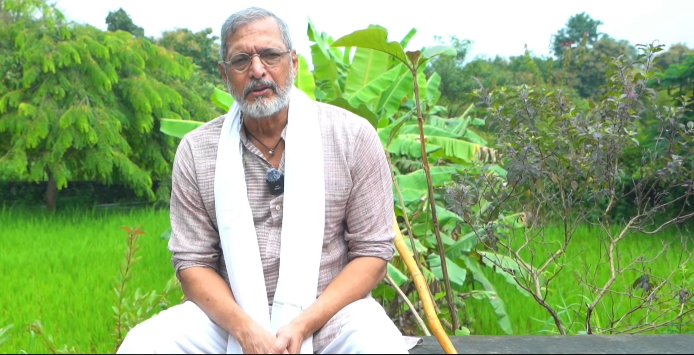
He was an institution no less—as an actor and as a human being. Across films, theater and television, but known primarily for Hindi cinema, Nana Patekar also did Marathi (his mother-tongue) films, as well as one in Kannada (Yaksha), two (Bommalatta and Kaala with Rajinikanth) in Tamil and the British TV series, Lord Mountbatten: The Final Victory, in which he played Nathuram Godse.
Born Vishwanath Patekar on January 1, 1956, Nana passed away after suffering a severe cardiac arrest at his residence in Goa. He was 75. The actor was reportedly found unconscious and rushed to a nearby hospital for medical attention. At 5: 20 am on October 8, he was declared dead, as despite 45 minutes of continuous CPR, he could not be revived.
A medico-legal case (MLC) has been registered, and a post-mortem will be conducted. His body will be later sent to Pune, where his last rites will be conducted at his farmhouse at Donje, on the outskirts of the town. He is survived by his wife Neelu and son Malhar.
The last social event Patekar attended was at Goa on October 4, during which he also remembered his friend and former Goa chief minister, the late Manohar Parrikar, stating, “We all have to go someday. I don’t know whether I will be here tomorrow. That time comes in the life of everyone. But before that time comes, I have to think, whether I am able to do what I want to do? Have I made the effort?”
The late actor, who turned writer-director with Prahaar in 1991, the first Hindi film ever to discuss the concept of India’s internal enemy eight years before Sarfarosh, won several accolades and awards in his career of over 40 years. Topped by the Padma Shri in 2013, the tally included three National Film awards (Parindaand Agnisakshi as Best Supporting Actor and Krantiveer as Best Actor), two Maharashtra State Film awards, four Filmfare awards and also Filmfare awards Marathi.
His most celebrated performances include Aaj Ka Awaz, Pratighaat, Parinda, Tirangaa, Krantiveer, Hum Dono, Agnisakshi, Darna Mana Hai, Bluffmaster!, Welcome and The Vaccine War in Hindi and Maaficha Sakshidaar, Deeol, Dr. Prakash Baba Amte: The Real Hero and (Ajay Devgn’s production) Aapla Manus in Marathi.
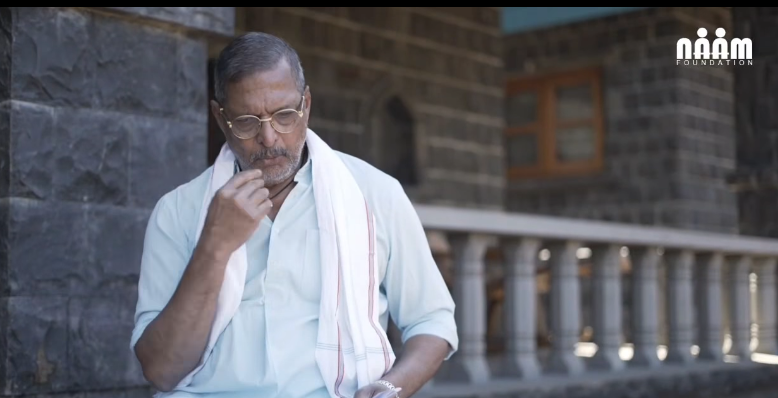
A unique personality and a loner of sorts, he would smoke 60 cigarettes a day until he decided to stop smoking in 2007. He would spend days at his farm near Wai (about two hours from Pune) and would even sell fresh vegetables from his farm in the early mornings at the village market. “The buyers would bargain with me just like with any other vendor,” he had told me smilingly.
His other hobbies including rifle-shooting, sketching and painting and he loved music. Choosing Laxmikant-Pyarelal as the composers of his Prahaar, he himself recited tracks under Anand-Milind in Yeshwant and Anu Malik in Wajood and also sang in Sanjeev-Darshan’s Aanch. The late giant, Manna Dey, considered Hamari hi mutthi mein akash saara from Prahaar as the last significant song he ever sang. The song was filmed on, but not lip-synched by Patekar.
Patekar originally had an ambition to join the armed forces, and that was a major reason for his making Prahaar, revealed filmmaker-writer N. Chandra, who was very close to him. Patekar did three films with him—Ankush that marked his debut as hero, Pratighaat and Wajood. Patekar also helped Chandra set up his own production outfit with the first film, released in 1985.
A perfectionist to the core, Patekar detested lack of dedication in co-artistes. Director Milan Luthria remarked that he would be so prepared that if a scene had to be discussed, Patekar would remember the page number in the script.
Patekar was last seen this year in brief roles in O’Romeo and Subedaar, besides playing the main protagonist, Ma’at Sahab, in the TV series, Sankalp. Said Jha to me, “I am completely devastated! I still can’t believe it, as he was very close to me. Not only professionally, but personally, we shared a lot, and I was dependent on him in a way, so his going is like a huge vacuum. I don’t know how I will ever be fill that up. I am sad, very sad today!”
Asked to speak on Nana Patekar, with whom he directed Bluffmaster! and also produced Taxi No. 9-2-1-1, Rohan Sippy requested me to “use” his tweet, which said, “No actor I’ve learned from more—from his intuitive understanding, his elaborate workshopping and rehearsal process, inevitably perfect delivery and timing on the first take, his ability to raise everyone around him on set… off sets, a wealth of humor, wisdom and affection. There will be no one like Nana Patekar. Ever.”
Very soon, Patekar was slated to appear in the inaugural episode of the Marathi show, Kon Honar Karodpati, with host Madhuri Dixit-Nene, his romantic co-star in Mohre and Wajood¸ who also worked under his direction in Prahaar besides doing Parinda.
A staunch altruist, Patekar would often donate a significant portion of his income to charitable and social causes. These also included demands for inaugurating showrooms where he would insist of moneys that he would then ask them to forward to good causes. “Such people must live longer!” said Yusuf Shaikh, a leading distributor, exhibitor and filmmaker and also Executive Committee Member of the Indian Motion Pictures Producers’ Association (IMPPA) and The Film Federation of India (FFI). “They contribute to society!”