Join WhatsApp Channel

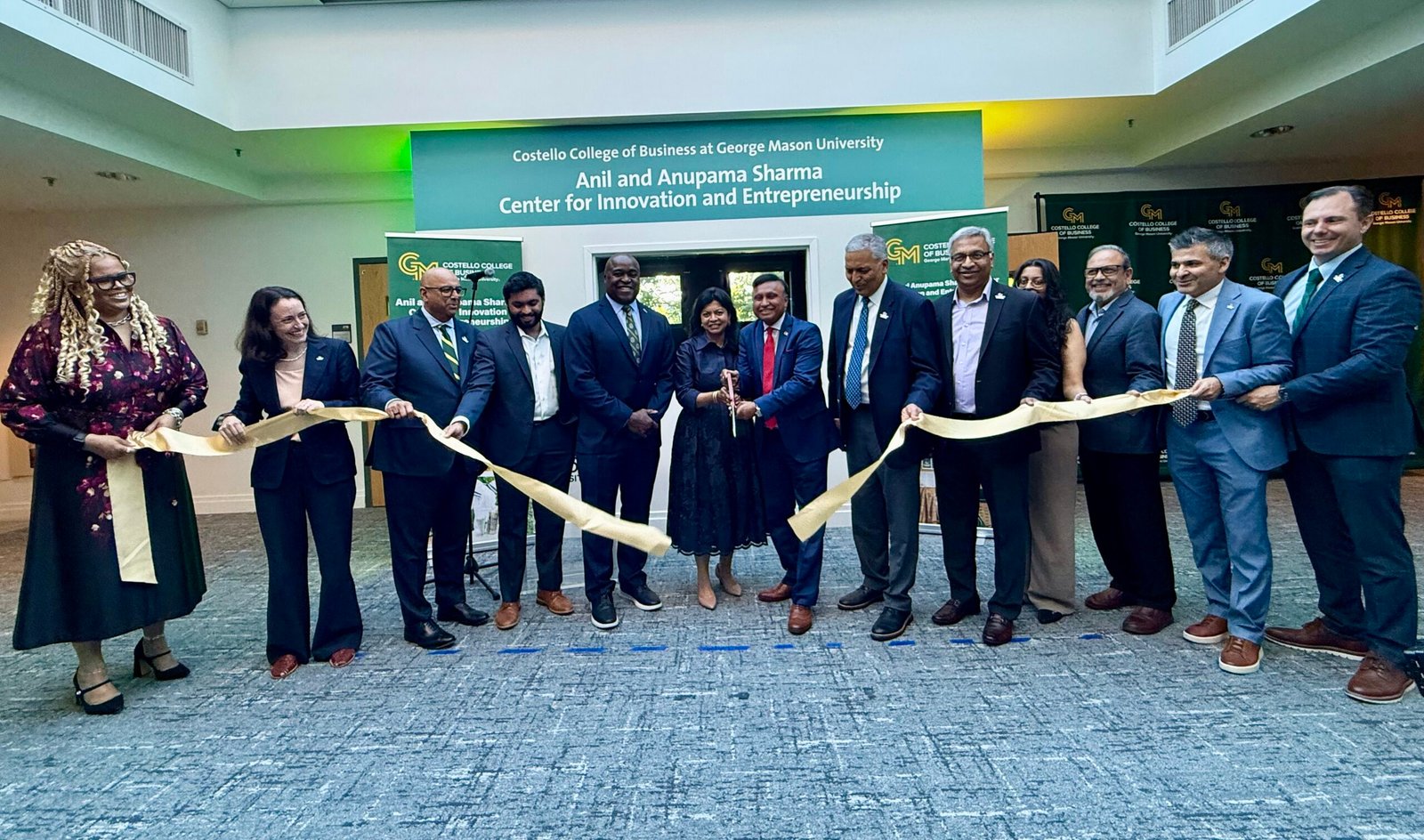
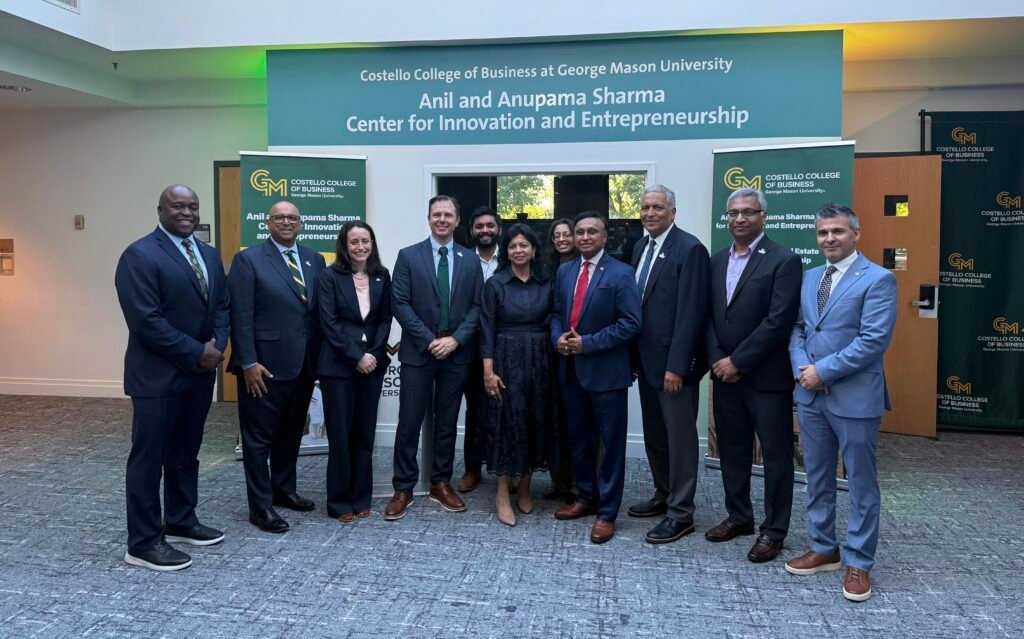
George Mason University’s (GMU) Costello College of Business held an official ribbon-cutting ceremony on October 5 for the Anil and Anupama Sharma Center for Innovation and Entrepreneurship.
Welcoming guests, Dean Ajay Vinze described the opening as an important milestone for the college. He said it reflected the university’s growing commitment to entrepreneurship and to providing students with opportunities to experience business firsthand.
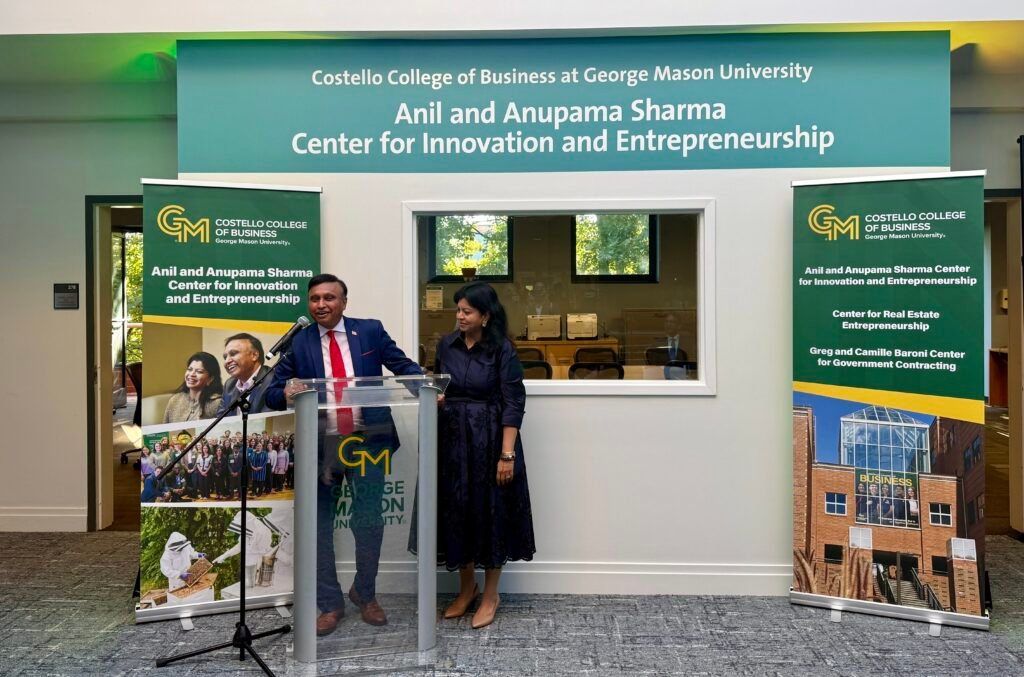
“This is not just about talking about business; this is actually doing business, and what more or what better way of doing it than actually leveraging the skills of a true entrepreneur who’s come here and really exemplified the nature or the notion of what entrepreneurship is and what entrepreneurship does,” he said, thanking Sharma and the family members who accompanied him.
Vinze said the Sharma Center establishes a physical presence on the Fairfax campus, with expansion into the Fuse Center at Mason in Arlington and a presence at Mason’s South Korea campus.
GMU President Gregory Washington emphasized the importance of entrepreneurship amid rapid technological change and uncertainty about its implications for employment.
“Entrepreneurship now means more than just about at any time in our history. We are going through a once-in-a-generation change in technology, and we actually don’t know the net effect that technology is going to have on jobs or on people,” he said.
Washington noted that the center offers students a pathway to create their own opportunities when traditional employment prospects are uncertain. He also expressed confidence that bringing together students, entrepreneurs, and members of the local community would contribute to its success.
“When I first met Anil and Anupama, I knew they were going to do something big. I knew it was going to be impactful. I didn’t know it was going to be this big,” he added.
Standing alongside his wife, Anil Sharma thanked those who had encouraged him to be part of the journey at GMU. He recalled that when they arrived in the United States 30 years ago, they could not have imagined standing at one of Virginia’s largest public universities to celebrate a center designed to create opportunities for future entrepreneurs.
“It’s a very personal, very proud moment for both of us and our kids who are here with us, Meghna and Nikhil,” he said.
Sharma described arriving as a first-generation immigrant with little more than a suitcase, hopes, and ambitious dreams. “I had no family here, no network, no roadmap, but this country gave me something incredibly strong,” he said.
He explained that the United States gave him opportunities to learn, build, take risks, and establish 22nd Century Technologies, which he said now employs 7,000 people.
Sharma said he was the first person in his family to graduate from college, an achievement that changed his life. Reflecting on the importance of education, he said it provides more than a “degree” it also gives people “confidence.”
He credited the United States with his success and described supporting education as part of his responsibility to give back.
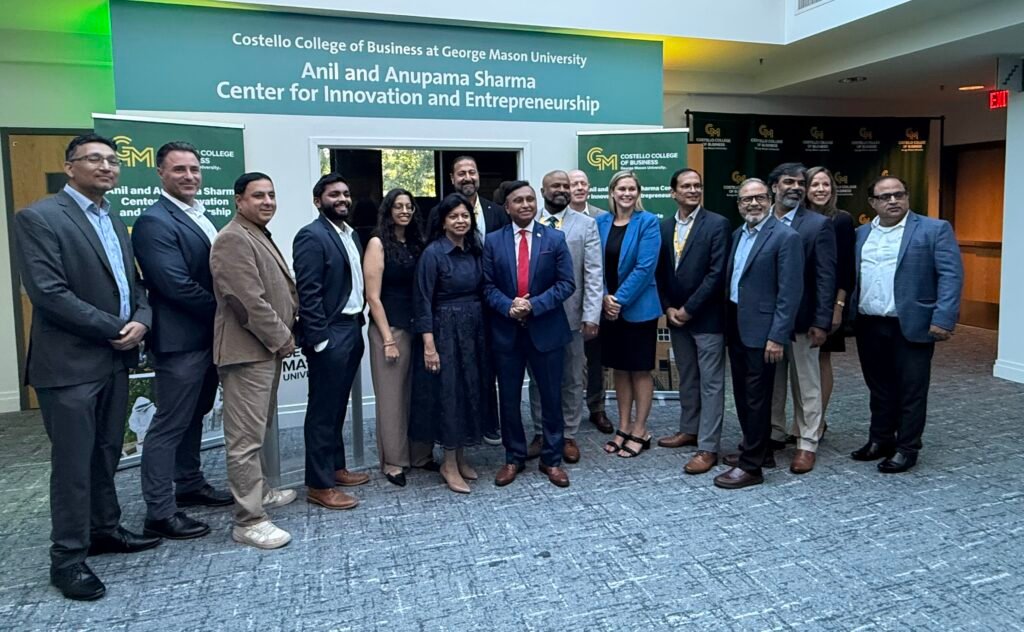
“I take it as a deep responsibility to give back, and that’s what this moment is all about. I want to give back to society, and education being the core, nothing like supporting George Mason,” he said.
Sharma said the vision is to help build a “local Silicon Valley” in Northern Virginia. He described the center as a place where innovations in cybersecurity, quantum technology, biotechnology, and other emerging fields could move from classrooms and laboratories into real-world applications.
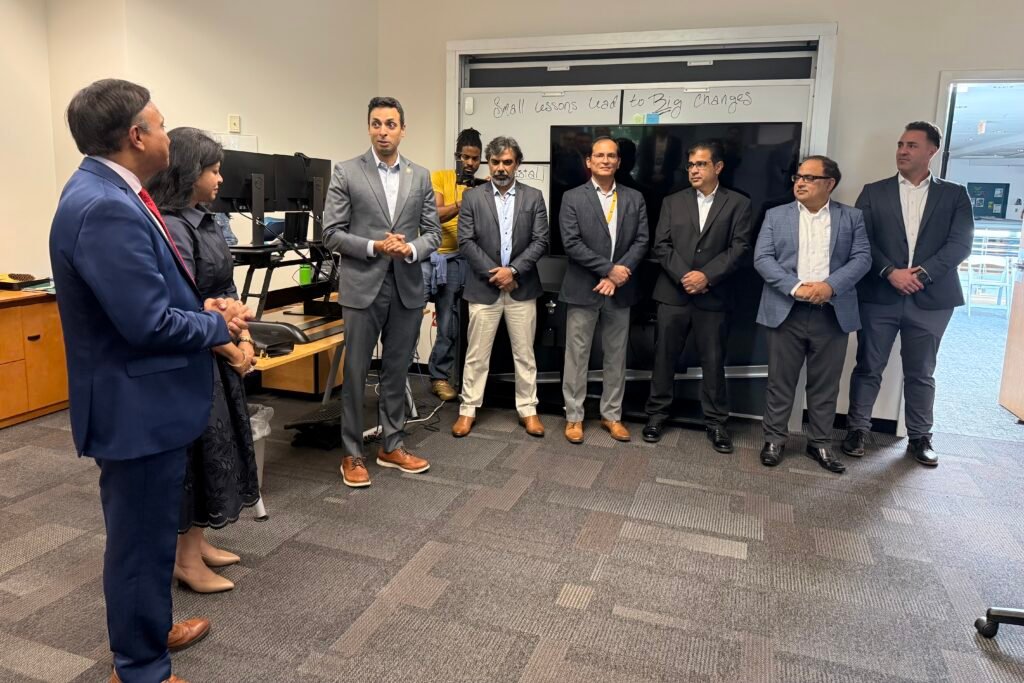
Congressman Suhas Subramanyam recognized the Sharma family’s philanthropic contributions to community initiatives across Virginia and highlighted the role of small businesses in the state’s economy.
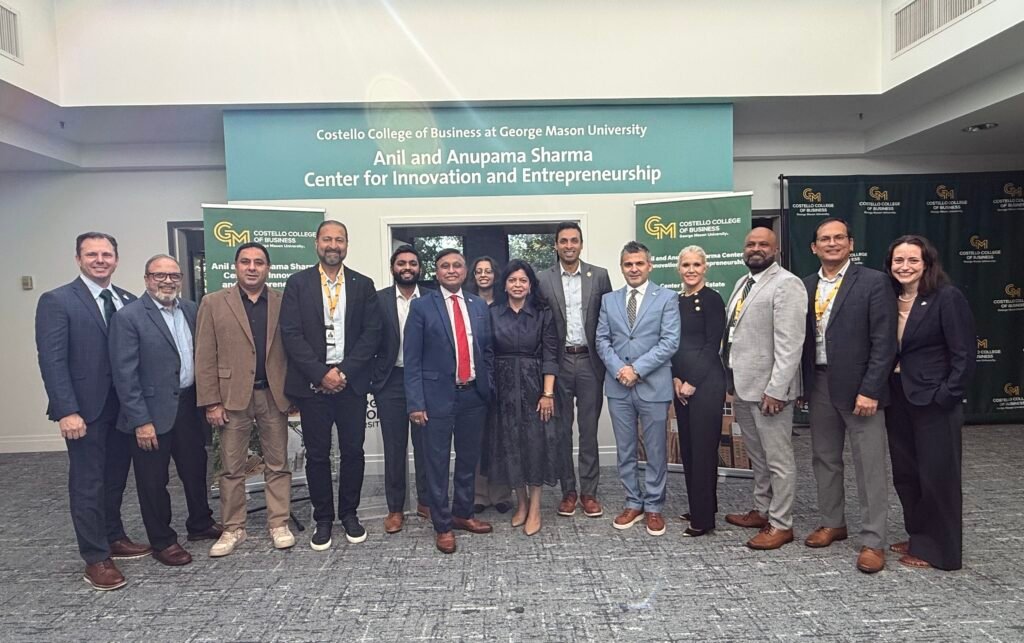
Subramanyam said small businesses account for 99 percent of Virginia businesses and employ approximately half of the state’s workforce. He described their owners as entrepreneurs and innovators who contribute to economic activity and investment.
“They’re one of the biggest drivers of investment, biggest drivers of entrepreneurship,” he said, adding that the George Mason initiative could help advance efforts to develop Northern Virginia into the next Silicon Valley.
“And you being the face and the name behind it makes all the sense in the world to me. So, thank you so much for everything you’ve done for the community up until now,” he told Sharma.
Subramanyam expressed optimism about the center’s potential to support new ventures, suggesting that future companies comparable to Google or Microsoft could emerge from its work.
Rector Sumeet Shrivastav reflected on his connection to George Mason as a 1994 MBA graduate of the Costello College. He described how the establishment of the Center for Innovation and Entrepreneurship in 2014 helped reconnect him with the university and its entrepreneurial community.
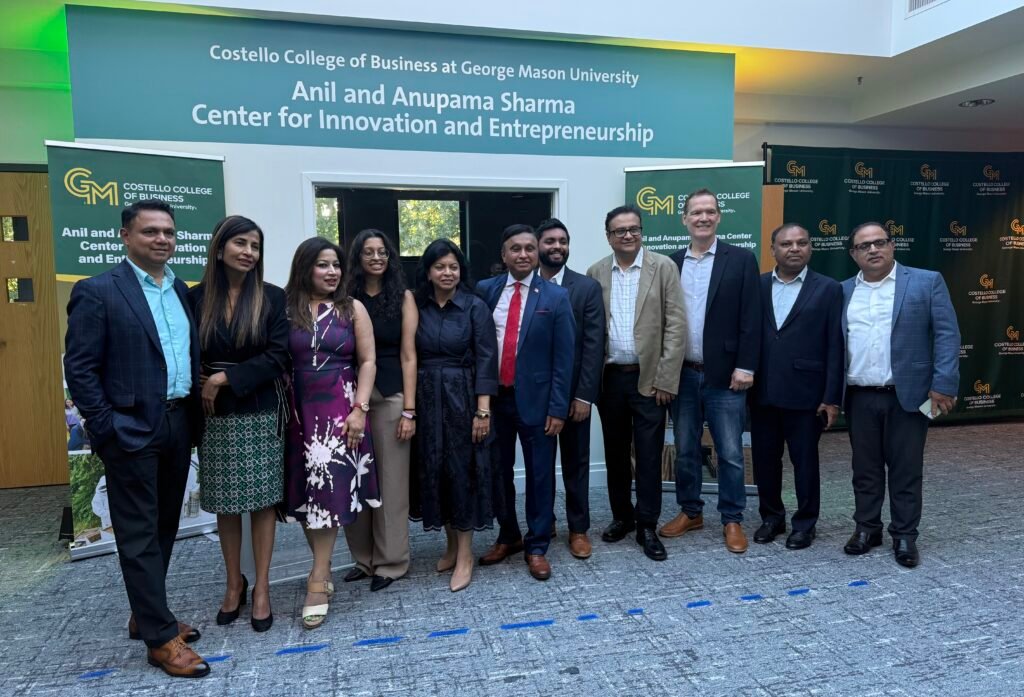
Shrivastav recognized the Sharma family’s decision to invest in the next generation of entrepreneurs and in the region’s future through their support for the center.
Calling Sharma his “good friend” VA community leader Juan Pablo Segura, said he attended the event to support Sharma and commend his investment in the community.
He said providing entrepreneurs with tools to develop and apply new ideas is essential to solving community problems, including challenges involving energy efficiency and therapeutics.
Patrick Soleymani, associate dean for outreach and strategic engagement, introduced the speakers and provided background on the program during the ceremony.
Related posts:
 George Mason Names Innovation Center After Anil and Anupama Sharma
 Fairfax City Ramps Up Tourism and Business Collaboration, Mayor Catherine Read Announces at CFCC Economic Summit
 IADA India Day Celebrations in Virginia Highlight US-India Partnership and Diaspora Contributions
 “I Was Chief Everything Officer”: 22nd Century Tech. CEO Shares Immigrant Success Story at ATA