Join WhatsApp Channel

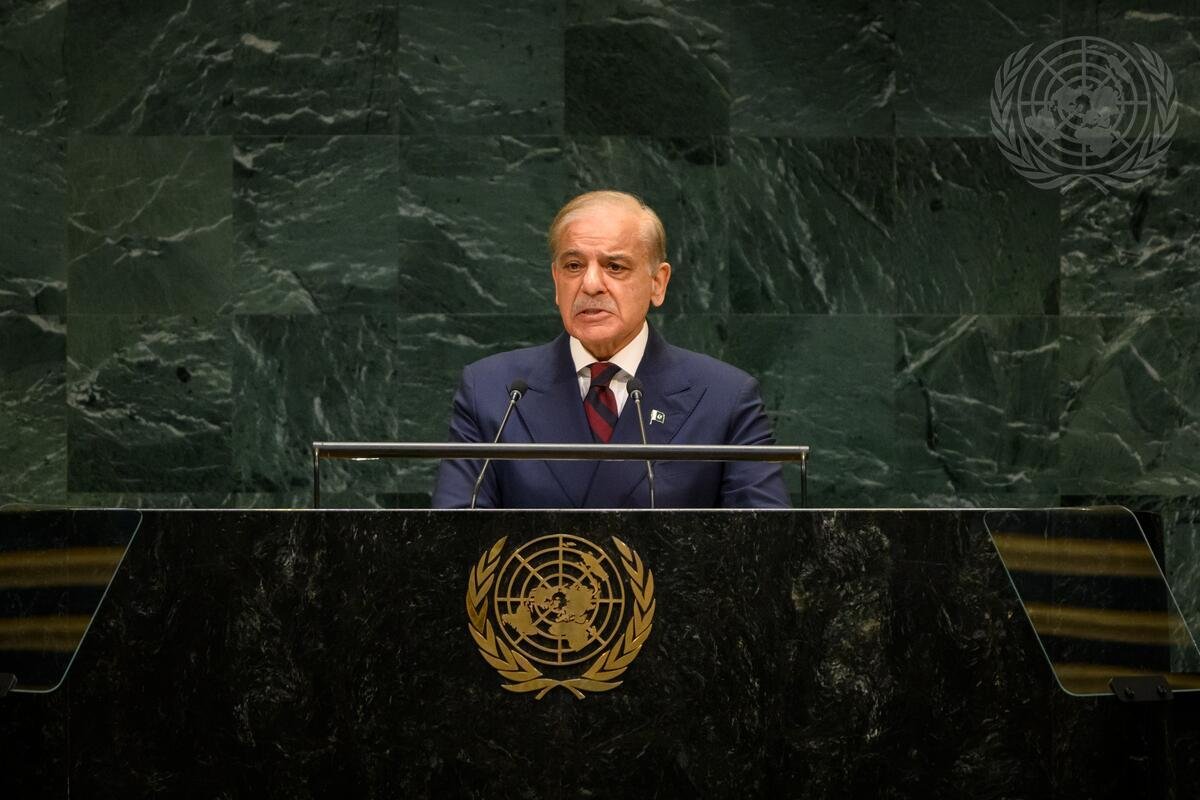
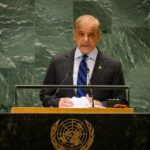
Pakistan’s economic revival is a central responsibility of his government, Prime Minister Shehbaz Sharif told the United Nations General Assembly on September 24, citing structural reforms and fiscal discipline that he said had helped restore macroeconomic stability.
Addressing the assembly’s 81st session, Sharif said Pakistan was working toward sustainable and inclusive growth by modernizing agriculture and industry, developing mineral resources and expanding digital skills.
“We are modernizing agriculture and industry, developing mineral resources, digitalizing our economy and equipping our youth with modern AI and IT skills,” he said. He also pointed to economic ties with China through the China-Pakistan Economic Corridor and to opportunities in the Gulf and Central Asia.
Sharif praised Chinese President Xi Jinping’s leadership and his global development, security, civilization and governance initiatives. “On these pillars, we can surely build a shared future for mankind,” he said.
Turning to the Middle East, Sharif said conflict in the Gulf earlier this year had cost lives, damaged economies and put pressure on maritime routes, particularly the Strait of Hormuz. He said Pakistan had brought representatives of Washington and Tehran together in Islamabad and that subsequent talks and an understanding reached there were steps toward ending the conflict.
The Strait of Hormuz and Bab al-Mandeb are vital to the global economy and must remain open, Sharif said. He urged countries to keep the waterways from becoming sites of confrontation.
Sharif also praised President Donald Trump’s intervention during a period of heightened tension between Pakistan and India, saying it came when the two nuclear-armed countries were close to war. He noted a year ago, “Pakistan faced external aggression from India under a false pretext.”
“We must therefore ensure that South Asia never reaches that precipice again,” Sharif said. He called for a resolution of the dispute over Jammu and Kashmir and reiterated Pakistan’s position that Kashmiris should be allowed a plebiscite under UN auspices.
Sharif raised concerns about the Indus River system, describing its shared waters as essential to Pakistan and the wider region. He said India’s decision to hold the existing water treaty in abeyance had “no legal basis whatsoever.”
On UN reform, Sharif said the UN80 Initiative should make the organization stronger and more effective. He called for a Security Council that is more representative, democratic and accountable, saying changes should reflect the interests of the broader membership.
Sharif also addressed the war in Gaza and violence in the West Bank. Recalling the deaths of Palestinian children, including Hind Rajab, he asked: “Does not a child born in Gaza deserve the same life and the same future as a child anywhere else in the world?” He accused Israel of pursuing a “genocidal agenda” through its actions in the West Bank.
Terrorism remains a grave threat to international peace and security, Sharif said, pointing to Pakistan’s efforts against armed groups within its cities and along its frontiers.
He closed by emphasizing Pakistan’s contribution to UN peacekeeping. Pakistani personnel have served for decades under the UN flag, protecting civilians and helping countries recover from conflict, he said. “We are proud of their valuable sacrifice.”
Related posts:
 Opinion: Pakistan’s Fake Narrative Against India to Hide its Own Mismanagement of Water Resources
 PM Sharif Praises President Trump’s Role in Averting South Asia War at UNGA — India Disputes Pakistan’s Account
 Partition for Peace: The Elusive Promise
 Pakistan’s Prime Minister compares situation in Palestine to Jammu and Kashmir at the United Nations General Assembly