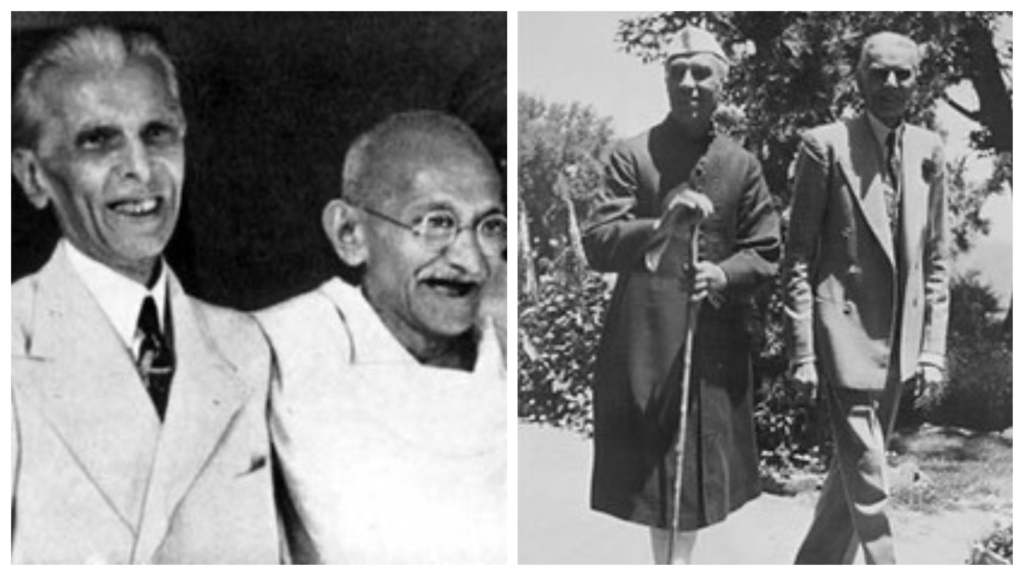
The difficulties between India and Pakistan today do not arise solely from the policies pursued by their respective Governments in what each considers its own national interest, even when those policies are perceived by the other side as hostile or threatening. They are rooted in deeper attitudes, historical narratives and mutual suspicions which can be traced back to the partition. These underlying issues must be identified, acknowledged and confronted if the two countries are to ever have a stable, meaningful and constructive relationship in the future. The anniversary of Pakistan and India’s independence offers an opportunity to revisit the past—not to reopen settled grievances, but to understand them more clearly and imagine a peaceful future.
Pakistan’s Existential Threat:
Much of the hatred between the two countries has been sustained over generations by the belief that India never wanted Pakistan to exist and has, from the beginning, sought to undermine if not destroy it. The belief that India continues to view its creation as a temporary aberration or a political error awaiting correction has not only made Pakistanis fiercely protective of their national identity but also fostered an enduring sense of vulnerability. That vulnerability has encouraged attempts to construct, retrospectively, a history of complete separation from India and even claim exclusive ownership of elements of a shared past making it all the more difficult for future generations to acknowledge that, before 1947, people on both sides of the border belonged to the same country.
Reinforced through successive political and historical narratives, Pakistan’s perceptions fail to distinguish between opposition to the partition of India and opposition to Pakistan’s existence after partition. This distinction on the nature of the opposition matters because historical framing shapes the politics and it is the politics which hardens into hostility and rivalry. As long as Pakistan continues to believe that its creation has never been accepted by its larger neighbor, the natural response is to remain defensive, assert victimhood and compete for moral legitimacy. If, instead, it acknowledges that its creation as a nation-state was a settled outcome of 1947 which does not require any validation, the incentives for perpetual grievance weaken. The desire of recognition by the other side does not require approval of the circumstances that produced separation; it only requires acceptance of the new reality and a willingness to build relations on that basis.
Advertisement
Looking back at the freedom struggle, it would not be wrong to say that till a particular point of time in history no one wanted India to be divided. When Allama Muhammad Iqbal recited the Tarana-E-Hind, ‘Saare jahan se achhcha Hindustan hamara, Hum bulbulen hain is ki, ye gulsitan hamara’ at Lahore in 1905 he was speaking for all Hindustanis (in vernacular) or Indians (in English) which includes the ancestors of all those who live in Pakistan today. Once the demand for a separate Nation State for Muslims grew, many nationalists in undivided India belonging to all religions were opposed to the idea because they genuinely believed that the subcontinent constituted a single historical and political entity in which people of different religions had been living together for years and could therefore continue to do so even in the future. If these included Hindus like Mahatma Gandhi, Jawaharlal Nehru and Sardar Vallabhbhai Patel they also included prominent Muslim voices, be it Khan Abdul Ghaffar Khan, Mirzali Khan (NWFP), Allah Bakhsh Soomro (Sindh), Allama Inayatullah Khan Mashriqi (Lahore), Abdul Samad Khan Achakzai (Balochistan), Malik Khizar Hayat Tiwana (Punjab), Syed Ata Ullah Shah Bukhari (Punjab) etc. in what later became West Pakistan and Maulana Abul Kalam Azad (Congress), Maulana Husain Ahmad Mamdani (Deoband), Abdul Qayyum Ansari (Bihar), Dr Saifuddin Kitchlew (Kashmir), Maulana Hasrat Mohani, Maghfoor Ahmad Ajazi (Bihar) and Rafi Ahmad Kidwai etc. on the other side.
Once Lord Mountbatten’s June 3 Plan made partition the only available constitutional course to attain independence without bloodshed, there was no realistic possibility of turning back and leaders on both sides recognized the necessity of moving on. Some accepted the reality happily while others did so with a heavy heart. Nehru expressed the anguish of the moment when he declared: “It is with no joy in my heart that I commend these proposals.” Everyone, nevertheless reconciled because political circumstances had made partition unavoidable. To argue therefore that “India never wanted Pakistan to exist” conflates two distinct truths. It is correct to say that several leaders of undivided India opposed the partition of India and tried their best to keep it united because they sought to preserve a single political entity where diverse communities could coexist. But it is incorrect to say that leaders of the Republic of India denied or refused to accept the existence of the new state of Pakistan which had been legally and politically created and opposed it after its creation. This history should be understood without triumphalism. To say that Pakistan was created through the partition of India is not to deny the sacrifices, aspirations or political agency of those who demanded it, nor is it to question Pakistan’s independence. It is simply an acknowledgment of the constitutional history of 1947.
There is another aspect of the matter. Even after the partition of India on the basis of the two-nation theory, West Pakistan had a lesser number of Muslims than those who rejected that theory and chose to remain with India. In fact, more than one-third of the subcontinent’s Muslims ultimately remained in India and today India is home to approximately 172.2 million Muslims. If opposition to partition and creation of Pakistan is to be treated as a reason for hating Hindus or India post 1947, is that hostility also to be extended to all the Muslims who opposed Partition, including Muslims from regions that became Pakistan? Clearly not. Those Muslims were absorbed into Pakistan’s mainstream, while only the supposed Hindu opposition to Partition continues to be invoked as a source of resentment. This selective memory suggests that the hostility is less about historical accountability and more about preserving the Two-Nation Theory as the continuing justification for Pakistan’s existence: Muslim opposition to Partition is accommodated, while Hindu and Indian opposition is remembered and magnified to flog the inherited narrative of hostility. It is time for Pakistan to recognize that opposition to the division of India by many pre 1947 cannot be extrapolated to a perceived opposition of Hindus to the existence of Pakistan post 1947.
India or Hindustan:
In the run up to freedom, there was an important disagreement over the name and identity of the dominions that would emerge after partition. Muhammad Ali Jinnah wanted the two successor dominions to be known as Pakistan and Hindustan so that both could be presented as equal and newly created entities. He also preferred the name Hindustan because its association with Hindus would symbolically reinforce the claim that the subcontinent comprised two distinct religious nations. In that sense, the name helped legitimize the Two-Nation Theory by presenting Hindus and Muslims as communities confined within fixed and mutually exclusive identities and regions. On the other hand, retaining the name “India” for the larger dominion would reinforce the fact that the whole of pre-partition India had continued under that name and Pakistan had merely separated from it. It would have acknowledged India as the civilizational and political entity which predated Pakistan and served as a constant reminder that Pakistan as a distinct political entity had been carved out from it rather than being created alongside.
However, the constitutional arrangement that prevailed retained the name and continuity of India rather than Hindustan. The Act itself was called the India Independence Act, and it declared: “As from the fifteenth day of August nineteen hundred and forty-seven, two independent Dominions shall be set up in India, to be known respectively as India and Pakistan.” Thus, in the legal structure of the settlement, Pakistan was a new country created out of the territory of India by its partition, while India continued as the successor state of the pre-partition entity. Even though this did not invalidate or diminish Pakistan’s sovereignty, individuality or equality as an independent state, the arrangement was sufficient for many Pakistanis to perceive that their moth-eaten country had been shortchanged at birth—that India had been granted preferential constitutional and historical status, while Pakistan had been treated as the younger, subordinate or departing entity.
This bitterness from birth only increased with time. It became increasingly difficult for Pakistanis to accept that they too were Hindustanis or Indians before 1947. Therefore, in order to underscore their separateness from that past they increasingly began arguing that India did not exist before the British and began referring to the pre partition entity as British India even though that expression was not the formal name used in the Indian independence Act. This linguistic shift was clearly more than terminological because it helped create a fictional distance from the broader Indian political and civilizational world of which Pakistan had once been a part.
India Before 1947
Long before the emergence of modern nation-states, there is ample historical record to show that the wider subcontinent was recognized as a connected geographical and civilizational entity through names derived from the Indus—Sindhu, Hindu, Hind, Indos and India. Therefore, even though the Republic of India as a Nation State emerged in 1947, the entire region was identified as India and possessed a recognizable civilizational identity long before British rule. To deny that India existed before the British is consequently to confuse the absence of a continuously unified nation-state with the absence of a shared civilizational, geographical and historical entity.
The British did not invent India as a name or create its historical and geographical conception from nothing. They codified and administered an already established entity, as reflected in the title of the Government of India Act, 1858, whose long title described it as “An Act for the better Government of India.” In the broader geographical and political sense, “India” encompassed both British India, consisting of territories directly administered by the British, and the princely states, which remained under their own rulers while acknowledging British paramountcy. The distinction between these terms was formally clarified in Section 18 of the Interpretation Act, 1889.
The Act provided: “The expression ‘British India’ shall mean all territories and places within Her Majesty’s dominions which are for the time being governed by Her Majesty through the Governor-General of India or through any governor or other officer subordinate to the Governor-General of India.” The same section defined “India” more broadly as: “India” shall mean British India together with any territories of any native prince or chief under the suzerainty of Her Majesty exercised through the Governor-General of India, or through any governor or other officer subordinate to the Governor-General of India. This statutory distinction recognized that British India was only a component of the wider India. It is therefore historically and legally misleading to narrow the meaning of India and use “British India” as a synonym for the whole of India pre-1947. However Pakistanis continue to do so perhaps because it makes Pakistan appear less like a part of the civilizational India and more like a wholly separate entity that merely shared a colonial administration with it, even though this interpretation flies in the face of language of the Indian Independence Act, 1947.
Independence Day or Creation Day:
Pakistan’s tendency to define its nationhood primarily through separation from India and by competing with it may also be traced to 1947 itself. Since Pakistan was created on August 15, 1947 (the date mentioned in the Act) therefore there was no question of it having attained independence from any colonial power on that day. Recognizing this, Jinnah in his first broadcast to the nation stated, ‘August 15 is the birthday of the independent and sovereign state of Pakistan.’ Since August 15 was being celebrated in India as its Independence Day, in order to distinguish Pakistan’s national celebrations from India and affirm its distinctive national identity, its public commemoration was subsequently shifted to August 14. While India was celebrating its independence from a colonial power, instead of acknowledging the historical reality of its creation and celebrating it, Pakistan too achieved ‘parity’ with India by celebrating its ‘independence’ and separation from India even though the occasion might more precisely have been recognized as its Yaum-E-Takhleek or birthday as observed by Jinnah.
The Past
Even though Pakistan did not exist in any recognizable political or territorial form before being carved out from India in 1947, there is no denying that the people who belonged to that region or those who migrated to and from that region have common roots. Therefore, both the sovereign states of the Republics of India and Pakistan have inherited a shared civilization, historical geography and memories that cannot be erased by a boundary line. But shared heritage need not imply a demand for political unity, just as separate nationhood need not justify perpetual antagonism. Partition was a historical reality; it was not meant to become a burden for future generations to carry on their shoulders. It took place with the promise of peace but has bequeathed a legacy of enmity fueled by the choices made by successive governments, competitive nation-building, securitized politics, unresolved territorial disputes and the cultivation of exaggerated narratives for domestic mobilization.
The Present
Like India, Pakistan too has many serious internal matters requiring the attention of its political leadership. Its present political order emerged after the removal of an elected government, while former Prime Minister Imran Khan remains imprisoned. Movements expressing demands for civil rights, political autonomy and self-determination continue in different regions. These issues cannot be resolved by inventing external enemies or presenting India as the source of every internal difficulty. Hostility with India should neither become a substitute for accountable government, constitutionalism and the protection of citizens’ rights nor a means for the political and security establishment to unite the nation against a common eternal enemy and divert attention from domestic issues.
Both India and Pakistan need to distinguish between electoral rhetoric, right wing ideological aspirations and actual state policy. Some individuals and organizations in India may speak of a civilizational or cultural Akhand Bharat, but that does not make territorial reunification with Pakistan the policy of the Government of India because India’s constitutional order recognizes Pakistan as a separate sovereign country, and India has always operated within that reality. Unfortunately, the President of Pakistan referred to this very concept on Pakistan’s Independence Day as if it was the policy of the Govt. of India. The use of Akhand Bharat as an existential threat perpetuates the very apprehension that Pakistan must overcome. It presents India as permanently expansionist, reinforces the belief that Pakistan’s survival depends upon constant vigilance against an inevitable attack, and makes compromise appear equivalent to surrender. Just as India must not be swayed by the alarmist ‘Ghazwa-E-Hind’ type inflammatory noises made by extreme elements in Pakistan, Pakistan must not allow its public discourse or policies to be shaped by the noise made by extreme elements in India. If the two countries keep on falling into this trap, they will never be able to escape the vicious cycle of mutual hostility and continue to perpetuate the very bitterness which prevents a stable relationship between them.
The Future
India and Pakistan must recognize that people cannot be hated simply because of their religion. The creation of a separate country on the basis of a political belief is one thing but living with that belief and allowing it to perpetuate hostility between people is another. Religious bigotry begets religious bigotry. It does not strengthen either nation but only deepens mistrust, distorts history and makes life difficult for both neighbors. Both countries should be able to criticize one another without manufacturing threats. There is no need to deny internal realities and blame each other for all their problems without any evidence solely to pander to their domestic constituencies. It is high time both countries view each other as neighboring states and not as challengers or adversaries. Their future cannot be built on inherited hatred. It must be built on a shared commitment to live and let live.
Disclaimer: The opinions and views expressed in this article/column are those of the author(s) and do not necessarily reflect the views or positions of South Asian Herald.