Join WhatsApp Channel

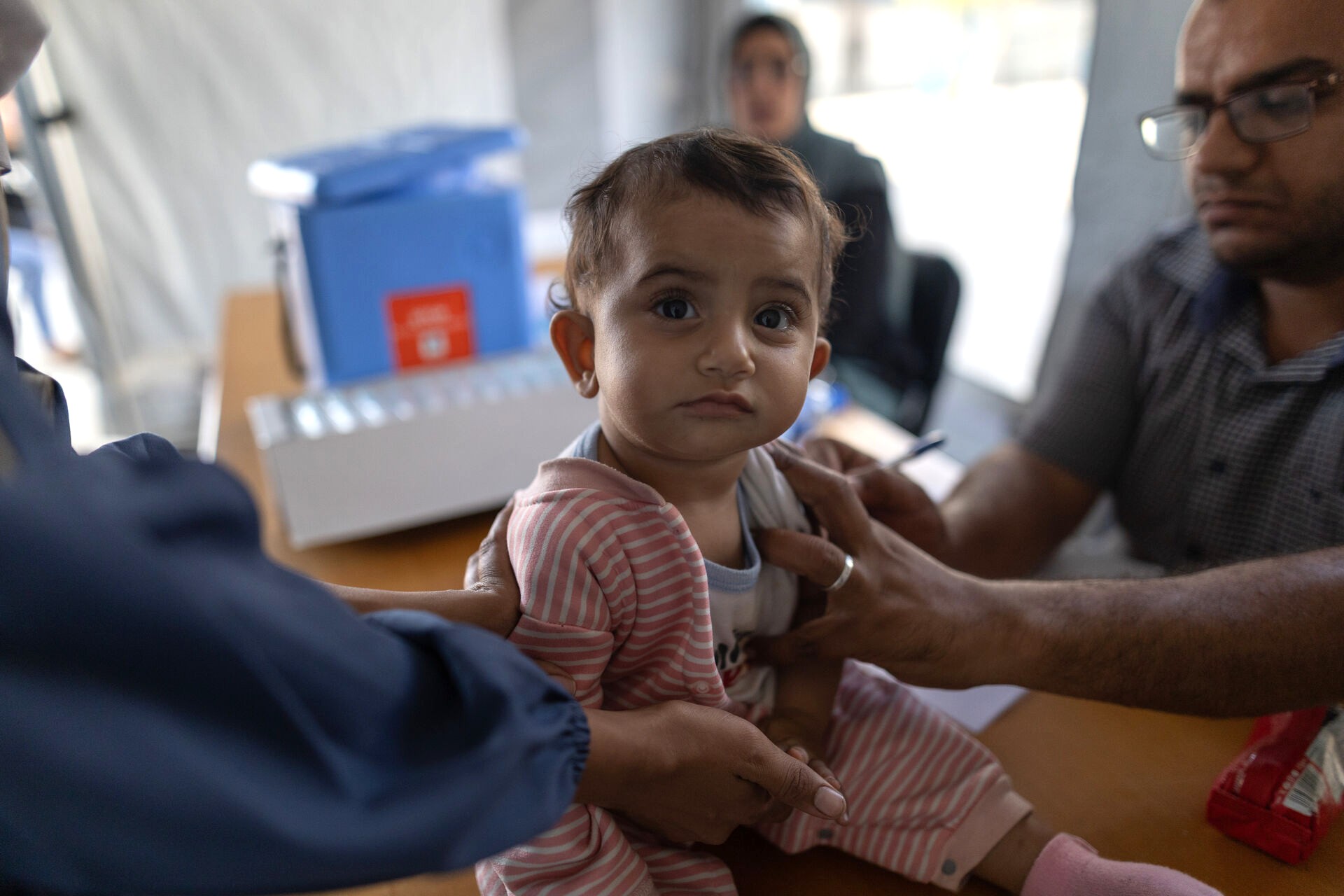
Amid Bangladesh’s worsening measles outbreak, the government will resume a nationwide measles vaccination campaign from September 25, Health Minister Sardar Md Sakhawat Husain said on September 10.
“Most of the vaccines have already arrived in the country through UNICEF. The remaining vaccines will arrive by September 17,” he told journalists after a seminar organized by the Association for Disabled People and Rotary Club Ahsan Manzil at the University Women’s Federation in Dhanmondi, Dhaka, to mark World Suicide Prevention Day.
Sakhawat said the government decided to launch another mop-up campaign after measles transmission continued despite the emergency vaccination drive carried out in April and May.
Under the mop-up campaign, another 1.4 million children have already been vaccinated against measles, he said.
The country has already crossed the grim threshold of a thousand deaths which are either due to measles or otherwise related to it, with all its districts seeing a rampant uncontained surge in infections and hospital admissions, straining its already strained medical infrastructure.
Recent Directorate General of Health Services (DGHS) data put the number of infections at more than 187,000, making it the most serious measles resurgence Bangladesh has experienced in decades.
Additionally, the nation is also facing a dangerous dengue outbreak, putting it in a catastrophic dual public-health emergency, as it continues facing the world’s most severe ongoing measles outbreak, compounded by a rapidly rising surge in dengue fever.
The Directorate General of Health Services (DGHS) reports that child fatalities from the measles epidemic have officially crossed 1,009 deaths, with total suspected and confirmed infections rising past 188,000 cases. Simultaneously, over 45,400 dengue infections and 130 deaths have stretched local hospitals to their absolute breaking points.
On the dengue front, Sakhawat said healthcare capacity had been strengthened at hospitals outside Dhaka to ease pressure on facilities in the capital.
“Isolation beds have been kept ready at every hospital, and arrangements have also been made for mobile hospitals,” he said.
The minister said necessary treatment would be available at the upazila level and that doctors working at the grassroots had been given guidance and coordination support through the Society of Medicine to reduce the burden on tertiary hospitals.
“We have been elected by the people’s vote. We have an obligation to the people. That is why we are making our utmost efforts to protect public health,” Sakhawat said.