Join WhatsApp Channel

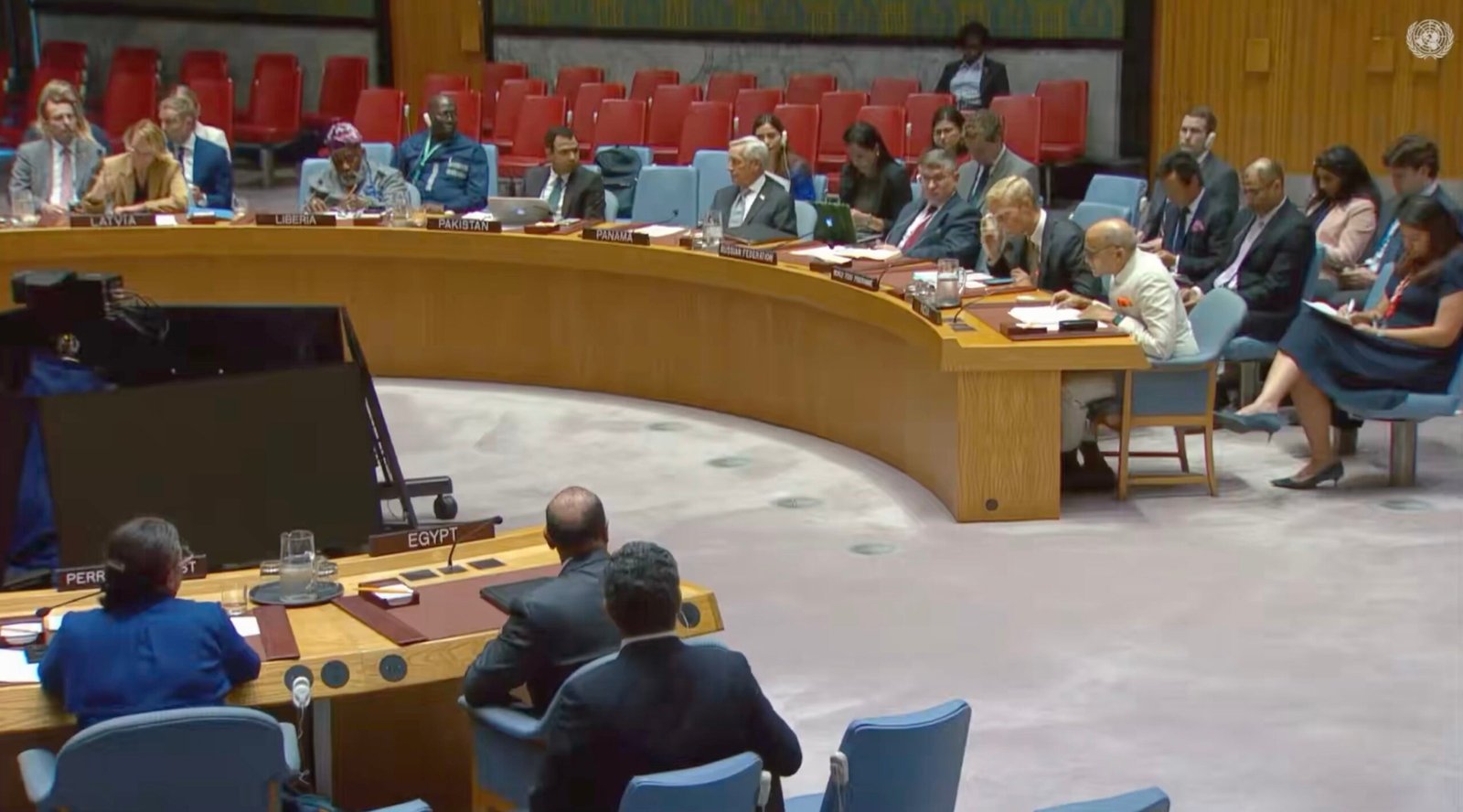
India’s Permanent Representative to the United Nations, Ambassador Harish Parvathaneni, has warned that food insecurity remains one of the “gravest” humanitarian consequences of armed conflict.
Speaking at the UN Security Council’s high-level open debate, “Food Under Fire: The Security Council’s Role in Mitigating Global and Local Food Crises,” on August 25, 2026, at UN Headquarters, Ambassador Harish said the effects of modern conflicts increasingly extend beyond their immediate locations.
“Today’s conflicts increasingly generate ripple effects far beyond the immediate theatre of hostilities. Disruptions to energy markets, fertilizer supplies, maritime transport, humanitarian logistics and agricultural trade have demonstrated how regional conflicts can threaten food security across the world, with the greatest burden falling on developing countries that are highly import-dependent,” he said.
Harish urged the Council to remain clear about the causality behind the challenge. He said food insecurity is fundamentally a “consequence” of conflict, political instability and underdevelopment, rather than their “root cause.”
While the Security Council has an important role in responding to threats to international peace and security, he said “building resilient, food-secure societies” remains primarily the responsibility of national governments, with support from the UN development system and Rome-based agencies.
He noted that Security Council Resolution 2417, which addresses conflict-induced food insecurity, provides an important framework by recognizing the relationship between armed conflict and hunger.
“Early warning should therefore not be limited to identifying deteriorating humanitarian conditions on the ground,” Harish said.
He added that early-warning efforts should include timely assessments of disruptions to critical supply chains involving food, fertilizer, fuel and humanitarian logistics. Such assessments should draw on the technical expertise of the Food and Agriculture Organization, the World Food Programme and other relevant agencies, while remaining objective, evidence-based and free from politicization.
Harish said the Council’s immediate priority should be mitigating the humanitarian consequences of conflict. This would require facilitating safe, rapid and unimpeded humanitarian access, supporting deconfliction arrangements where appropriate, and ensuring that Council measures, including sanctions regimes, do not unintentionally obstruct humanitarian assistance or legitimate food and agricultural trade.
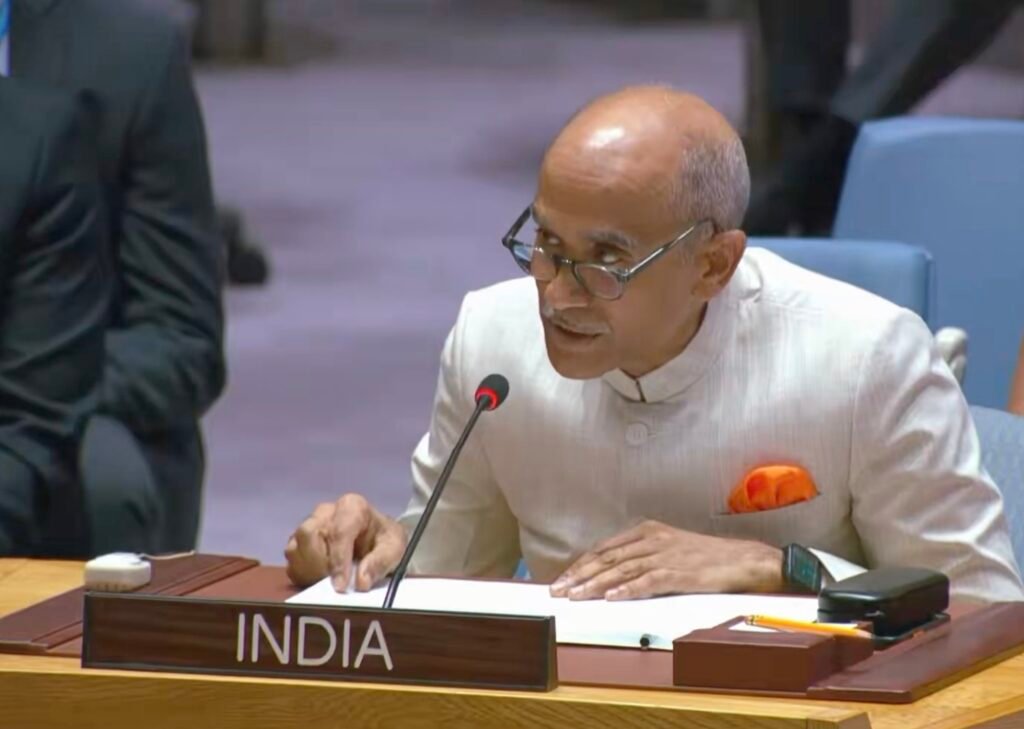
He also emphasized the importance of protecting civilian infrastructure essential to food security, including “agricultural land, irrigation systems, storage facilities, transport corridors and ports.”
Harish said safeguarding the security and freedom of navigation of commercial shipping in accordance with international law is equally important. Secure and predictable maritime trade routes, he noted, are essential to the uninterrupted movement of “food, fertilisers, fuel and other essential commodities.”
“Disruptions to commercial shipping during conflicts can have cascading effects far beyond the immediate region, disproportionately affecting food-importing developing countries and humanitarian operations,” he said. “The international community must therefore work collectively to safeguard critical sea lanes and maritime infrastructure, while ensuring that legitimate commercial trade and humanitarian shipments are able to proceed without undue impediment.”
Harish stressed that humanitarian assistance alone cannot deliver lasting resilience. He called on member states, international financial institutions, regional organizations and development partners to work together to “strengthen domestic agricultural production, diversify supply chains, improve storage and logistics infrastructure, and promote climate-resilient agriculture.”
Predictable and affordable access to fertilizers, quality seeds, technology and concessional financing remains essential, particularly for developing countries, he said. Open, transparent and rules-based trade in food and agricultural inputs is also critical to global food security.
“India’s own experience underscores the centrality of sustained, nationally-owned investments in resilient food systems,” he said. “The National Food Security Act provides a statutory entitlement to subsidised food grains. Direct benefit transfers to over 110 million farming households under the PM-KISAN have strengthened the economic resilience of small and marginal producers. India’s championing of the International Year of Millets in 2023 has catalysed global attention to climate-resilient, nutrient-rich crops as a viable pathway to diversified food security.”
The Ambassador said these efforts, supported by digital public infrastructure and climate-adaptive agricultural practices, have enabled India to remain food-secure and make a net contribution to the global food supply.
“We remain committed to sharing these experiences through South-South Cooperation and development partnerships,” he added.
He also highlighted the additional risks posed by ocean-atmosphere variations such as El Niño, which can disrupt monsoon patterns, reduce crop yields and strain water resources, further compounding food insecurity. Addressing these challenges requires stronger international cooperation, he said, adding that India looks forward to working with the international community.
Harish said the UN secretary-general’s good offices could play a valuable role in “facilitating dialogue, reducing tensions and supporting humanitarian access,” where appropriate. He added that the broader UN system should continue using “scientific expertise, operational capabilities and timely data” to inform decision-making.
Such efforts should complement, rather than replace, national ownership and nationally led responses, he said.
“India firmly believes that peace, development and food security are mutually reinforcing,” Harish said. “The Security Council should focus on fulfilling its mandate by addressing conflict, facilitating humanitarian access and supporting conditions for peace. The General Assembly, ECOSOC, the UN development system and the Rome-based agencies should continue to lead the long-term response to food insecurity.”
He cautioned that overreliance on any single production model could be counterproductive because such systems are vulnerable to geopolitical disruptions, economic coercion and weaponization.
“We must encourage small and marginal farmers to enhance their productivity and contribute to ensuring food security in developing countries of the Global South. We must also encourage climate-resilient crops such as millets rather than limit conceptions of food security to the biggest staple grain crops, such as rice, wheat and corn,” Harish said.
He added that the UN system could better prevent food crises by operating within the mandates of its respective bodies and embracing genuine multilateral cooperation.
UN Secretary-General António Guterres, addressing the debate, said it provided the Council with an opportunity to confront a “dangerous and evolving” reality.
“Critical food systems, and the lives and livelihoods they sustain, are under attack,” Guterres said. “Getting enough to eat is a basic human need, a need that is clearly reflected in Sustainable Development Goal 2: ending hunger. Zero hunger is achievable. But it requires tackling hunger’s many root causes, including conflict.”
Referring to Resolution 2417, Guterres said it recognizes the need to “break the vicious cycle between armed conflict and food insecurity.” However, he warned that the “vicious cycle” continues.
“So today, I call on this Council to consider three measures to strengthen, and build on, this landmark Resolution,” Guterres said, urging that Resolution 2417 be implemented “consistently and in full.”
Related posts:
 Why Cooperation in Agricultural R&D Matters for BRICS
 India’s UN Deputy Envoy Warns UN Security Council that Food Insecurity Is a Devastating Consequence of Conflict
 India Calls for Peace, Stability, and Greater Humanitarian Support for Afghanistan at UN Security Council
 India Calls for ‘Zero Tolerance’ on Civilian Deaths at UNSC Debate