Join WhatsApp Channel

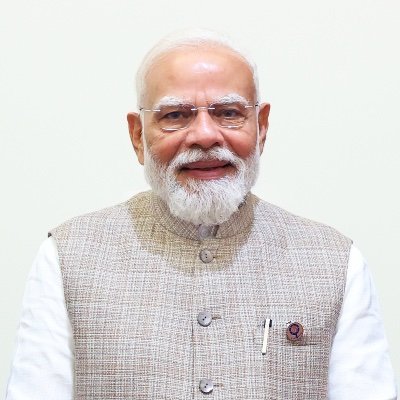
Prime Minister Narendra Modi on Wednesday conveyed his condolences to Nepal Prime Minister Balendra Shah over the loss of lives in devastating flash floods and assured the neighboring country of India’s full humanitarian support as rescue and relief operations continued in the disaster-hit Himalayan regions.
In a post on social media platform X, Prime Minister Narendra Modi said India stood in solidarity with the people of Nepal during the difficult time and that teams from the two countries were coordinating closely to strengthen rescue and relief efforts.
“Spoke to Prime Minister Balendra Shah and conveyed condolences on the loss of lives due to the floods in Nepal. The people of India stand in solidarity with their sisters and brothers in Nepal at this difficult time,” Modi said.
“India is ready to provide all possible humanitarian assistance to Nepal. Our teams are coordinating closely on rescue and relief efforts,” he added.
The flash floods struck northern Nepal on Wednesday, unleashing widespread destruction across mountainous border regions. Initial reports suggested that the disaster may have been triggered by a suspected earthquake and a massive ice and rock avalanche on the Tibetan side of the border, sending a powerful surge of water, mud and debris through Himalayan river valleys and into Nepal.
At least 16 to 17 people have been confirmed dead, according to available official assessments, although the number is feared to rise as rescue teams reach remote and severely affected areas. Nearly 400 travelers have reportedly gone missing, including 291 foreign tourists. Among them are at least 105 Indian nationals and 12 British citizens.
The flooding has also left 41 security personnel, including members of the Nepal Police and Armed Police Force, unaccounted for after a border post was overwhelmed by the sudden torrent.
The Bhote Koshi River reportedly surged dramatically at around 9 a.m. local time, carrying enormous quantities of water, rocks and debris through narrow valleys. Settlements in Nepal’s Rasuwa district, close to the Nepal-China border, were among the worst affected.
Timure and Syapru Besi suffered extensive destruction, with reports of multi-storey structures collapsing and sections of villages being swept away. Floodwaters and muddy debris also moved further downstream into Nuwakot district, where several residential areas were partially submerged.
Authorities have issued high-water warnings for areas along the Trishuli and Narayani river systems, prompting emergency evacuations and increased monitoring in vulnerable locations. The disaster has also dealt a significant blow to Nepal’s power infrastructure, with more than 430 MW of electricity supply reportedly affected after six major hydropower facilities suffered structural damage.
The Rasuwagadhi and Chilime hydropower projects were among the affected facilities. The disruption accounts for more than 12 per cent of Nepal’s national hydropower capacity and could further complicate emergency operations and recovery efforts.
Rescue operations have been hampered by difficult weather conditions and Nepal’s challenging Himalayan terrain. Nepal Prime Minister Balendra Shah has reportedly deployed 14 military and disaster-response helicopters, but strong winds and dangerous flood conditions have prevented aircraft from landing in some of the worst-hit areas.
Rescue teams on the ground are also facing major difficulties because roads, bridges and communication infrastructure have been damaged or washed away.
The Embassy of India in Nepal said it remained closely engaged with Nepalese authorities to facilitate the rescue and relief of Indian nationals affected by the floods.
“The Embassy of India has remained engaged with the relevant authorities of the Government of Nepal for early rescue and relief for Indian nationals affected by the flash floods that took place in Nepal today. Rescue and relief efforts continue to be strengthened in coordination with the Government of Nepal,” the Embassy said.
It also issued emergency helpline numbers for Indian nationals affected by the disaster and their families seeking information: 977 985 131 6807 and 977 970 910 7500.
India is mobilizing emergency assistance and coordinating closely with Nepalese authorities as the scale of the disaster continues to emerge. The response reflects the close geographical, cultural and humanitarian ties between India and Nepal, which share an open border and have repeatedly extended assistance to each other during natural disasters.
The disaster has also triggered concern in India because Himalayan rivers flowing through Nepal eventually connect with river systems in northern India. The Bhote Koshi is linked to downstream networks feeding into the Gandak and Kosi systems, leading authorities in Bihar to place vulnerable downstream and border districts on heightened alert and closely monitor water levels.
Nepal is highly vulnerable to natural disasters because of its rugged Himalayan geography, fragile mountain slopes and extensive network of fast-flowing rivers. Flash floods, landslides, earthquakes and glacial events can rapidly trigger humanitarian emergencies, particularly in remote mountain areas where evacuation and rescue operations are difficult.
With hundreds of people still missing, including Indian citizens and other foreign nationals, the immediate focus remains on search and rescue operations, restoring access to isolated communities and preventing further casualties. As adverse weather and damaged infrastructure continue to hinder relief efforts, India and Nepal are expected to maintain close coordination in the coming days while authorities work to determine the full scale of the tragedy.