Join WhatsApp Channel

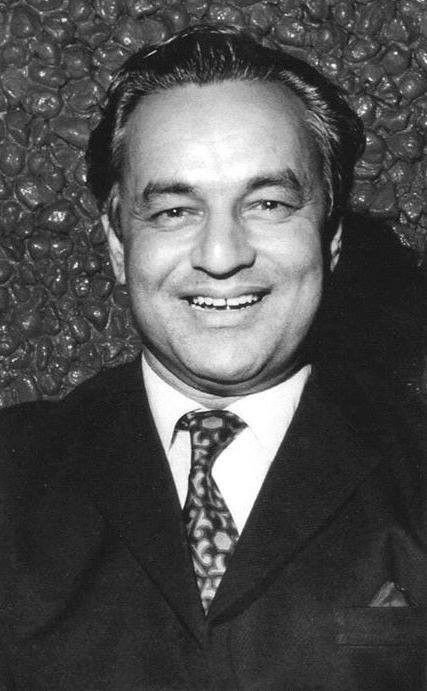
On August 27, it is 50 years since Mukesh Chand Mathur left us. Mukesh sang a fraction of the number of songs of his illustrious contemporaries Mohammed Rafi and Kishore Kumar and yet ranked alongside them in stature, simply because almost nine out of ten songs were popular.
To encapsulate the legend in a paragraph, the perfect gentleman that was Mukesh was more than just the voice of Raj Kapoor and Manoj Kumar and also lots more than just the uncrowned Prince of Pathos. Variety abounded in his songs, many of which are the sole reasons why certain films and composers are even remembered today. The soul in his vocals, added to the fact that the common man could reproduce his songs easily, only added to his devotees!
Mukesh’s debut came about with Dil hi ho bujha hua to, composed by Ashok Ghosh for Nirdosh (1941). On-screen, Mukesh himself enacted it. And his last recording, hours before he left directly from the studio to the airport for a US concert tour, during which he died literally with his boots on, was Chanchal sheetal nirmal komal for Satyam Shivam Sundaram (1978), composed by Laxmikant Pyarelal for that Raj Kapoor film.
Perhaps it was fitting that his swan-song was for Raj Kapoor’s banner, for Raj was always the primary actor-producer with whom Mukesh was linked. What was doubly interesting was that the last song that he sang on stage was also the lyrically-apt Mera Naam Joker (1970) perennial, Jeena yahaan marna yahaan!
Dil jalta hai to jalne do (Pehli Nazar / 1945) was his breakthrough song, composed by Anil Biswas. As per his son, Nitin Mukesh, the song was about to be cut as they felt it was hampering the pace of the film. Instead, they realized that when the song came on, the audience was throwing coins at the screen!
Mukesh’s idol was singing legend and actor K.L. Saigal and the singer also styled his vocals on his role-model until Shankar-Jaikishan made him develop his own stamp with Barsaat (1949). This original and unique Mukesh style became consolidated by that cult song whose popularity extended to Russia long before globalization—Awara hoonfrom Awara (1951).
Branded as a narrow-range singer, Mukesh strode the high notes of S.N. Tripathi’s Jhoomti chali hawaa (Sangeet Samrat Tansen / 1962) to disprove this allegation. Today, like that film, dozens of films are remembered only for their Mukesh’s immortal songs, among them—besides Dil jalta hai from Pehli Nazar and the abovementioned song—Yeh kaun chitrakaar hai (Boond Jo Ban Gayi Moti / 1967) or Ek hasrat thi ke aanchal ka mujhe pyar mile (Zindagi Aur Toofan / 1975) or Jeevan bhar dhoonda jisko (Nadaan / 1971).
And why only the sad song at which he was unmatched? Mukesh excelled in light songs, reaching his comic acme, perhaps, in Woh pari kahaan se (Pehchan / 1970) just as he excelled in patriotism with Chhodo kal ki baatein (Hum Hindustani / 1960), in intense romance with Chandan sa badan (Saraswatichandra/ 1968) and in bhakti-ras with Jyot se jyot jagaate chalo (Sant Gyaneshwar / 1964).
Statistically, Mukesh recorded the most with Shankar-Jaikishan and then with Kalyanji-Anandji. It was Kalyanji who challenged a top-rung classical vocalist to sing Chandan sa badan (Saraswatichandra) as soulfully as Mukesh had done to make him understand why Mukesh had a limousine while the ustad did not!
When Stereophonic Sound took its first tentative steps in Indian music, it was Mukesh to the fore as the sole male voice of V. Shantaram’s Laxmikant-Pyarelal humdinger, Jal Bin Macchli Nritya Bin Bijli (1971). L-P’s association with him had much more to offer as well—they gave him his longest song, the 18-minute gem Main na bhoolunga that Mukesh sang with Lata Mangeshkar and was recorded live in Roti Kapada Aur Makaan (1974).
Says Nitin, “Even after a whopper like Sangam (1964), my father inexplicably faced a professional lull. But then Milan(1967) came, and after that all-hit score led by L-P’s Sawan ka mahina (with Lata), he never looked back.”
Roshan and Salil Chowdhury were two more composers who rated Mukesh very highly. For Roshan the association stemmed from his own breakthrough, Bawre Nain (1950) to his swan song Anokhi Raat (1969) with Malhar, Dil Hi To Hai and Devar in-between. With Chowdhury, we would primarily look at Kahin baar yoon hi dekha hai (Rajnigandha / 1974), which got Mukesh his only National award, apart from Madhumati, Anand and Annadata.
But Mukesh sang for every major composer, from Naushad all the way to Rajesh Roshan, never discriminating as he sang hits for even rarer composers as varied as Satish Bhatia (Boond Jo Ban Gayee Moti / 1967), Daan Singh (My Love/1970), Shamji Ghanshamji (Thokar / 1971), Brij Bhushan (Milap / 1973) or Ratandeep-Hemraj (Pyasi Nadi / 1973).
Some Mukesh hits for major composers
- C. Ramachandra: Jap jap jap jap jap re / Sharada (1957)
- Chitragupta: Ek raat mein do do chand khile / Barkha (1959)
- Khayyam: Kabhi kabhi mere dil mein / Kabhi Kabhie (1976)
- Madan Mohan: Bhooli hui yaadon / Sanjog (1961)
- Naushad: Jhoom jhoom ke nacho aaj / Andaz (1949)
- O.P. Nayyar: Chal akela / Sambandh (1968)
- R.D. Burman: Ek din bik jaayega / Dharam Karam (1975)
- Rajesh Roshan: Hum dono milke / Tumhari Kasam (1978)
- Ravi: Ek woh bhi Diwali thi / Nazrana
- S.D. Burman: O jaanewale ho sake to laut ke aana / Bandini (1963)
- Sonik-Omi: Jinhe hum bhoolna chahe / Aabroo (1968)
- Usha Khanna: Barkha rani / Sabak (1973)