Join WhatsApp Channel

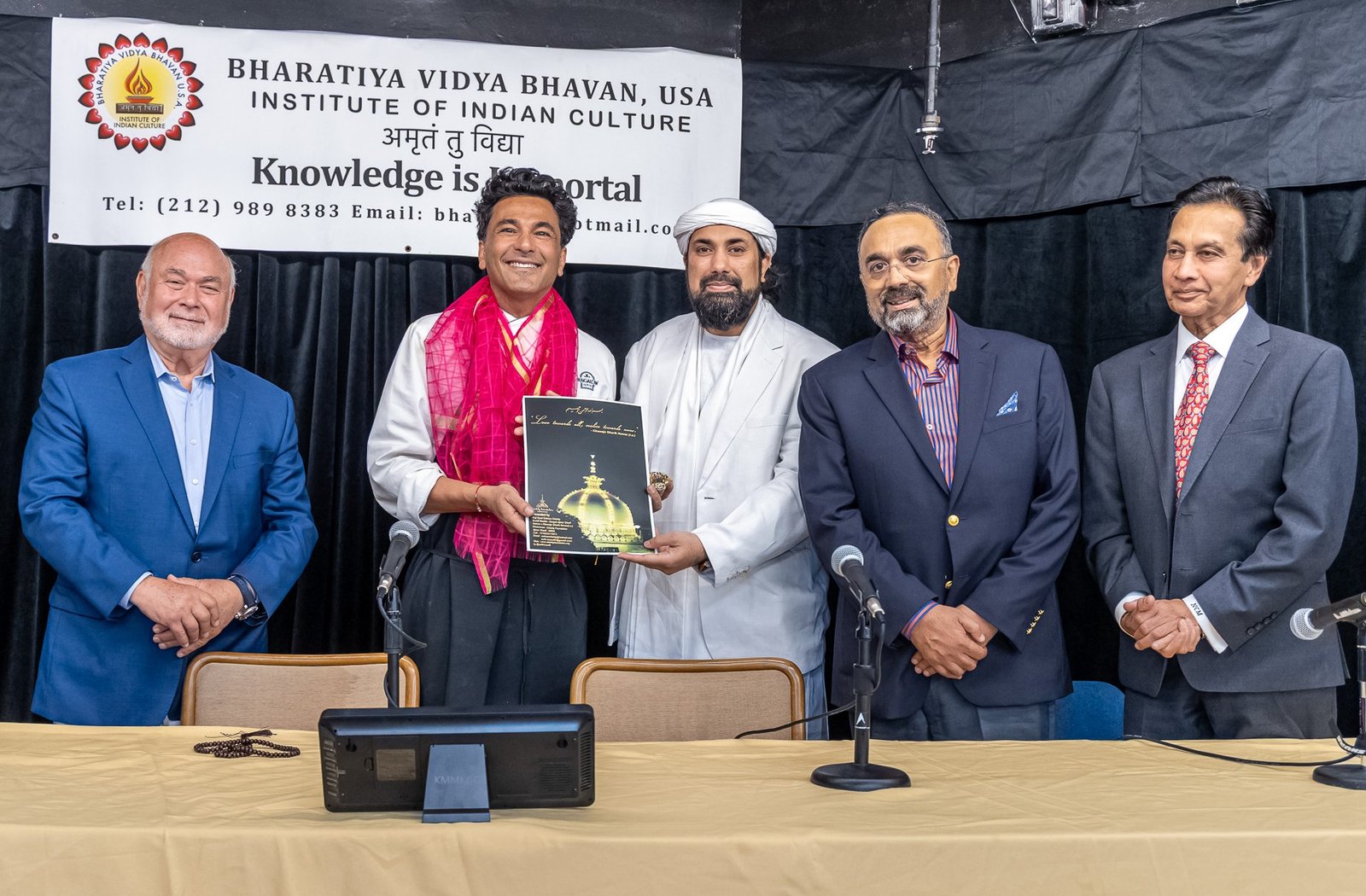
New York City: ‘Many Paths…. One Destination’. This core civilizational message from India, was an apt title for an illuminating program organized by the Bharatiya Vidya Bhavan here on August 12.
All the four featured speakers belonging to diverse faith traditions converged on the one truth that we are all seeking connection with – the divinity within.
The elite invited audience packing the Bhavan’s elliptical hall on the 17th floor of a midtown Manhattan building listened with rapt attention to the unifying message of Haji Salman Chishty, Jonathan Granoff, Yakub Mathew, and Chef Vikas Khanna, who offered different perspectives on peace within and without and the role human connection can play.
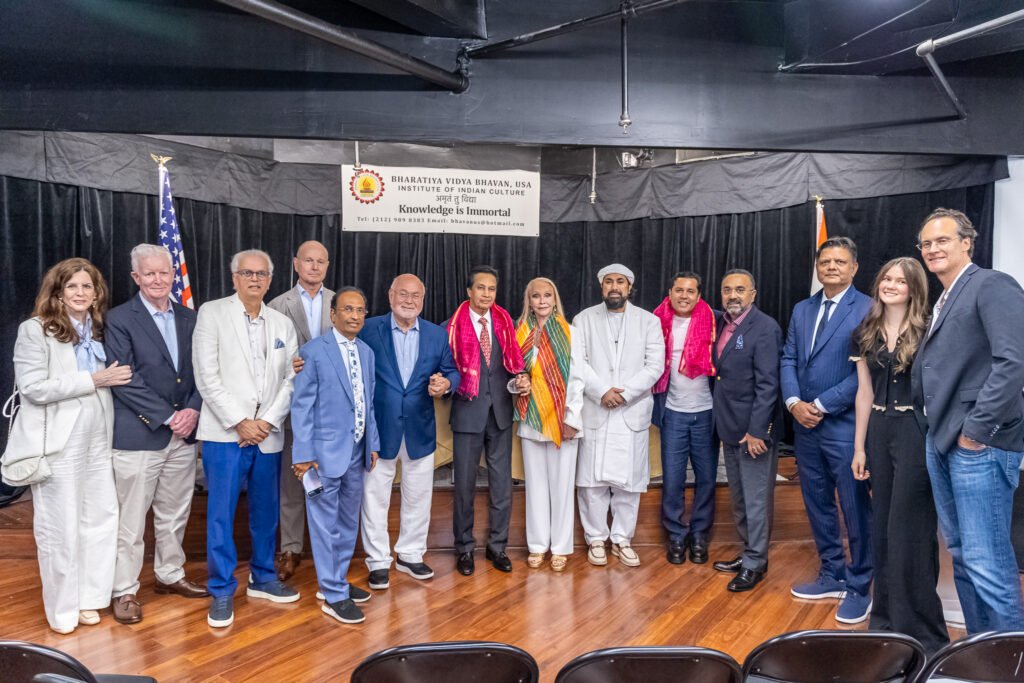
Yakub Mathew, banker and author of ‘Seeking the Infinite’ a multifaith bestseller based on the ‘Mahima’ of the Maha Kumbh, arranged the program and initiated the panel discussion.
Syed Salman Chishty, Gaddi Nashin of the Ajmer Sharif shrine in Rajasthan, said that at the dargah of Khwaja Moinuddin Chishti, people of diverse faiths are welcomed every day. He shared two simple actionable concepts from Sufi teaching: Shukr and Sabr: “Wake up with Shukr (gratitude) as every day is a grace, and go to bed with Sabr (patience) that all will be well.” When asked by Parveen Chopra., Founder of A Lotus In The Mud spiritual magazine, about aids to spiritual growth, he recommended a few minutes of silence and breathing practices that enable us to be conscious of the reality of who we are.
Jonathan Granoff, an international lawyer, president of the Global Security Institute of the United Nations, and a nuclear disarmament warrior nominated for the Nobel Peace Prize in 2014, said that the only thing that can fulfill our human birth is to know yourself and to know the Creator. There are many paths to achieve that, which involve working on yourself by scrubbing and cleaning, he said, adding, “There are many waves on the ocean, but when they bow down, they all become the ocean. So may we have the courage and humility to bow down into the ocean of God.”
Vikas Khanna, Michelin-star chef, came wearing the kitchen apron and had to rush back to serve dinner at his Bungalow restaurant. Yet, with his brief remarks, he touched the hearts of all. The boy from Amritsar who grew up revering the langar tradition at the Golden Temple, said serving food is his worship. He said his belief in pluralism was strengthened when a Muslim lady harbored him in Ghatkopar during the 1992 Mumbai riots.
In the question-answer session, Barbara Winston, founder of Peace Innovation Initiative, asked Salman Chisthy, “What do we do with evil?” He replied, “We respond with patience as Mahatma Gandhi said, ‘An eye for an eye would leave the world blind’. But, yes, we have to defend ourselves. We have to protect our family and community. We have to be resilient.”
Dr Navin C. Mehta, eminent otolaryngologist and Chairman of the Bharatiaya Vidya Bhavan, asked Yakub Mathew, a banker, about the power money has over us. Yakub replied, “Once I posed the same question to Mother Teresa who used to come to our house in Delhi. She said, ‘It’s a means, not an end. The power of money is to give it away, to touch as many lives who can’t thank you.’” Yakub added, “All I can say is money gives you dignity, money gives you the means to touch lives. Money is important. So, make money, celebrate your life and share your abundance with those who cannot thank you.”
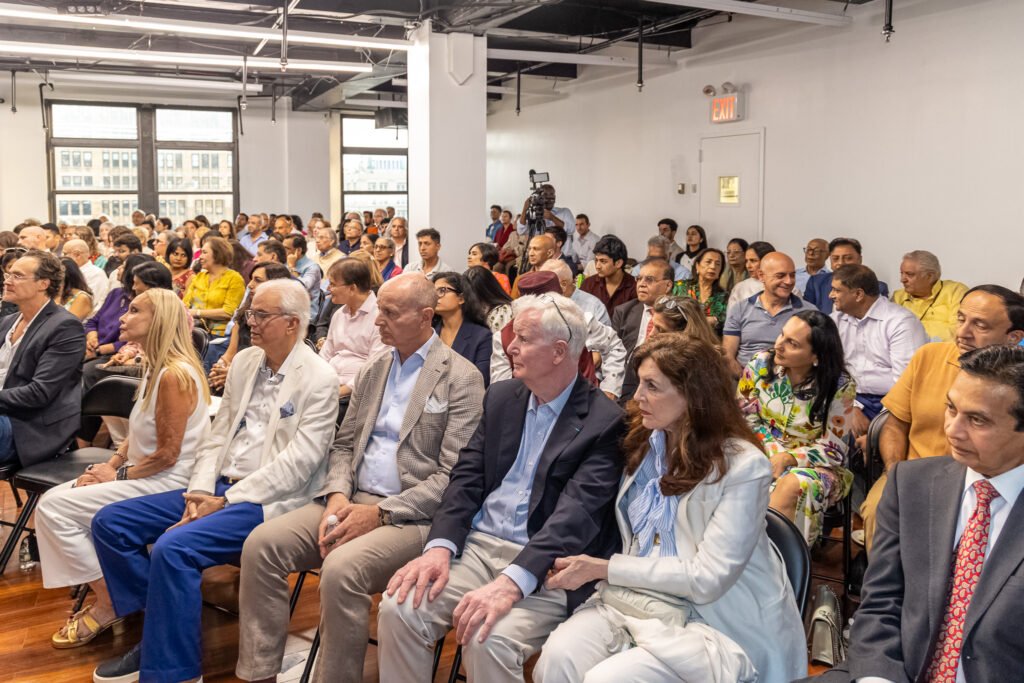
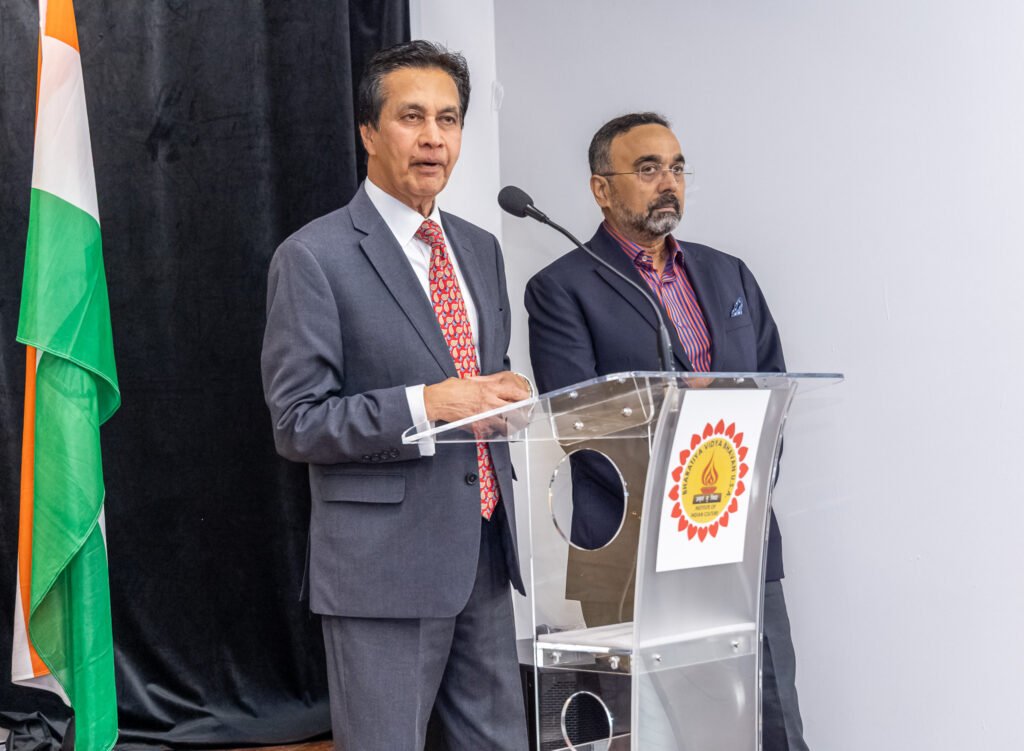
In his speech, Dr Mehta spoke glowingly about the Bhavan, a venerable institution in the city that has been promoting art, culture and heritage of India since 1981.
The evening program opened with popular Indian spiritual numbers performed by the multitalented Kunal Lamba and closed with a soul-stirring rendition of “Amazing Grace” by an admirable vocalist, Kristin Hoffman.
Those gracing the event included the Very Reverend Winnie Varghese, Lama Aria Drolma, Prince Dimitri of Yugoslavia, Bhavan’s Vice-Chairman Kenny Desai and Executive Director Minesh Patel.
After food for the soul, food for the belly was served courtesy Vikas Khanna and Jimmy Rizvi, described as his dervish by Salman Chishty.