Join WhatsApp Channel

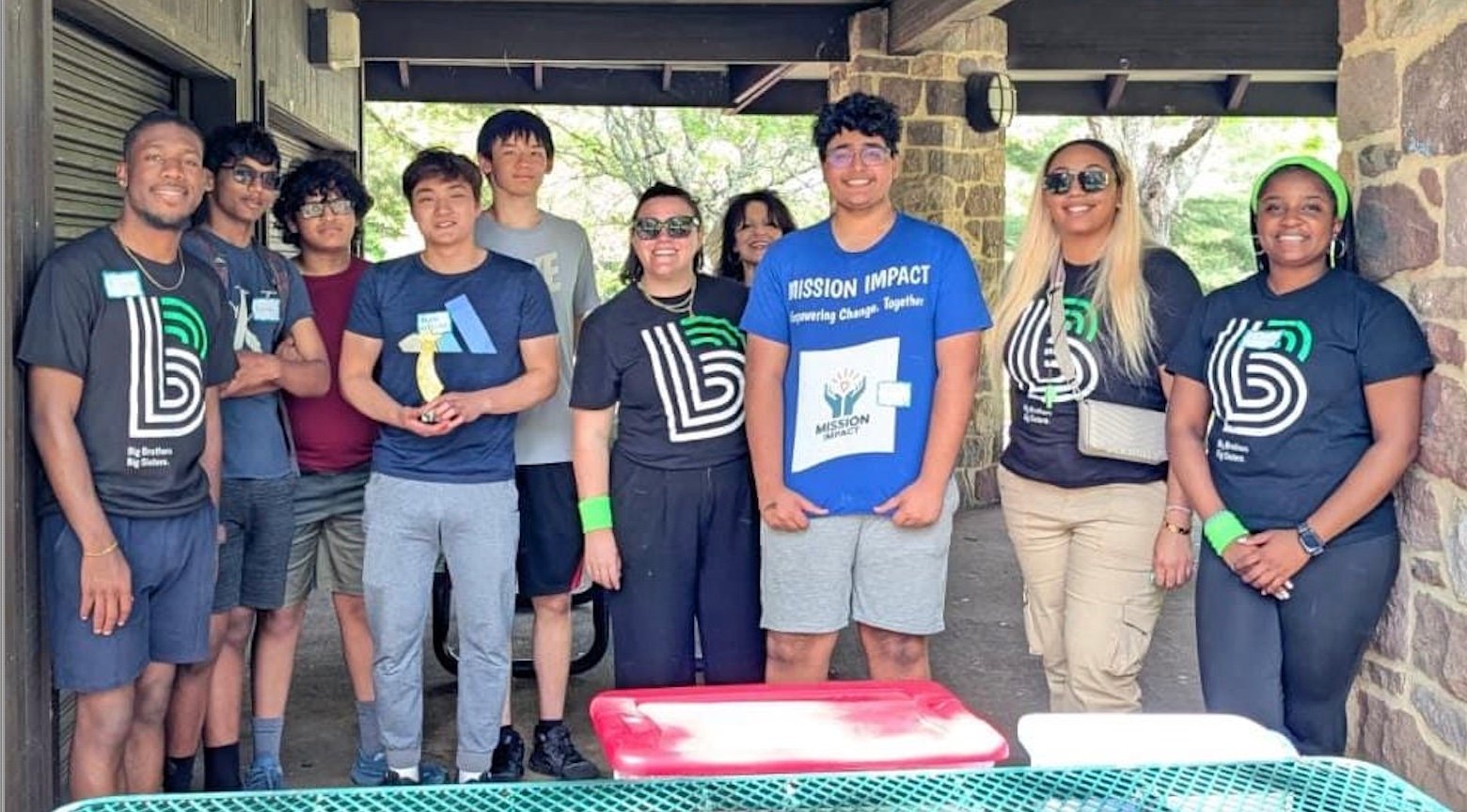
A few years ago, if you had asked me what service meant, I probably would have given you the answer most high school students would.
Showing up. Volunteering. Helping someone. Logging a few hours.
I had been serving my community for years through Scouting, robotics, local organizations and school activities. I loved it. But somewhere along the way, I started noticing a disconnect.
There were students all around me who wanted to make a difference. They cared. They had energy. They had ideas.
But too often, they didn’t know where to start.
At the same time, I met community organizations doing extraordinary work with limited time and resources. They needed young people, but not simply another group of students who would show up for two hours, take a picture and disappear.
There was enormous potential on both sides.
Something was missing in the middle.
That realization eventually became Mission Impact.
But the lesson that shaped Mission Impact didn’t come from a spreadsheet, an award or a leadership position.
It came from moments when things didn’t go according to plan.
When Half the Team Disappeared
I still think about one afternoon at HomeFront.
Our Mission Impact team had planned activities for children there, including a cultural scavenger hunt and poster-making. We had volunteers, materials and a plan.
Then, unexpectedly, about half of our volunteer team had to step away.
Suddenly, the plan we had spent time preparing didn’t matter very much.
There were still children waiting for us.
I remember looking around at the students who remained. We could have scaled everything back. We could have explained that we were short-staffed. We could have treated it as a failed volunteer event.
Instead, everyone adjusted.
Students who had expected to assist suddenly had to lead. People took responsibility for activities they had not planned to run. We improvised, communicated and kept moving.
And the kids kept smiling.
Watching that happen changed something for me.
Until then, I had thought a lot about my ability to lead a service project.
That afternoon made me think much more seriously about something else:
Could I create an environment where someone else discovers that they can lead?
That became the question behind Mission Impact.
The Problem With “Getting Your Hours”
High school students hear about service constantly.
We need volunteer hours for clubs. We need them for National Honor Society. They appear on applications and résumés. Sometimes service becomes another box to check between homework, sports and everything else competing for our attention.
I don’t think students are the problem.
Most young people I have met genuinely want to help.
The problem is that we often introduce teenagers to service by asking, “How many hours did you complete?”
What if we asked something different?
Who was better off because you were there?
And then:
What did you learn that will allow you to help the next person better?
Mission Impact grew from that tension.
I didn’t want to build another organization where students collected hours.
I wanted to build something where they collected experiences that changed how they saw themselves.
What Happened When We Trusted Young People
At first, the idea was simple: connect students who wanted to serve with organizations that needed their help.
Then something unexpected started happening.
The students changed.
A volunteer would arrive nervous and unsure what to say. A few projects later, that same student would be coordinating other volunteers.
Someone who barely spoke during their first event would eventually be leading a team.
Students stopped asking me, “What should I do?”
They started saying, “Here’s what I think we should do.”
That may be my favorite measure of Mission Impact.
Not a number.
A sentence.
Because every time I heard it, I knew another young person had stopped seeing themselves only as a volunteer and started seeing themselves as someone capable of leading.
And once that happens, service begins to multiply.
From One Project to 460,000 Lives
Over time, the small moments became something much larger than I expected when I started.
Mission Impact has now positively impacted more than 460,000 lives.
More than 150 students have been empowered as youth leaders.
We have built more than 10 long-term community partnerships, working alongside organizations including Big Brothers Big Sisters of Mercer County, UrbanPromise Trenton, Project Freedom and HomeFront.
Those numbers still feel strange for me to write.
But they are not the part of Mission Impact I am proudest of.
I am proud of the student who realizes, maybe for the first time, that people will listen when they speak.
I am proud of the volunteer who comes back for a second project without anyone having to ask.
I am proud when an organization begins trusting our students with more responsibility because they know we will show up.
And I am proud when something continues without me.
Because that is when I know it is no longer my impact.
It belongs to everyone involved.
Service Changed Me, Too
It would be easy to write this story as if I started Mission Impact because I had figured something out.
The opposite is probably closer to the truth.
Mission Impact taught me.
It taught me that leadership isn’t having the best plan in the room. Sometimes it is watching your plan collapse and helping everyone around you believe that you can still make the day work.
It taught me that impact and intention aren’t the same thing. Wanting to help someone matters, but understanding whether you actually helped them matters more.
It taught me to listen to community partners instead of arriving with my own assumptions about what they needed.
Most importantly, it changed my definition of leadership.
When I was younger, I thought being a leader meant being the person at the front.
Today, I think leadership is often the opposite.
It is creating the conditions for someone else to step forward.
That realization followed me everywhere: through Scouting and eventually becoming an Eagle Scout, through robotics and community outreach, through school organizations and through hundreds of hours spent working alongside people throughout my community.
Each experience reinforced the same lesson.
Service isn’t separate from leadership.
Service is where I learned how to lead.
Then Came a Moment I Never Expected
During my senior year, something unusual started happening.
People began recognizing the work.
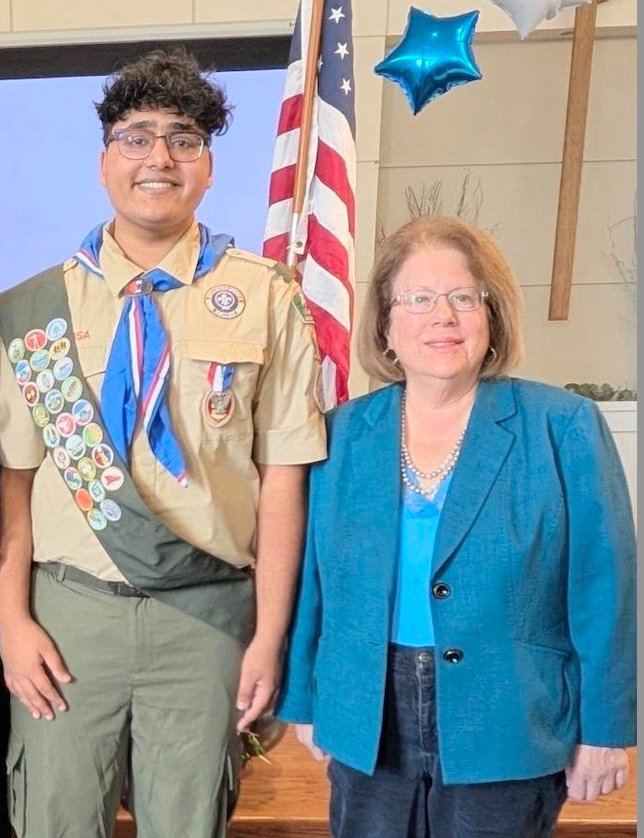
State Senator Linda Greenstein, Assemblyman Wayne DeAngelo and Assemblywoman Tennille McCoy honored me with the 14th Legislative District Award, and I received a New Jersey State Legislature Proclamation recognizing my service and leadership.
I remember thinking about how far removed that moment felt from the small service projects where all of this had begun.
Then came an even more unexpected phone call.
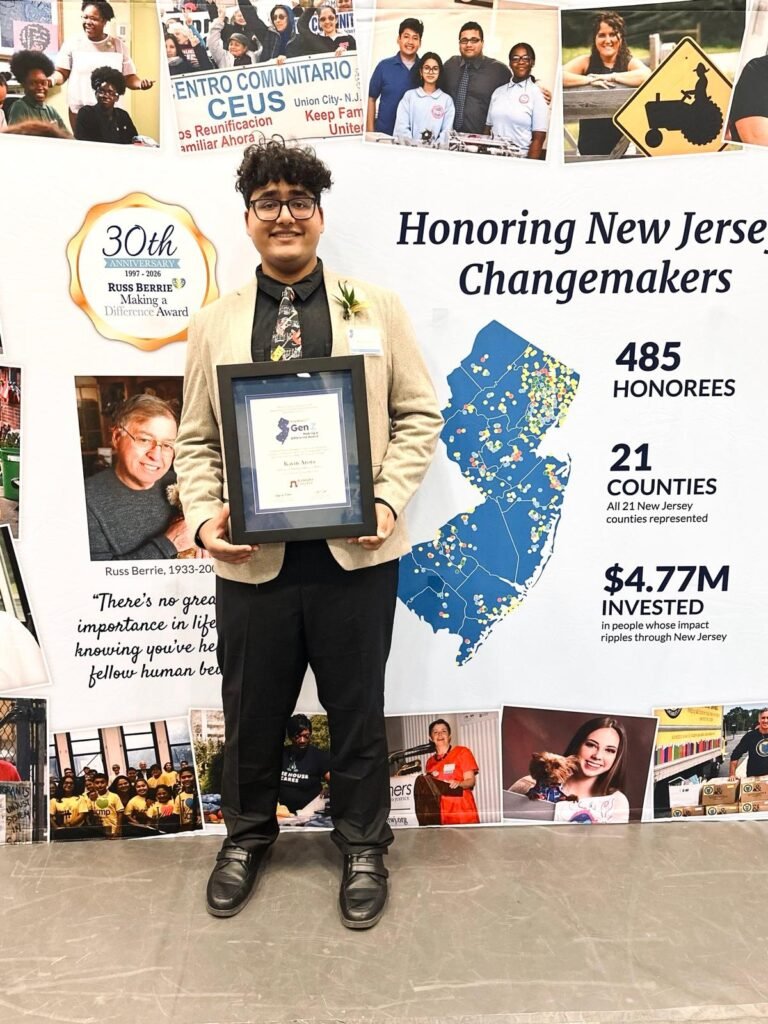
I had been selected as a 2026 Gen Z Making a Difference Honoree by the Russ Berrie Making a Difference Award.
I knew what the award represented.
For 30 years, the Russ Berrie Making a Difference Award had recognized New Jersey residents whose service transformed their communities. Hundreds of changemakers from across the state had been recognized since the program began in 1997.
And 2026 would be its 30th and final year.
To be selected as part of its inaugural and final Gen Z class, representing Robbinsville and Mercer County for Community Engagement, was difficult to process.
But what stayed with me wasn’t simply having my name attached to an award.
It was what the award seemed to say about the idea behind Mission Impact.
Young people belong in this work.
Not someday.
Now.
The Strange Thing About Graduation
Graduation has a way of making you look backward.
You walk across a stage, receive a diploma and suddenly four years are reduced to photographs, memories and goodbyes.
When I think about Robbinsville High School now, I don’t first think about a résumé.
I think about people.
I think about friends who became volunteers.
Volunteers who became leaders.
Adults who took a chance on a teenager with an idea.
Community partners who trusted us enough to tell us what they actually needed.
Students who showed up uncertain and left standing a little taller.
And I think about how much I changed alongside them.
When I entered high school, I thought impact meant doing as much as I possibly could.
As I leave, I understand it differently.
If everything stops when you leave, you may have done something meaningful.
But if people you helped empower keep going, you may have built something meaningful.
That distinction has changed the way I think about Mission Impact and about my own future.
What Could Be
There is still a problem I haven’t solved.
There are millions of young people who care deeply about their communities but have never been told that they are capable of changing them.
Some are waiting for an invitation.
Some are waiting until they are older.
Some believe leadership belongs to someone louder, more experienced or more qualified.
I used to think that way, too.
Now I have watched what happens when young people are trusted with real responsibility.
I have seen a nervous volunteer become a leader.
I have seen a small project become a partnership.
I have seen one student’s willingness to serve inspire another student’s willingness to serve.
And somehow, those moments have accumulated into more than 460,000 lives impacted.
The Russ Berrie Award and the State Legislature Proclamation are honors I will always carry with enormous gratitude.
But they aren’t the ending I want for this story.
Graduation isn’t either.
Because the most important thing Mission Impact gave me wasn’t an award, a statistic or even an organization.
It gave me a different understanding of what one person can do.
One person can serve.
But one person can also inspire ten others to serve.
Those ten can inspire a hundred.
And eventually, you stop being able to tell where one person’s impact ends and another person’s begins.
That’s the kind of impact I want to spend my life creating.
I started high school asking myself:
How can I make a difference?
I graduated asking a much better question:
How many other people can I help realize that they can make one too?
Disclaimer: The opinions and views expressed in this article/column are those of the author(s) and do not necessarily reflect the views or positions of South Asian Herald.