Join WhatsApp Channel

This year, we have seen Ikkis and Main Wapas Aaunga on the traumas of Partition. They were very personal for the protagonists and endeared us to their issues. But the films were probably rejected due to a lack of identification with the major chunk of the audience, possibly because these films looked at the enemy country sympathetically by portraying their people positively.
Not that one can generalize, for good and bad exist everywhere. And this time, this becomes the crux, though the angle focuses on religion rather than nationality. Preity Zinta, the heroine, was right when she said that for her, Batwara 1947 was more about a family than about Partition per se.
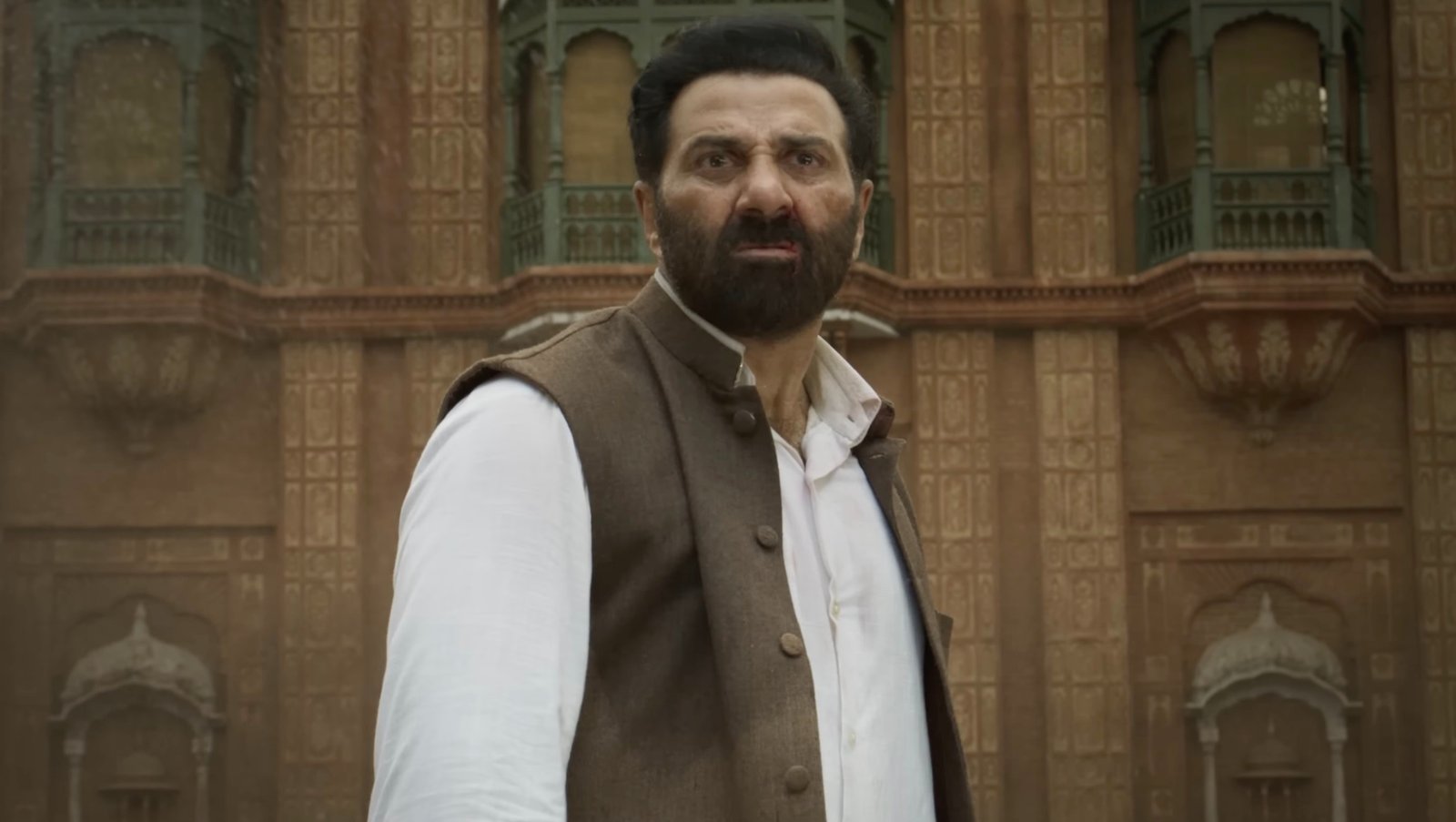
Sikandar Mirza (Sunny Deol), a well-to-do businessman, is set to celebrate India’s newfound Independence when riots strike Lucknow on August 15 itself. Though he does not want to leave his country (for him it is India, not Pakistan), he is forced to do so when Hindu zealots even attack his mansion. With wife Hamida (Preity G. Zinta), son Javed (Karan Deol) and daughter Taano (Khushi Hajare), he tries to board an overcrowded train leaving for Lahore, but Javed gets left behind along with Sikandar’s family friend, Rashid (Rajan Modi) and the latter’s family.
The Mirzas are accommodated in a relief camp in Lahore, and soon, a happy-go-lucky shaayar (poet) with a noble heart named Habib Anwar (Ali Fazal) gives Sikandar a haveli allotted to him. But when they reach the place, they find it is a massive mansion, named Durga Niwas, with 22 rooms. And even as they are obviously pining for Javed, they find an old lady in residence.
This cute lady is the actual owner of the place. But Sikandar and Hamida try all kinds of ploys to make her leave, and she refuses. She will not do so until her son Ratan (Khalid Siddiqui) returns with his family.
And gradually, this Hindu lady wins a place in their hearts. She helps when Tanno is unwell, she is generally affectionate and she is delighted when one day, Javed actually comes home.
But destiny has other plans. A fanatic wrestler named Yakub (Abhimanyu Singh) pathologically hates Hindus and wants her out. He also has an ulterior motive—to grab the rest of the property. By now, Sikandar and Hamida begin to look upon her as Mai, a mother. But the thorn in the flesh is Javed. Having seen Rashid and his family butchered thanks to a Hindu station officer squealing on their wherabouts, and the atrocities heaped on fellow Muslims back home, he now hates all Hindus. When Sikandar refuses to be moved by Yakub’s threats and harassment, Javed leaves home and joins Yakub.
For Yakub, the limit is reached when the Mirzas decorate Durga Niwas for Diwali so that Mai performs a puja. He takes it as a bid to convert his fellow Muslims into Hindus. Worse, he is also aspiring to contest elections.
However, Mai is popular with the neighborhood for her helpfulness to everyone. And one day, Mai breathes her last. And the Mirzas take a crucial decision.
The story is based on Asghar Wajahat’s 1989 play, Jis Lahore Nai Vekhya, O Jamya E Nai (Experiencing Lahore is so fundamental that not seeing it is akin to never being born). Rajkumar Santoshi takes part credit for the story due to some key changes that he has made. His screenplay is heart-tugging, except when it descends to filmic tropes like Sikandar beating a whole gang, and smashing people and furniture in even a police station without being held accountable for it!
Sequences like Sikandar berating his opponents in the police station by pointing out that every infant utters the word “Maa” (mother) before words like “Ram” and “Allah”, or his quoting passages from the Holy Quran stating that Islam has always respected other religions reinforce, albeit in no new manner, that humanity supersedes all faiths.
The script is co-written by Wajahat himself and such dialogues are the highlight. But clearly, audience gratification is not a Santoshi priority, for the reformation of Javed comes a shade too late. Also, the gray streak in Sikandar early on may be logical for his mindset at the time, but may not be accepted by fans of a paragon-like superhero in Sunny the actor.
Also not logical is how a businessman is so good at beating up so many people. This may be ‘Sunny side up’ for Deol but does not fit his character, and the modest quantum of such action may also put off Sunny’s hardcore fans who know him for more for his Border and Gadar franchises, Tridev, Ghayal, Ghatak and Jatt kind of high-voltage actioners.
Shabana Azmi is a past master in every kind of roles and she is brilliant as Mai. Her expressions, body language and more show an artistry that has only improved with age and experience. Sunny is very effective, especially in the emotional sequences with Shabana. Preity G. Zinta makes a charming comeback. Khushi Hajare as Tanno is very sweet.
I found Abhimanyu Singh very routine and one-dimensional, and Karan Deol is good only sporadically. But Ali Fazal was superb as the lovelorn poet with a past. The rest of the cast is good, especially Chandan Dilawar as Mushtaq Khan.
Santosh Sivan’s cinematography is evocative, Ravi Verma’s action is well done and the production design by Subrata Chakraborty and Amit Ray outstanding. A.R. Rahman’s background score is brilliantly unshowy, but his songs are ho-hum as has been the case now for (very) long.
For Santoshi as director, this is a return to form 22 years after “Khakee.” For his sake, principally, I hope that the film works.
Rating: ****
Aamir Khan Productions’ Batwara 1947 Produced by: Aamir Khan Directed by: Rajkumar Santoshi Written by: Asghar Wajahat & Rajkumar Santoshi Music: A.R. Rahman Starring: Sunny Deol, Preity G. Zinta, Shabana Azmi, Karan Deol, Abhimanyu Singh, Ali Fazal, Khushi Hajare, Khalid Siddiqui, Rajan Modi, Kanikka Kapur, Isha Sandhir, Vishnu Sharma, Chandan Dilavar & others