Join WhatsApp Channel

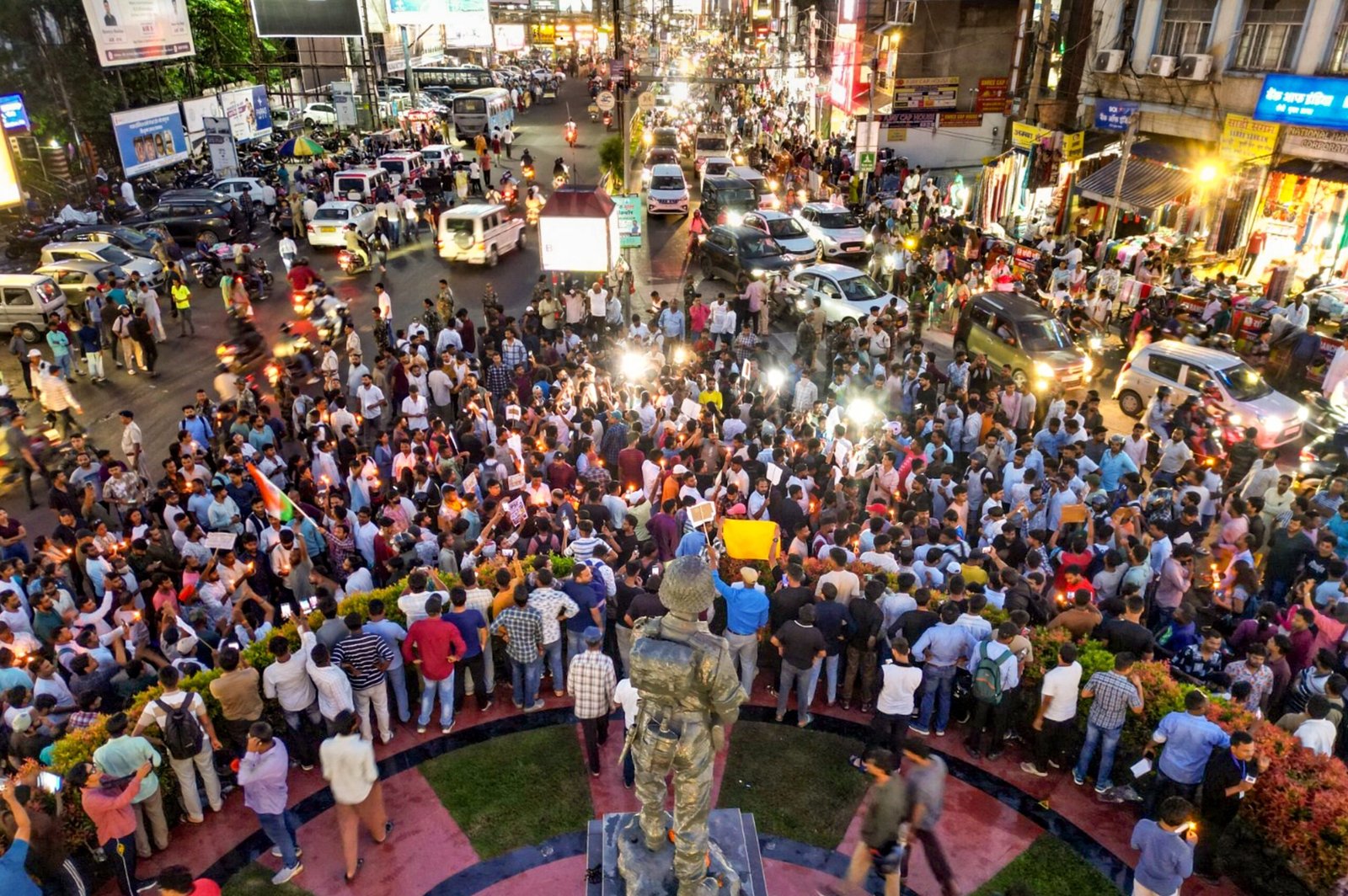
The traffic came to a standstill near Albert Ekka Chowk in Ranchi. I was stuck, like hundreds of others, watching a procession of students march past with placards and the national flag. What began as an inconvenience soon became a moment of reflection — and a conversation with a fellow passenger that stayed with me long after the road cleared.
My fellow passenger, an elderly gentleman who introduced himself as Mr. Banerjee, a school teacher from Jamshedpur, leaned forward as the students passed by. Unlike the usual impatient honking, there was a strange silence on the road.
“You see that?” he said, nodding toward the marchers. “That’s not chaos. That’s discipline.”
I looked closer. Hundreds of students — perhaps a thousand — were walking in an orderly manner, holding the tricolor, singing the national anthem. There were no broken windows, no burnt tires, no abusive slogans. Just quiet, resolute faces.
“I was in Delhi last month,” I told him. “Saw the Jantar Mantar protests too. This feels… different.”
Mr. Sharma smiled knowingly. “That’s exactly the point. In Delhi, you had the CJP protests — loud, theatrical, with political cameras following every move. Here? These students have been sitting at Jaipal Singh Munda Stadium since July 29. In the rain. Under tarpaulin sheets. And not one stone thrown.”
The Spark: One Viral OMR Sheet
“What are they even protesting about?” I asked.
“JPSC. JSSC. Paper leaks. The same old story,” he said, his voice heavy with weariness.
The controversy began when a carbon copy of a successful candidate’s OMR answer sheet went viral on social media. The post claimed the candidate had qualified for the next round despite answering only 48 out of 100 questions in the first paper. For students who had spent years preparing — some five years, like protest organizer Vinay Mehta — this was the final straw.
“But this isn’t new, is it?” I asked.
“New?” Mr. Banerjee laughed bitterly. “Jharkhand’s civil services examination has been dogged by controversy for more than two decades. In 2003, the History paper leaked. In 2012, the CBI found that successful candidates were relatives of politicians, civil servants, and JPSC officials. And now this. The students have lost faith in the state CID probe. They want the CBI. They want the ED. And frankly, who can blame them?”
Five Demands, One Cry for Justice
A young protester walking past our car was holding a placard. I rolled down the window.
“What do you want?” I asked.
He didn’t hesitate. “Cancel the 14th JPSC preliminary exam. CBI and ED investigation. Action against the guilty. Reforms in the recruitment system. And a fifth option — ‘not attempted’ — in OMR sheets.”
“That’s five demands,” Mr. Banerjee noted from the backseat. “But really, it’s one demand: fairness.” The student nodded and walked on, joining his companions in a silent flash march inside the stadium.
The Delhi Contrast: A Tale of Two Protests
“Why isn’t this getting the same attention as Delhi?” I asked.
Mr. Banerjee sighed. “That’s the question, isn’t it? The Delhi protests had Sonam Wangchuk on a 26-day hunger strike. They had CJP founder Abhijeet Dipke leading the charge. They had political parties rushing to show solidarity. The Union Education Minister resigned.”
“And here – the student leading the protest – Devendra Nath Mahto is on an indefinite hunger strike. His health has deteriorated significantly without much support from the media and/or political parties.
I recalled reading about this — how BJP leader Amit Malviya had pointed out that the Ranchi protest was peaceful, with “no abusive language, no slogans calling to break the country, no attacks on public property, and opposition leaders are not rushing in with cameras in hand”. The contrast was striking.
“So, the irony,” I said slowly, “is that because they’re peaceful, they’re being ignored?”
“Exactly,” Mr. Banerjee said. “Peaceful protest doesn’t make for sensational news. But that’s what makes this movement so powerful — and so heartbreaking.”
The Bigger Picture: A State Bleeding Talent
The traffic began to move, but our conversation didn’t stop.
“You know what this is really about?” Mr. Banerjee asked. “It’s not just about one exam. It’s about a system that has been failing Jharkhand’s youth for decades. And when the system fails, the youth leave.”
He told me about the brain drain — how Jharkhand has the lowest college density in the country. How nearly 16 lakh workers from Jharkhand are employed outside the state. How bright young minds are forced to migrate to Bengaluru, Pune, and Delhi because there are no opportunities at home.
“Paper leaks are just a symptom,” he said. “The disease is red-tapeism. Bureaucracy. Ineffective policies. When a student spends years preparing for an exam, only to have it compromised by corruption — what message does that send? That merit doesn’t matter. That connections matter more than competence.”
A study on Bihar and Jharkhand’s talent crisis noted that “the large number of skilled people leaving Bihar and Jharkhand to find better opportunities is a major reason for the low per capita income in these states”. The question arises as to “Why are these regions unable to provide the opportunities to retain their talent? What are the systemic barriers?”
The Placard That Said Everything
As we approached the end of the traffic jam, I saw one more placard that stopped me cold. It featured a man portrayed in multiple roles — an astronaut, a police officer, an advocate, a doctor, and a Minister.
“What’s that about?” I asked.
Mr. Banerjee explained: “The students say that man represents what money can buy in Jharkhand. With enough money, you can secure any government job, regardless of merit. That placard isn’t just satire. It’s the painful truth of what these young people are up against.”
What These Students Deserve
The traffic cleared. Mr. Banerjee and I exchanged numbers, promising to stay in touch. But the conversation lingered.
These students — thousands of them — have been protesting for days. They’ve endured rain, hunger strikes, and the indifference of a political class that rushed to Delhi’s Jantar Mantar but has been conspicuously absent in Ranchi. One report noted that while the CJP extended support through a video call, “the BJP has accused the Congress of selective activism, pointing to its vocal backing of student protests in Delhi while limiting its support in Jharkhand to sending breakfast boxes.”
“Is outrage over student issues driven by principle or political convenience?” a leading Channel reporter asked. The question answers itself.
What these students deserve is simple: a fair chance. They deserve a recruitment system that rewards merit, not money. They deserve transparency, accountability, and timely examinations. They deserve to build their futures in the state they call home — without being forced to leave because the system has failed them.
A Call for Attention
As I drove away, I thought about what Mr. Banerjee had said at the very beginning: “That’s not chaos. That’s discipline.”
In a state known more for its mineral wealth than its intellectual capital, these students are fighting for something far more precious: the right to a future based on merit. They are fighting peacefully, holding the Constitution, singing the national anthem. They are showing the country what true student activism looks like.
The least the country can do is pay attention.
The protest in Jharkhand continues. As of today, students remain at Jaipal Singh Munda Stadium, demanding justice. Devendra Nath Mahto remains on hunger strike. And the question remains: will anyone listen before it’s too late?
Disclaimer: The opinions and views expressed in this article/column are those of the author(s) and do not necessarily reflect the views or positions of South Asian Herald.