Join WhatsApp Channel


Parts of Pakistan-administered Kashmir, or Pakistan-Occupied Kashmir (POK) is in the throes of protests yet again after unrest in 2023, 2024 and 2025.
POK is divided into two: the so-called Azad (Free) Jammu and Kashmir (AJK) comprising an area over 13,000 square kilometers with a population of 4.4 million and Gilgit-Baltistan that covers 72,000 square kilometers with a population of less than 2 million. As in the past, the protests this time too are in AJK.
The current unrest can be traced to early June, after polls to the regional assembly were called for July 27. Agitating the locals is the reservation of 12 seats in 53-member AJK assembly for Kashmiri refugees, i.e. those not living in Pakistan-administered Kashmir but are from the Indian administered part of Kashmir. This reduces seats for AJK residents to contest. The Joint Awami Action Committee (JAAC), a collective of activist groups spearheading the protests, has called for the abolition of reservations. They argue this dilutes political representation and the voice of local people. Reuters says the number of dead in clashes with security personnel in Muzaffarabad, Rawalakot, Mirpur and other parts of AJK is 30, but the toll is suspected to be higher.
The reservation was introduced decades ago, the BBC said, but the disaffection has been compounded by corruption, administrative neglect, soaring inflation, unemployment and deteriorating economic conditions. In that sense, it mirrors the recent Gen Z protests in Sri Lanka, Nepal and Bangladesh. Several posts show young boys raising slogans against the Pakistan army. Much of the information about the protests filtering out despite an information blackout is through X.com posts and reels – possibly the handiwork of Gen Z. Will these protests too go the same way as others in South Asia? That’s hard to say right now. Pakistan will do its utmost to ensure it doesn’t.
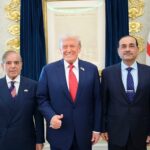
For Pakistan, the protests are surfacing at an inconvenient time. Its civilian and military leadership have been basking in the rosy aftermath of a truce they brokered between Iran and the US. US President Donald Trump and Vice President J.D. Vance hailed these efforts. It’s another matter that Trump last week jettisoned the ceasefire and is back at war with Iran. The question is – if Pakistan can broker a ceasefire between Iran and the US, surely it can settle differences with the people it governs?
The AJK unrest is in addition to protests in other parts of the country – Balochistan, for instance. Here too, Pakistan hasn’t found a way to resolve longstanding grievances. Then there is the tension with Afghanistan. Ironic, therefore, that Pakistan’s success at brokering peace abroad.
Second, the measures that Pakistan has used to quell protests in AJK, i.e. internet shutdown, sending in extra security forces, deeming the protests terrorism and violation of human rights —are exactly what Pakistan accuses India of doing in its part of Kashmir. Terrorists that it trains and infiltrates into India are labelled freedom fighters. Can Pakistan really then claim the moral high ground here vis-a-vis India? How can it say it champions freedom and human rights for Kashmiris in the Indian administered half while suppressing protests by AJK Kashmiris? JAAC leader Sardar Aman Khan has been quoted as saying that AJK was neither “Azad” nor “disputed” but an occupied territory. Is there a message for those in Indian-Kashmir supporting or sympathizing with Pakistan?
Disclaimer: The opinions and views expressed in this article/column are those of the author(s) and do not necessarily reflect the views or positions of South Asian Herald.