Join WhatsApp Channel

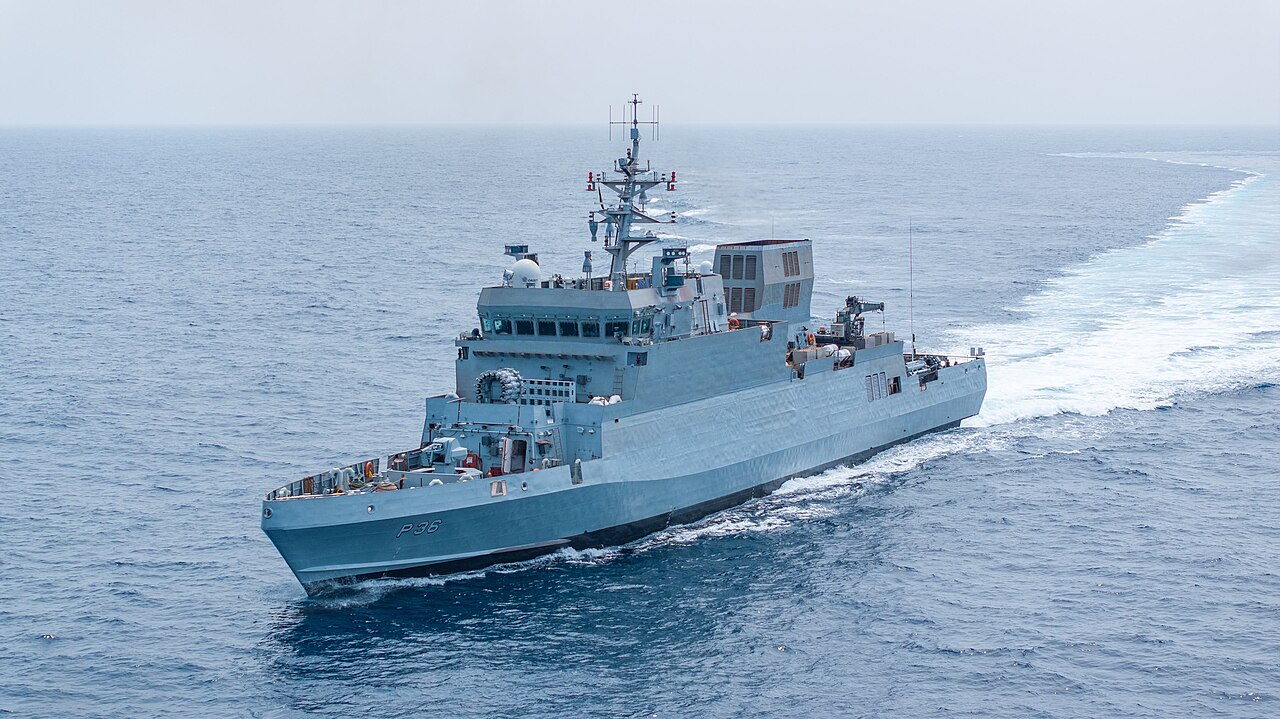
The commissioning of INS Mahendragiri, the sixth Project 17A Nilgiri-class stealth frigate, underscores more than the Indian Navy’s steady modernization. It highlights how global defense suppliers are positioning themselves for a larger role in India’s estimated Rs 2-3 lakh crore ($25-35 billion) naval procurement program as New Delhi seeks to establish itself as the pre-eminent maritime power in the Indian Ocean and an increasingly influential security partner across the Indo-Pacific.
For Rolls-Royce, whose mtu power-generation systems equip INS Mahendragiri, the latest induction represents another step towards securing a long-term position in one of the world’s fastest-growing naval markets.
The British engineering group said the frigate, commissioned by Defense Minister Rajnath Singh on July 11, is equipped with four mtu 12V 396 TE54 diesel generator sets, each producing one megawatt of electrical power for the ship’s combat systems, sensors and mission-critical operations.
The commissioning follows last month’s induction of INS Dunagiri, another Nilgiri-class frigate powered by the same mtu generators, and INS Agray, an Arnala-class anti-submarine warfare shallow water craft propelled by mtu 20V 4000 M93L engines.
Together, the three warships illustrate the growing integration of international propulsion and power-system providers into India’s indigenous shipbuilding program, even as New Delhi pushes for greater domestic manufacturing under the Aatmanirbhar Bharat initiative.
The timing is significant.
India’s maritime strategy is evolving rapidly amid intensifying strategic competition in the Indo-Pacific. China’s expanding naval footprint in the Indian Ocean Region, regular deployments in the Arabian Sea, growing presence around Sri Lanka and the Maldives, and increasing influence across the western Pacific have accelerated New Delhi’s efforts to build a blue-water navy capable of sustained operations from the eastern coast of Africa to the western Pacific.
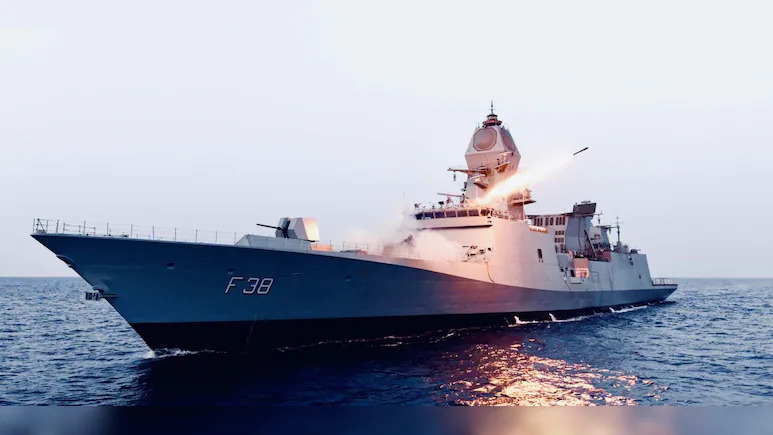
The Indian Navy is expected to expand from roughly 130 ships today to around 170-175 vessels over the next decade. That expansion is expected to include Project 18 next-generation destroyers, additional Project 17B stealth frigates, Project 75(I) conventional submarines, nuclear-powered attack submarines, next-generation corvettes, fleet support ships, mine countermeasure vessels and an expanding fleet of unmanned maritime platforms.
Collectively, these programs are expected to represent procurement opportunities worth Rs 2-3 lakh crore ($25-35 billion) over the coming decade, making India one of the most attractive naval markets for global propulsion, power-generation and combat systems suppliers.
For companies such as Rolls-Royce, the opportunity extends well beyond supplying engines.
Modern naval platforms are becoming increasingly dependent on electrical power. Advanced multifunction radars, integrated combat management systems, electronic warfare suites, sophisticated sonar arrays and future directed-energy weapons require significantly greater onboard power generation and management than previous generations of warships.
As navies transition towards integrated electric propulsion and digital ship architectures, electrical power systems are emerging as strategic technologies rather than auxiliary equipment.
That evolution has intensified competition among global suppliers including Rolls-Royce, Germany’s MAN Energy Solutions, Finland’s Wärtsilä, Caterpillar’s marine division and GE Vernova.
Rolls-Royce enters that contest with one important advantage—an established presence across India’s defense ecosystem. More than 1,400 Rolls-Royce engines power platforms operated by the Indian Air Force, Navy, Coast Guard and Army, while the company has spent nearly nine decades building engineering capabilities, local partnerships and supply chains in India.
By contrast, MAN Energy Solutions has built a strong reputation in naval propulsion systems and remains a significant competitor for future warship programs. Wärtsilä is leveraging its expertise in integrated marine power solutions, hybrid propulsion and lifecycle services, while Caterpillar continues to target patrol vessels, logistics ships and auxiliary naval platforms through its Cat and MaK engine portfolio. GE Vernova, although not a major supplier of marine diesel propulsion, is well positioned to benefit from the growing electrification of naval platforms through advanced power conversion, grid management and electrical infrastructure technologies.
India’s procurement policy is also reshaping the competitive landscape.
Rather than importing complete propulsion packages, the Ministry of Defense increasingly requires technology transfer, local manufacturing and domestic value addition. Success in future naval programs is therefore expected to depend as much on industrial partnerships and lifecycle support as on product performance.
That approach aligns with India’s broader ambition of transforming itself from one of the world’s largest arms importers into a defense manufacturing and export hub. Indigenous warships are already being offered to friendly countries in Southeast Asia, Africa and the Indian Ocean Region, potentially expanding export opportunities for suppliers embedded in India’s naval production ecosystem.
“Our relationship with the Indian Navy spans decades, marked by a legacy of trust and collaboration,” said Sashi Mukundan, Executive Vice President – Transformation at Rolls-Royce India. He said the commissioning of INS Mahendragiri, together with INS Agray and INS Dunagiri, reflected the company’s commitment to strengthening India’s indigenous defense capabilities.
G.S. Selwyn, Executive Vice President of Rolls-Royce in India and Managing Director of Rolls-Royce Power Systems India, said the company remained focused on delivering reliable propulsion and power-generation technologies to enhance the Navy’s operational readiness.
The commercial stakes are substantial. Naval propulsion and power systems typically generate decades of revenue through maintenance, digital upgrades, spare parts and lifecycle support, often exceeding the value of the original equipment contract.
For Rolls-Royce, therefore, INS Mahendragiri represents more than another successful delivery. It is an entry point into India’s next generation of naval capability—a strategic build-up that is as much about projecting influence across the Indo-Pacific as it is about safeguarding sea lanes, countering an increasingly assertive Chinese navy and positioning India as a net security provider in the Indian Ocean.
As geopolitical competition reshapes maritime Asia, companies able to combine advanced technology with deep industrial partnerships in India are likely to emerge as the biggest winners from the country’s naval transformation.