Join WhatsApp Channel

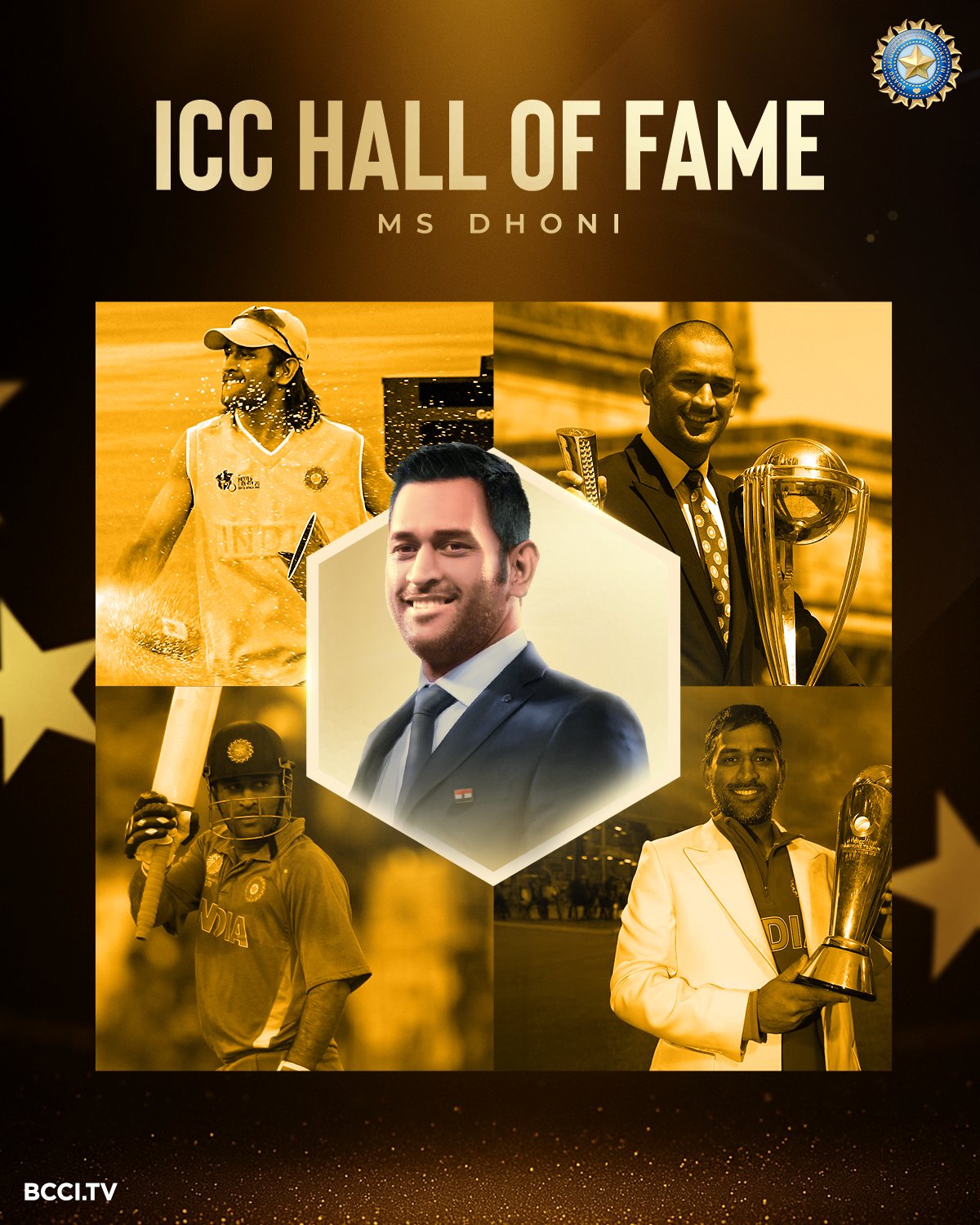
Forget the golf-club retirements and the tearful farewell laps. In a small stadium in Chennai, a 45-year-old man walks out to bat, and 40,000 people lose their minds like it’s still 2011. That’s the Dhoni effect — and it hasn’t faded one bit.
For readers in London, New York or Sydney who’ve only ever caught cricket in passing — think of MS Dhoni as the sport’s answer to Tom Brady with the on-field ice of a Cool Hand Luke, minus the ego, plus a helicopter shot that turned a Twenty20 pitch into a highlight reel. He is arguably the most beloved athlete to come out of a country of 1.4 billion people, and he built it all from behind a railway ticket counter.
From Platform to Podium
Before the fame, before the six-figure endorsement deals, there was a nondescript job at a station in eastern India: Travelling Ticket Examiner, Indian Railways, Kharagpur. While the rest of the cricketing world groomed its stars in academies, Dhoni was punching tickets and playing weekend cricket in Ranchi and Bihar, a small-town kid nobody in Mumbai or Delhi’s cricketing establishment had on their radar.
Then came the debut in 2004 — a run-out for a duck against Bangladesh, the kind of start that ends careers before they begin. Instead, within months, Dhoni produced a 148 against Pakistan that stopped the country in its tracks, followed by an even wilder 183 not out against Sri Lanka — still one of the most destructive innings ever played by a wicketkeeper-batsman anywhere in the world. Long golden hair, fearless hitting, a shot invented on the fly that would be nicknamed “the helicopter” — Indian cricket had a new outlaw, and it loved him.
THE COOLEST HEAD IN THE ROOM: Then came the crown. In 2007, India handed a largely untested young squad to Dhoni for the inaugural T20 World Cup — a gamble that looked more like a shrug from the selectors than a plan. Dhoni turned it into a trophy, beating Pakistan in a final that launched a dynasty and a nickname: Captain Cool. Not because he felt nothing, but because nothing on a cricket field could rattle him.
Four years later came the moment every Indian over the age of thirty can describe from memory: the 2011 World Cup final at Wankhede Stadium, Mumbai. Dhoni promoted himself up the order ahead of an in-form Yuvraj Singh — a call that baffled pundits in real time — then finished the job himself, an unbeaten 91 capped by a six launched into the Mumbai night that ended India’s 28-year wait for the World Cup. Two years later he won the Champions Trophy. To date, no other captain in the sport’s history has won all three global white-ball trophies — the T20 World Cup, the ODI World Cup and the Champions Trophy. That record still belongs to him alone.
THALA: THE GOD OF CHENNAI: If international cricket made Dhoni a star, the Indian Premier League made him a deity — specifically in Tamil Nadu, a state that doesn’t hand out affection to outsiders easily.
As captain of the Chennai Super Kings from 2008, Dhoni delivered five IPL titles — 2010, 2011, 2018, 2021 and 2023 — making him joint-most successful captain in IPL history. Across 278 IPL matches he racked up 5,439 runs, and remains, the only wicketkeeper to have effected more than 200 dismissals behind the stumps in the tournament’s history. In Chennai they don’t call him Dhoni. They call him “Thala” — the leader — and grown adults chant the name with the fervor usually reserved for gods, not middle-order finishers.
Even 2026 hasn’t been kind in the way fans hoped: a recurring calf injury kept him out of CSK’s entire playing XI through the bulk of the season, he ultimately missed the whole IPL 2026 campaign — the first time in the tournament’s 19-year history he has sat out a full season. For a competitor who has never fully let go, it was a brutal way to turn 45. But even injured, benched, unable to lace up — CSK’s stadiums still sold out. That’s not fandom. That’s devotion.
THE MAN BEHIND THE MYTH: Off the field, Dhoni has run his life with the same tight control he showed with a bat in a run-chase. An early romance with Priyanka Jha ended in tragedy — a chapter later dramatized in the hit biopic M.S. Dhoni: The Untold Story, where Sushant Singh Rajput’s performance as Dhoni remains one of Bollywood’s most acclaimed sports portrayals.
Dhoni later married Sakshi Singh Dhoni in a private 2010 ceremony that blindsided even his closest friends, and the couple has kept their daughter Ziva almost entirely shielded from the media circus that follows her father.
He’s sold cars, watches, biscuits, insurance and soft drinks with the same deadpan charm he brought to a dressing room — one ad for a ceiling-fan brand, where he deadpans “I don’t like them” before landing the punchline “I like the new ones,” has become a small masterclass in comic timing.
WHY HE STILL MATTERS: Strip away the trophies and the sponsorship deals, and Dhoni’s real legacy is simpler: he proved that greatness doesn’t need a pedigree. It can start on a railway platform in Bihar and end with a six into the Mumbai night that a billion people still remember exactly where they were watching.
Bat, gloves or fan blade in hand — Captain Cool remains unbothered, unbeaten, and very much undefeated in the one competition that matters most: the hearts of the people who watched him do it.
Disclaimer: The opinions and views expressed in this article/column are those of the author(s) and do not necessarily reflect the views or positions of South Asian Herald.