Join WhatsApp Channel

Have you ever been confronted with the question ‘Is dairy ghee good for health or bad.’ Or ‘Should I consume artificial sweeteners’? There are many such concerns that one faces almost every day, amidst sea of unsubstantiated information and anecdotes circulated widely.
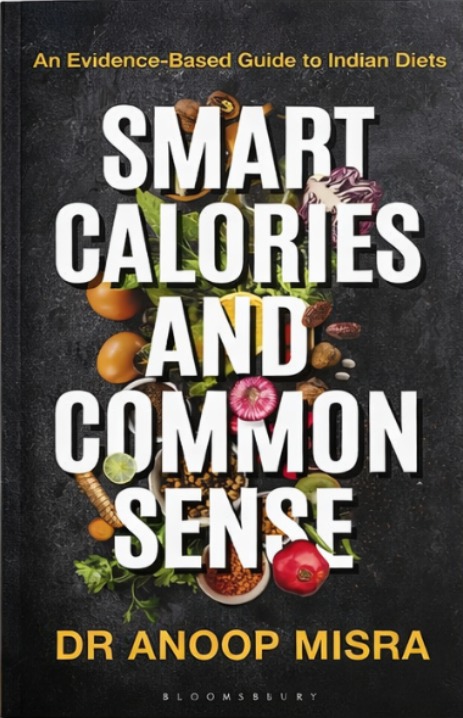
Many of such common queries related to what to eat and what to avoid, have been addressed in a new book ‘Smart calories and common sense’ by noted diabetologist Dr. Anoop Misra.
“Dietary myths circulate freely on social media, during morning walks, among exercise group, and social gatherings, often passed down as grandmother’s tales or innovative new science. It is therefore not surprising that a ten-minute walk in a park can expose one to more dietary advice than a year of medical training,” he says.
For example, confusion regarding dairy ghee is widespread. Actually, to consume ghee or not has been a somewhat sentimental question for Indians. The confusion gets further enhanced when often no specific advice is given on edible oils by physicians to patients who have diabetes or/and are obese. Sometimes causal advice to patients is “don’t eat fried foods.” To which, patients draw their own conclusions, merrily thinking “that doesn’t include putting a lot of butter on bread or plenty of ghee in dal or on rotis.”
Then, people also cite anecdotal evidence like how their grandparents used to eat plenty of ghee and butter and remained healthy. “Your grandfather must have walked 10-15 kilometers daily and eaten plenty of vegetables, fruits and fiber-containing food. But, if you are given the kind of fat he consumed, it will burst and burn your liver and heart within a short time with your current lifestyle, characterized by little physical activity and an uncontrolled diet,” he says.
Therefore, going by the scientific evidence “clearly, it appears that ghee is not the superfood many people think it is.”
The same holds true for coconut oil, popular in some parts of the country. The reason being dairy ghee and coconut oil contain high saturated fat, around 60-80 per cent, and palmitic acid, shown to be associated with several disorders in studies. Saturated fats make cell membranes stiff and raise cholesterol and blood pressure. They have been found to be associated with development of diabetes, heart disease and fatty liver.
One study shows that a daily intake of even as little as one teaspoon of dairy ghee increases heart attack risk several fold. There is also data to show that ghee increases the risk of kidney damage in animals and lung cancer in human beings, he writes in the book. However, some small studies also show good effect of ghee on memory, and weight, but these are small.
“For North India ghee is super food. For South Indian people coconut oil is super food. We are emotionally attached to ghee. My mother would say add ghee to dal. Earlier, people used to walk a lot. But considering today’s circumstances, it would cause damage to liver, will be deposited in arteries. People say it is good for knees. But, it doesn’t do anything to knees. Pregnant women are given ghee, which leads to weight gain,” Dr. Misra says.
Therefore, careful consumption only in small amounts is required, especially for those who have high lipids, heart disease or excess liver fat.
Dr. Misra says the idea of writing this book originated when he tried to find a scientifically sound India-centric book on diets. And he could find none. The aim was to counter dietary misinformation and promote informed choices among people. The book, published by Bloomsbury India, also evaluates popular and controversial diets – such as intermittent fasting, ketogenic diets, and diabetes reversal strategies – often used indiscreetly to reach certain health benefits. It analyses their benefits, risks, and suitability for Indians. It also delves deeply into the issue of artificial sweeteners, advising against their use.
So, what should be done to make better food choices. “Your eyes should be open and scanning, looking at nutrition labels for quantity of saturated fats, palm oil and trans-fatty acids. You should consume more fresh fruits and vegetables and limited quantities of healthy oils, used in rotation and in combination,” he writes.