Join WhatsApp Channel

On the morning after the Congress-led United Democratic Front swept back to power in Kerala with a commanding 102 seats in a 140-member Assembly, the machinery of high politics ground into motion in New Delhi. Ministers-in-waiting made phone calls. Factional lieutenants dispatched WhatsApp messages to loyalists. Aspirants cultivated key intermediaries. And somewhere inside the marble corridors of the All India Congress Committee headquarters, a familiar drama was already beginning to unspool — the one where Delhi decides who shall govern a state that has just, decisively, spoken for itself.
What followed over the next six days would not merely determine who became the Chief Minister of Kerala. It would illuminate, with unusual clarity, the shifting tectonic plates of power within India’s oldest political party, and reveal that when it comes to the Congress of 2026, the most consequential voice in the room is no longer necessarily the loudest one.
That voice, it turned out, belonged to a woman.
The Candidate the Ground Chose
To understand why V. D. Satheesan’s elevation to the chief ministership was so charged with significance, one must understand what he represents — and what he was told, repeatedly, that he could never become.
A six-time Member of the Legislative Assembly from Paravur in Ernakulam district, Satheesan rose through the grinding machinery of student politics and Youth Congress activism, disciplines that reward combativeness over elegance and endurance over eloquence. He is not a man of inherited political capital. He is not the scion of a political dynasty. He climbed — rung by rung, election by election — through a party notorious for reserving its highest honors for those who arrive already carrying connections to the family that controls it.
As Leader of the Opposition in the Kerala Assembly, Satheesan spent five relentless years making the life of Chief Minister Pinarayi Vijayan — one of the most politically entrenched and administratively authoritarian figures in contemporary Indian state politics — profoundly uncomfortable. He attacked from the floor of the Assembly. He attacked in press conferences on Thiruvananthapuram’s sweltering streets. He attacked on social media, in padayatras, in constituency meetings, in party rallies that swelled into something resembling a revival. He personalized the opposition to Vijayan in a way no Congress leader in Kerala had managed in a generation, and in doing so, he gave the UDF a face, a fury, and ultimately a mandate.
When the results came in and Kerala swung back, there was, among the party’s grassroots workers, a settled expectation: the man who had fought this battle would lead the government. In politics, as in war, those who take the hill generally expect to plant their flag on it.
But Delhi, as Kerala had long learned, is not always in the habit of rewarding those who actually fight.
The Delhi Candidate and the Poster War
K. C. Venugopal is many things to many people inside the Congress. To the party’s organizational apparatus, he is the indispensable general secretary — the man who keeps the AICC machinery synchronized with the Gandhi family’s political priorities, who manages state units and candidate lists and coalition negotiations with the quiet, administrative competence that the Congress desperately needs and frequently undervalues. To Rahul Gandhi, he is something closer to a trusted political comrade, a figure who has stood by him through the lean years of the party’s long electoral wilderness.
That proximity was, for a brief period after the Kerala results, translated into a serious push to make Venugopal the Chief Minister. The argument made on his behalf by his supporters had a certain organizational logic: a chief minister tightly aligned with the central leadership would ensure that Kerala’s Congress government did not drift into the factional warfare that has historically consumed the party when it holds power. Venugopal’s national standing, his backers argued, would also help Kerala extract more from the Centre.
What Venugopal’s camp did not adequately account for was the depth of feeling on the ground.
Within hours of reports emerging that he was the frontrunner, Thiruvananthapuram transformed into a billboard war. Posters endorsing Satheesan as the “people’s chief minister” went up around KPCC headquarters, at Statue Junction, at Vellayambalam. Some carried messages of barely coded warning to the Gandhi family: do not ignore Kerala Congress workers; do not allow Delhi to impose leadership on a state that has just delivered you a historic victory. For a party that has always managed its internal disputes with a certain practiced discretion, the eruption of public dissent was extraordinary — and it was, by any political reading, deliberate.
The poster campaign did what it was designed to do. It framed the choice in terms that made any decision in favor of Venugopal politically costly. It was no longer simply a question of organizational preference; it had become a question of whether the Congress high command was capable of listening to those who had actually delivered the election.
The Sister Steps In
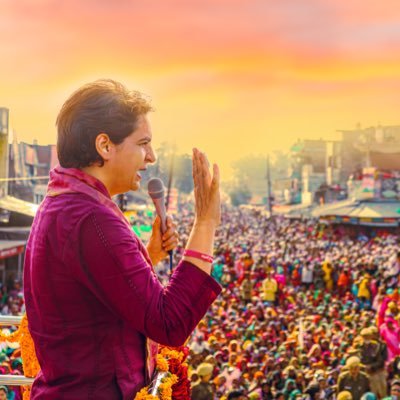
It was at this point that Priyanka Gandhi Vadra intervened — and it was her intervention, according to party sources, that proved decisive.
Priyanka’s political journey has been one of gradual, deliberate self-definition. For years, she was understood primarily as a campaign asset — the Gandhi sibling with the easier charisma, the one who could work a crowd. Her emergence as an independent political force, with her own views and her own willingness to act on them, has been one of the more significant internal developments within the Congress over the past several years.
In the Kerala deliberations, she reportedly made a clear and pointed argument: denying Satheesan the chief ministership after his five years of relentless opposition work would be read by the party cadre as a betrayal. It would signal that in the Congress of 2026, ground-level political performance counted for less than proximity to the family. It would undermine morale at precisely the moment when the party needed to demonstrate that it was capable of governing with the confidence of its own workers behind it.
She is also said to have made an argument about optics that cut through the deliberations. In Kerala, a state where political messaging is parsed with unusual sophistication, installing Venugopal — a man seen across the state more as an AICC functionary than as a mass politician — risked creating an impression of a high command that did not trust local leadership to govern itself. In a state with a politically literate electorate, that impression could be corrosive.
Rahul Gandhi, it is reported, remained reluctant. His long personal and political association with Venugopal made the decision genuinely difficult for him — not merely as a calculation but as a matter of political loyalty. Yet as consultations expanded, the feedback from newly elected MLAs and UDF alliance partners was unambiguous: Satheesan had been the architect of the comeback. The combative energy he had brought to the opposition had animated the UDF base in a way that had not been seen in years. Denying him the chief ministership risked fracturing that energy at the very start of a new government.
The final consultations in New Delhi lasted several hours. Senior leaders including party president Mallikarjun Kharge, Ajay Maken, and Mukul Wasnik weighed the competing considerations. By Thursday evening, the political arithmetic had resolved itself. Satheesan would be Chief Minister.
A History of Difficult Transitions: Kerala’s Chief Ministers
Kerala’s history of selecting chief ministers has rarely been a smooth or elegant exercise — for either political coalition. If anything, the Satheesan episode follows a long tradition of succession battles that exposed the fault lines of Indian democratic politics.
Since independence, Kerala has had a procession of chief ministers shaped by factional calculation, caste arithmetic, coalition compulsion, and, in the Congress’s case, the ever-present shadow of the Gandhi family’s preferences.
- E. M. S. Namboodiripad became Kerala’s first Chief Minister in 1957, leading the world’s first democratically elected communist government — and was promptly dismissed by the Centre in 1959, under Jawaharlal Nehru, in what remains one of the most controversial uses of Article 356 in Indian constitutional history. He served again from 1967 to 1969.
- Pattom Thanu Pillai followed the dismissal, leading an interim government (1960–61), followed by R. Sankar (1962–64), whose Congress government fell to internal fragmentation, a pattern that would define Congress governance in Kerala for generations.
- C. Achutha Menon (CPI) governed through the early 1970s with relative stability, a rare commodity in Kerala politics.
- K. Karunakaran, the Congress strongman who bestrode Kerala politics for three decades, served multiple terms — 1977–78, 1981–82, and again 1982–87 and 1991–95 — and his succession battles, particularly with A. K. Antony, were legendary for their bitterness. The Karunakaran-Antony rivalry defined an entire era of Congress infighting in the state, with New Delhi repeatedly called in to arbitrate, and rarely satisfying either side.
- K. Antony himself served three terms (1977, 1995–96, and 2001–04), each time navigating the peculiar challenge of leading a coalition government in which his own party’s internal divisions were at least as dangerous as the opposition.
- E. K. Nayanar (CPI-M) dominated the Left’s innings, serving from 1980–82, 1987–91, and 1996–2001 — a figure of considerable personal stature whose succession within the Left was more orderly, reflecting the CPI-M’s more disciplined organizational culture.
- Oommen Chandy (2004–06 and 2011–16) became the most recent Congress chief minister before Satheesan, and his own elevation in 2004 was preceded by internal Congress negotiations that were, as is traditional, conducted with maximum discretion and minimum transparency.
- Pinarayi Vijayan, the CPI-M strongman who governed from 2016 to 2026, offered the Left’s most efficient and centralized administration in memory — and also its most controversial — before the UDF tsunami finally ended his decade of dominance.
The LDF has historically had an easier time managing succession — the CPI-M’s democratic centralism provides a clearer internal mechanism — but it has not been without its own tensions, particularly when Vijayan’s grip on the party grew so complete that it began to discomfit even his own colleagues. The UDF, by contrast, has almost always resolved its succession battles through a combination of high command intervention, factional exhaustion, and, occasionally, street-level pressure not dissimilar to what played out this week with the Satheesan posters.
What the Oath Means
On May 18, when Satheesan takes the oath of office at the Central Stadium in Thiruvananthapuram before proceeding to the Sree Padmanabhaswamy Temple — a ritual freighted with the symbolism of the old Kerala order paying deference to the divine — the ceremony will carry more meanings than the occasion’s ceremonial weight alone can hold.
It will mark the return of the UDF to power. It will mark a generational shift within Kerala Congress, the diminishing of old factional structures that once determined every major decision. The reported exclusion of Ramesh Chennithala from the cabinet underlines that this transition is not merely cosmetic; it is intended to signal that a new political layer, centered around Satheesan and younger legislators, is now in charge.
It will also mark something less comfortable for the Congress high command to acknowledge openly: the moment a state unit successfully resisted the center’s initial preference and won. That precedent — that cadre sentiment, when organized and vocal, can outweigh central calculation — is one that party units in other states will have noticed.
And it will mark, for those paying close attention to the Gandhi family’s internal dynamics, the moment when Priyanka Gandhi Vadra stepped visibly into the role of strategic decider, not merely campaign asset. Her intervention in the Kerala leadership contest may be remembered, in time, as the clearest signal yet that the Congress of the next decade will be shaped by more than one voice from Janpath.
For Satheesan himself, a six-time MLA who spent years dismissed as an outsider to the entrenched factional elite, the moment is, above all, a vindication. He fought. He energized. He delivered. And in a political culture that has too often rewarded loyalty to Delhi over loyalty to the voters of Kerala, he has now been rewarded for neither — but for something rarer and more durable: the trust of those who actually did the work.
That, in the end, is the story Kerala will tell about how it chose its next chief minister. Not a story of high command magnanimity. Not a story of organizational management. But a story of a politician who earned it, a cadre that demanded it, and a woman in Delhi who, quietly and unmistakably, made sure it happened.
V. D. Satheesan, 61, is sworn in as Kerala’s Chief Minister on May 18, 2026, at the Central Stadium, Thiruvananthapuram.
Disclaimer: The opinions and views expressed in this article/column are those of the author(s) and do not necessarily reflect the views or positions of South Asian Herald.
Related posts:
 The Gulf in the Ballot Box: How a Distant War Is Reshaping India’s Five-State Election
 Kerala’s Culinary Heritage Shines as Chatti by Chef Regi Mathew Debuts in New York City
 Tamil Nadu’s Great Political Chessboard: Vijay at the Gates, Dravidian Rivals in the Shadows
 144 Ayes: The Number That Changed Tamil Nadu’s Political History