Join WhatsApp Channel

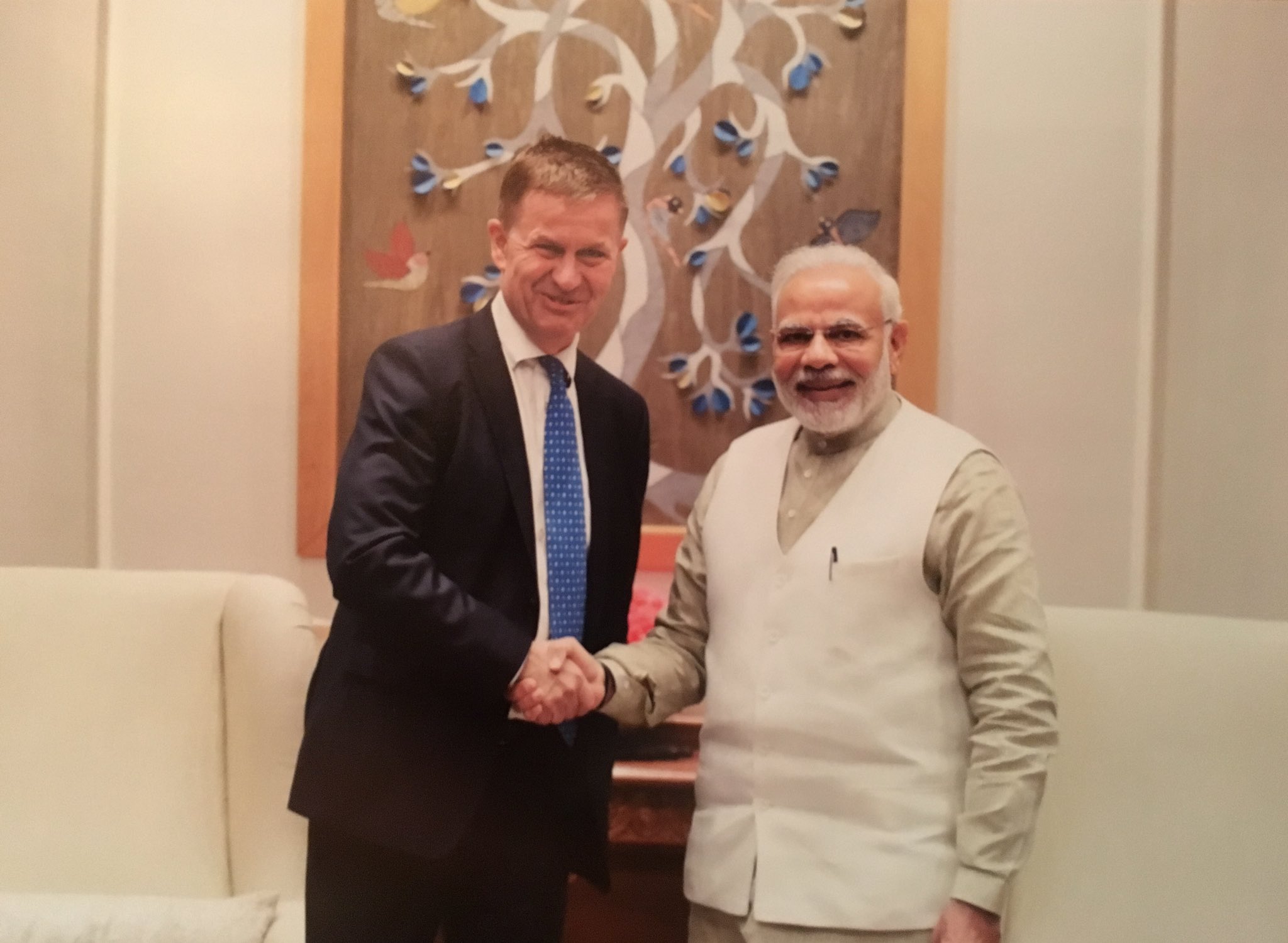

Erik Solheim is a globally recognized diplomat, environmental leader, and strategic thinker on sustainable development, geopolitics, and civilizational dialogue. Formerly Norway’s Minister of Environment and International Development, he has played a central role in international peace negotiations, climate diplomacy, and global sustainability initiatives for more than three decades.
Solheim served as Executive Director of the United Nations Environment Programme, where he championed international cooperation on climate action, renewable energy transitions, ocean conservation, and green development. Widely known for advocating stronger partnerships between the Global South and advanced economies, he has consistently argued for a multipolar world order rooted in dialogue, sovereignty, and sustainable growth.
In this wide-ranging exclusive interview with South Asian Herald, Solheim reflects on global governance reform, India’s civilizational rise, climate leadership, the future of the Global South, and the urgent need for a more cooperative multipolar world order.
Sovereignty as the Foundation of Global Stability
At the heart of the contemporary international crisis, Solheim argues, lies the erosion of respect for sovereign equality. While many national borders were drawn arbitrarily during the colonial era – often dividing ethnic and cultural communities – the alternative to respecting territorial integrity is far more dangerous.
“If we accept that stronger powers can redraw borders by force,” he warns, “we open a Pandora’s Box of horror without end.”
He points to the position adopted by the African Union, which has consistently defended the sanctity of borders as a stabilizing principle for the post-colonial world. In his assessment, most nations of the Global South remain committed to this principle, while only a few major powers continue to challenge it.
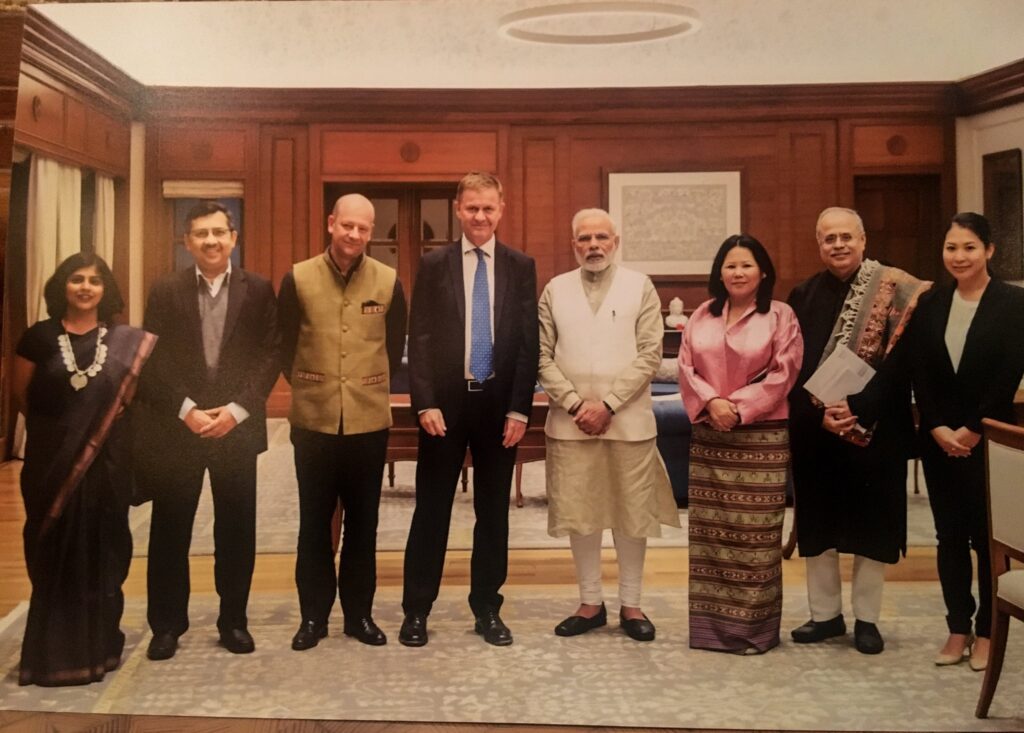
For him, the larger problem is institutional. The United Nations, founded in 1945 under the vision of US President Franklin D. Roosevelt, no longer reflects contemporary geopolitical realities. At the time of its creation, much of Asia and Africa remained under colonial rule, while global power structures were dominated by Europe and the United States.
“The UN has been allergic to reform,” he says, describing the institution as “frozen in the past.”
He calls for sweeping structural and cultural reforms, beginning with expansion of the UN Security Council to include India as a permanent member. He also argues that Africa must gain formal representation, potentially through a rotating seat linked to the African Union.
Sustainability Beyond the Western Model
Turning to climate and development, he observes that while Nordic countries once led the global sustainability movement, the center of gravity has shifted dramatically.
“The indispensable nation for the green transition today is China,” he notes, while also highlighting India’s rapid rise as the world’s third-largest renewable energy producer.
Yet beyond technology and economics, he believes the future of sustainability depends on what he calls a “dialogue of civilizations.” India’s modernization model, he argues, differs fundamentally from Western development because it remains deeply rooted in the philosophical traditions of Hindu Dharma rather than functioning as a Western transplant.
“Indian democracy was not invented by the British,” he emphasizes. “It is deeply rooted in India’s own civilizational heritage.”
He suggests that Europe itself has much to learn from Indian traditions, particularly their emphasis on tolerance and humanity’s relationship with nature. Alongside philosophical exchange, he sees enormous potential in expanded trade, tourism, technological collaboration, and political cooperation between India and the Nordic region.
A Historic Shift in the Economics of Green Energy
On the question of climate justice and economic development, he argues that the world is witnessing a historic turning point.
“For the first time in human history,” he says, “there is a development path where economic growth and environmental sustainability are no longer in conflict.”
Historically, industrialization required large-scale dependence on fossil fuels. The pollution-intensive development model pioneered in the United Kingdom spread across Europe, the United States, and eventually Asia because there were few viable alternatives. That equation, however, has changed dramatically due to falling renewable energy costs – driven largely by the efficiency and scale of Chinese green technology companies.
“The price of solar has fallen by 90 percent in just over a decade,” he explains, adding that wind energy, battery storage, and electric vehicles are also becoming rapidly more affordable. For countries like India, the implications are transformative. Every reduction in oil dependence, he argues, increases national wealth, improves energy security, and reduces pollution simultaneously.
He recounts meeting operators of grain mills in Uttar Pradesh who had cut energy costs by more than half after replacing diesel-powered systems with rooftop solar infrastructure. “Switching from fossil fuels to solar is no longer a sacrifice,” he says. “It saves money.”
India’s Civilizational Democracy and the Search for Modernity
One of the most striking themes in the conversation is his argument that India represents a unique model of non-Western modernization. “All developing nations have faced the same dilemma,” he explains. “How do you modernize without westernizing?”
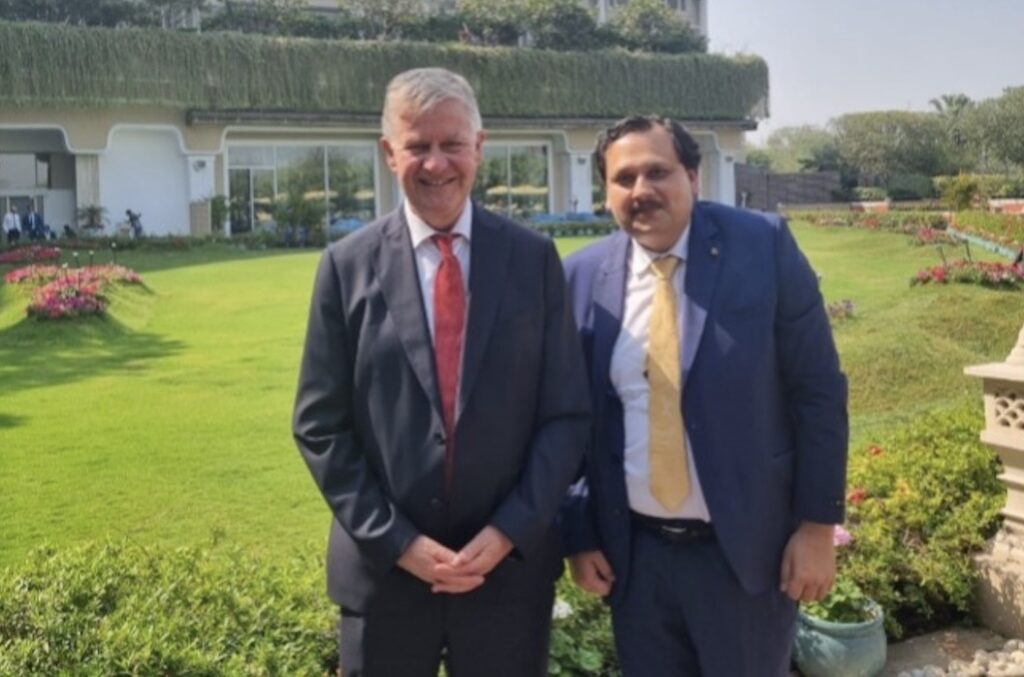
He points to Japan, South Korea, and China as examples of societies that achieved modernization while remaining rooted in their own cultural traditions. India, he believes, is pursuing a similar path under a democratic framework shaped by its ancient civilizational ethos.
In his view, India’s cultural foundations cannot be separated from Hindu Dharma and the broader spiritual traditions that emerged from the subcontinent, including Buddhism, Jainism, and Sikhism. At the same time, he stresses the importance of inclusivity and respect for minorities, particularly India’s large Muslim population.
“Hindu Dharma underlines that humans are part of nature, not above nature,” he says, contrasting it with what he sees as more rigid Western intellectual traditions. Recalling a conversation with Sadhguru, he reflects on the Indian tradition of inquiry and spiritual seeking.
He expresses frustration that many Western intellectual circles struggle to appreciate the depth and vitality of Indian spiritual traditions, attributing it partly to secularism and intellectual arrogance within the West.
India, China, and the Future of the Asian Century
Discussing the intensifying rivalry between the United States and China, he criticizes what he describes as the “zero-sum thinking” dominating much of Western strategic discourse. “Many US foreign policy thinkers believe any gain for China is automatically a loss for America,” he says. “That is simply wrong.”
On issues ranging from artificial intelligence governance to climate change, poverty reduction, pandemic prevention, and economic growth, he argues that international cooperation creates mutual gains rather than inevitable losers.
He believes both India and China possess philosophical traditions more inclined toward “win-win” thinking and should focus on areas of cooperation while setting aside unresolved disputes for future resolution.
He notes that China has recently overtaken the United States as India’s largest trading partner and argues that Indian businesses could benefit significantly from Chinese expertise in green technologies. “The power of the Global South depends on India–China relations,” “Without cooperation between the two giants, institutions created to strengthen the developing world become paper tigers.”
The Strategic Power of the Indian Diaspora
Reflecting on the global influence of the Indian diaspora, he describes its rise as one of the most remarkable geopolitical developments of recent decades. The United Kingdom recently had a prime minister of Indian origin, while in the United States, both major political parties have prominently featured leaders connected to Indian heritage. “A figure like Winston Churchill would probably be turning in his grave,” he remarks.
For him, the Indian diaspora represents far more than a source of remittances or cultural soft power. It is a strategic asset capable of shaping global narratives, policy frameworks, and economic networks.
He encourages India to actively invite more members of its diaspora to return to contribute to nation-building, entrepreneurship, and technological development. “They can invest not just money, but time, expertise, and influence,” he says. Above all, he believes the diaspora should speak “loudly and proudly” about India’s achievements, democratic resilience, and civilizational heritage.
As the world navigates the uncertainties of a fractured international order, he sees India emerging not merely as a geopolitical power, but as a civilizational force capable of offering alternative frameworks for modernity, sustainability, and coexistence.
Related posts:
 China’s WTO Salvo Tests India’s ‘Make in India’ Firewall
 SEforALL Reports Highlight Urgent Need for Climate Finance and Resilient Energy in South Asia’s Healthcare Systems
 Earth Day 2026: Why Climate Education Is Our Most Powerful Climate Solution
 Modi, Starmer Pledge Deeper India–UK Partnership Across Key Sectors