Join WhatsApp Channel

As a new high-powered Indian envoy prepares to take charge in Dhaka, the second political appointee to serve as India’s High Commissioner to Bangladesh, a familiar and potentially dangerous political pattern appears to be resurfacing across the border.
In recent weeks, leaders of Bangladesh Jamaat-e-Islami and figures associated with the National Citizen Party (NCP), widely believed to be ideologically aligned with Jamaat circles, have sharply raised the issue of alleged persecution of Muslims in Assam and West Bengal following the BJP’s victory in the Bengal assembly elections.
Jamaat Amir Shafiqur Rahman publicly referred to the political shift in West Bengal and urged India to ensure that “no harm is done by targeting any religion, caste, or ethnic group.”
NCP leader Nahid Islam went further, alleging that Muslims and Matua community voters had been denied voting rights and warning that reports of “persecution” in Assam could have repercussions inside Bangladesh itself.
While the language may have sounded cautionary, even threatening at points, the broader significance lies elsewhere — these statements are part of a steadily expanding anti-India rhetorical space in Bangladesh at a highly sensitive diplomatic moment.
“This partisan anti-Indian rhetoric is disturbing, as several key takeaways from our relationship, such as the Ganges water treaty, are to be negotiated. However, the BNP government there has made it clear that they are not party to this narrative,” pointed out Pinka R Chakravarty, former Indian High Commissioner to Dhaka.
Dhaka officially has attempted to maintain balance even as it gears up to welcome former Railway Minister Dinesh Trivedi as India’s envoy. The Bangladesh government has stated clearly that there is no evidence of systematic persecution of Muslims in India.
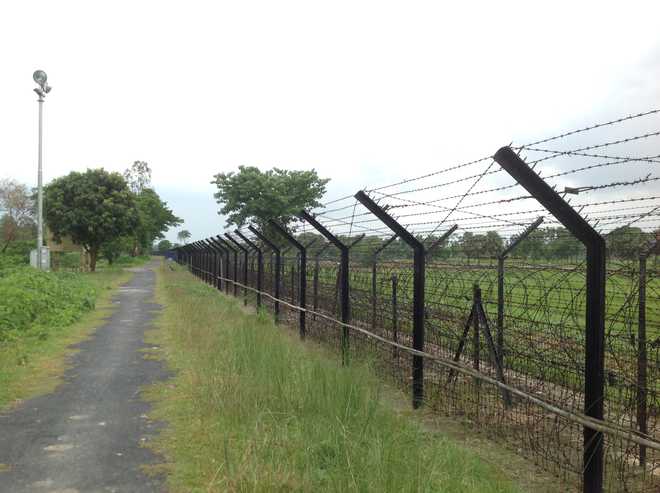
Simultaneously, however, it has strongly opposed any Indian attempt to extend border fencing beyond the agreed 150-yard limit. This comes after the West Bengal cabinet transferred several unfenced land parcels to the Border Security Force to complete fencing work along stretches of the more than 4,000 km-long India-Bangladesh border.
The cumulative effect is politically significant. Border fencing, minority rights, river waters, and regional security are increasingly being woven together into a larger narrative that risks hardening public opinion against India inside Bangladesh.
“The timing of coming up with an anti-Indian narrative is significant. Though the government has distanced itself, we cannot rule out a tacit approval to keep India under pressure while negotiating with Bangladesh,” said Shantanu Mukharji, former National Security Advisor to Mauritius.
History also offers sobering parallels of periods when India was being labelled by politicians in Dhaka. In 1964, following the so-called Hazratbal relic controversy in Jammu and Kashmir, involving rumors that a sacred hair believed to belong to the Prophet Muhammad had disappeared, communal violence erupted across what was then East Pakistan.
Islamist and communal political forces, including elements linked to Jamaat and the Muslim League, exploited the incident to target Hindu-owned businesses and urban communities. The issue had less to do with the relic itself and more to do with mobilizing sentiment for domestic political purposes.
A similar mobilization occurred over the Ganges waters issue in 1976. The 30-year Ganges Water Sharing Treaty is due for renewal this December, making water diplomacy once again politically charged.
A year after Sheikh Mujib died, veteran Bangladeshi leader Maulana Abdul Hamid Khan Bhashani threatened a “Long March” to India’s Farakka Barrage, accusing New Delhi of drying up the Padma river and causing ecological devastation in Bangladesh.
The current rhetoric emerges against a backdrop of shifting regional alignments. Bangladesh’s ties with China have deepened substantially over the past decade. Around 70 per cent of Bangladesh’s military hardware reportedly originates from China, and bilateral military engagement has expanded steadily.
At the same time, exchanges between Bangladeshi and Pakistani military establishments have visibly increased, with several Pakistani military delegations visiting Bangladesh in recent months. A delegation from Jamaat-e-Islami also recently met Bangladeshi Jamaat leaders in Dhaka.
None of this necessarily means Bangladesh is moving into an overtly anti-India strategic camp. Bangladesh’s economic and geographic realities still make stable ties with India indispensable.
“However, it does suggest that anti-India narratives are becoming increasingly useful as instruments in Bangladesh’s domestic political contestation,” pointed out Mukharji. Other officials added that this is happening “particularly ahead of sensitive negotiations over water sharing, border management and regional influence.”
For India, the challenge is not merely diplomatic. It is about recognizing how historical grievances, identity politics, regional geopolitics, and great-power competition that are beginning to converge in Bangladesh’s public discourse. (UNI)