Join WhatsApp Channel

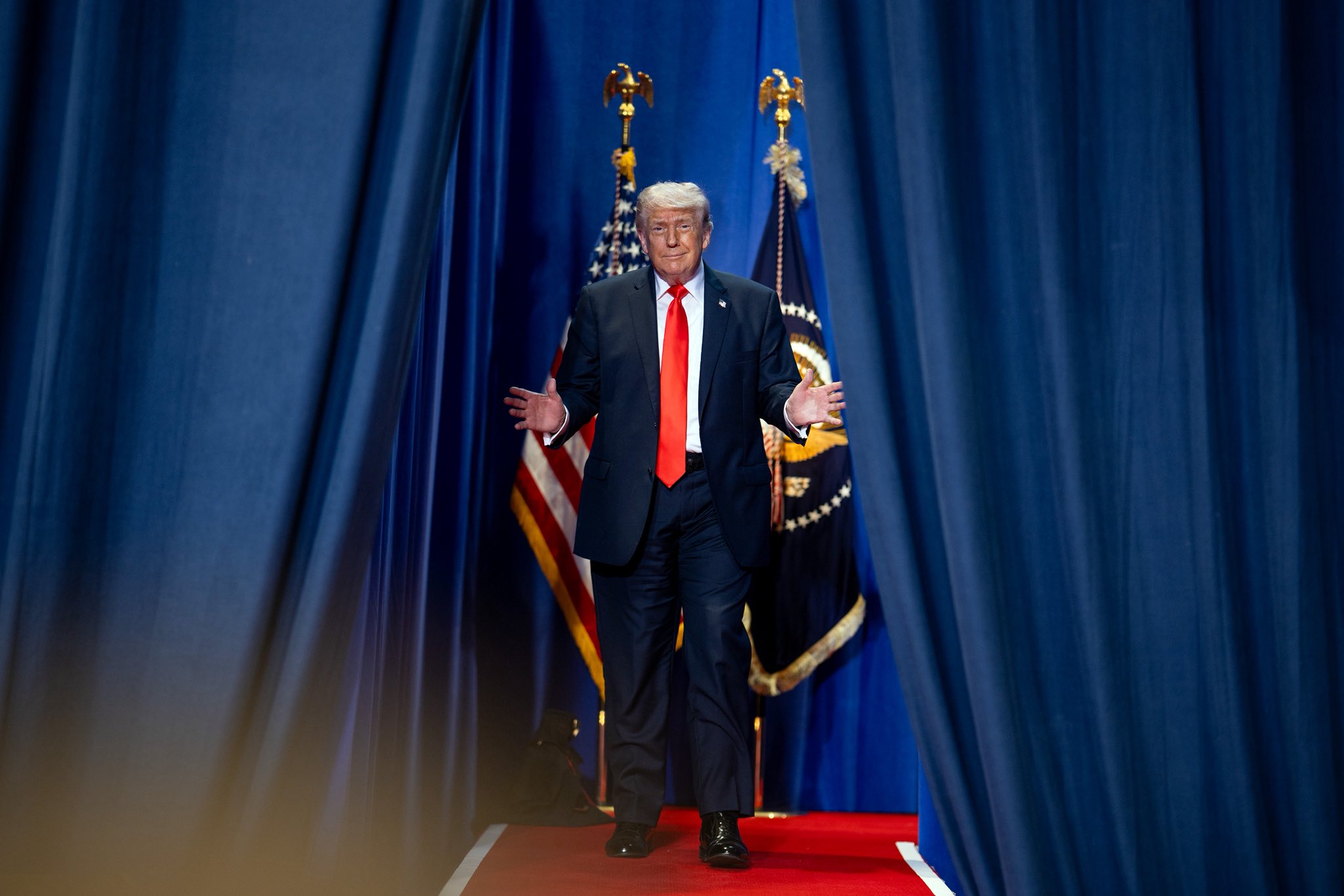
It is easy to get distracted in politics especially if the stakes are high; and it is no different in international politics when there could be a bigger incentive to keep babbling about things as a way of buying time. In the corridors of power in Washington DC, two things are taking place: President Donald Trump saying that he is studying a latest proposal from Iran; and law makers arguing whether the President would have to come before Congress about the war in Iran as a 60-day deadline mandated by the 1973 War Powers Act has already expired.
If Washington is to stay on fighting Tehran, only law makers could give that extension. President Trump is correct in saying that the track record on this issue is far from perfect: Republican Presidents like Ronald Regan, George HW Bush and George W Bush have stayed with the Congressional requirement; and Democratic Presidents like Bill Clinton and Barack Obama have flouted the law.
Details of the latest proposal from Iran have not been made public except that President Trump has expressed skepticism maintaining that Iran has yet to make good for all that they have done to humanity and the world in the last 47 years. But according to Iranian news agency that has been carried in western media outlets, Tehran is calling for a comprehensive settlement, not a temporary truce or sorts that would address ranging from Lebanon to economic sanctions, security guarantees, withdrawal of all American forces in the surrounding regions and lifting of all blockades and naval restrictions, release of frozen assets and compensation pertaining to punitive measures and military action. And a new mechanism to run the Strait of Hormuz.
An ominous silence on the nuclear issue which is where the core of the problem would seem to be. With the United States going in to hit Iranian nuclear sites on February 28, it would only seem obvious that its campaign of June 2025 had not been fully accomplished even if President Trump claimed at the time of obliteration. But the problem is of stitching a deal on the lines of the Joint Comprehensive Plan of Action (JCPOA) of 2015. This deal that was backed by the Permanent Five plus Germany capped enrichment at 3.67 percent with strict monitoring by the International Atomic Energy Agency (IAEA). The First Trump administration walked out of the nuclear deal in 2018 arguing that the United States had given away too much for too little.
The Europeans and IAEA disagreed pleading with Washington to stay with the accord. But at the time President Trump argued that it was a “horrible” and a “one-sided deal” that did not take into account Tehran’s ballistic missile program, its continued regional aggression or activities in Lebanon, Syria and Yemen and that too much relief had been given by way of relaxing sanctions.
Following the abrogation in 2018, the Trump administration re-imposed punitive measures and intensified the economic squeeze. But between 2018 and 2026, the ball game has shifted with now Tehran seen as having enriched uranium to 60 percent and significant stockpiles in the neighborhood of about 440 kilograms or enough to make more than a handful of nuclear warheads. Hence a feeling that the framework of the 2015 deal is totally irrelevant given the advances that Tehran has made in its quest for a nuclear program.
For Republicans and Democrats in Congress to be talking past one another over the interpretation of the War Powers Act does little to address the immediate need to find ways to bring this messy conflict to an end. The argument over the wording of the 1973 Act can be played out politically and in academic circles for years. In fact, even till this day the last word may not have been said on the circumstances that led to the Tonkin Gulf Resolution of 1964 that pushed the United States into expanding the conflict in Vietnam.
President Lyndon Johnson was convinced that North Vietnamese patrol boats had brazen attacked American vessels the USS Maddox and USS Turner Joy; later investigations opened up the possibilities of the two American frigates firing at each other with heavy rain and poor visuals as contributing factors. A year later President Johnson is said to have told reporters, “For all I know, our Navy was shooting at whales out there.” The Democratic President has also been attributed to another remark: “Hell, those dumb stupid sailors were just shooting at flying fish.”
Both Iran and the United States know full well that the only way to get over the impasse is to keep the eye on the ball and not get distracted into sideshows. The United States has said that it has the “finger on the trigger” for resuming operations; and Tehran has said that it is ready to meet American “foolishness.” All this may go down well for a cheering domestic audience who could be blissfully ignorant of ground realities. Oil prices are again fluctuating leaving markets in the United States, Europe and Asia Pacific jittery; the war is taking its toll on currencies and Americans are not too happy about forking out upwards of US 4 per gallon at the pump not to mention the uptick on prices at grocery store.
And if Iran thinks it is sitting pretty economically because of its oil reserves, it has another story coming its way: independent observers are making the point that the effective American naval blockade in and around the Hormuz is hurting Tehran as tankers can neither go in or come out. The non-availability of empty tankers mean that Iran has difficulty in storing oil it has pumped; and looking for floating islands to store oil open up the possibility of being targets for aerial assaults.
The money that Tehran was supposedly collecting in currency and cryptos for safe passage of ships is also in jeopardy with Washington making it known that shipping companies involved in this activity will be subject to sanctions. For the leadership in Tehran to call its people to be ready for an “economic battle” or to engage in an “economic jihad” against adversaries is one thing; but running out of essentials and empty shelves in supermarkets is a totally different story.
Disclaimer: The opinions and views expressed in this article/column are those of the author(s) and do not necessarily reflect the views or positions of South Asian Herald.