Join WhatsApp Channel

“The rule of the sea is indeed a great matter.” – Thucydides
For years, the Indo-Pacific was drawn as an eastern theater of power, with most attention fixed on the South China Sea, Taiwan, the western Pacific, and the Indian Ocean. Gulf instability sat in a different file, usually discussed through oil shocks, militias, sanctions, and chronic disorder. Recent events have erased that separation. The Iran crisis reveals something larger and harder to ignore. The Indo-Pacific does not stop at the Arabian Sea. Its western edge runs through the Gulf.
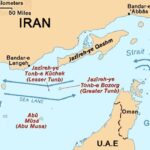
Geography leaves little room for illusion. The Strait of Hormuz is just 29 nautical miles wide at its narrowest, yet a large share of Asia’s economic life depends on it. In 2025, about 20 million barrels of oil and petroleum products passed through it each day, roughly a quarter of global seaborne oil trade. In 2024, about one-fifth of global LNG trade also crossed the strait, much of it bound for Asia. This narrow Gulf corridor helps shape freight costs in Mumbai, fuel bills in Seoul, industrial planning in Tokyo, and investor sentiment across the region. When shipping slows, insurance costs rise, or naval tensions spike, the effects spread quickly beyond the local level.
India feels that pressure quickly and directly. With nearly 89 percent of its crude imported, it cannot treat Gulf instability as far away. Strain in those waters feeds into inflation, transport costs, refinery decisions, and supply chains at home. Market actors move before governments do. Traders hedge, freight costs climb, and insurance tightens. Strategic vulnerability turns into economic pressure.
China’s dependence reinforces the point. As the world’s largest crude importer and a major buyer of Gulf energy, Beijing cannot treat instability around Iran as remote. Any prolonged disruption in Hormuz would hit Chinese energy security, shipping, and industrial output, even as China extends its reach across the Indian Ocean. A waterway once central to Middle Eastern politics now sits inside the wider competitive map of Asia.
No region has more at stake in a prolonged closure than Asia. Most of the crude and LNG moving through Hormuz is headed to Asian markets, not the United States, and the first shock will be felt in Asian import bills, freight rates, refinery planning, and industrial costs. Europe will also feel the strain, especially in gas markets, but the immediate burden falls more heavily on Asian economies that rely on uninterrupted Gulf energy flows. A disruption that drags on does not remain a Middle Eastern crisis for long. It becomes an Asian economic emergency.
Foreign Minister S. Jaishankar has already signaled the seriousness of the moment by stressing India’s interest in safe passage through the Strait of Hormuz. Access has to be secured, not assumed. Earlier expectations of maritime stability are wearing thin. Sea lanes, once treated as background conditions, are now part of the contest itself.
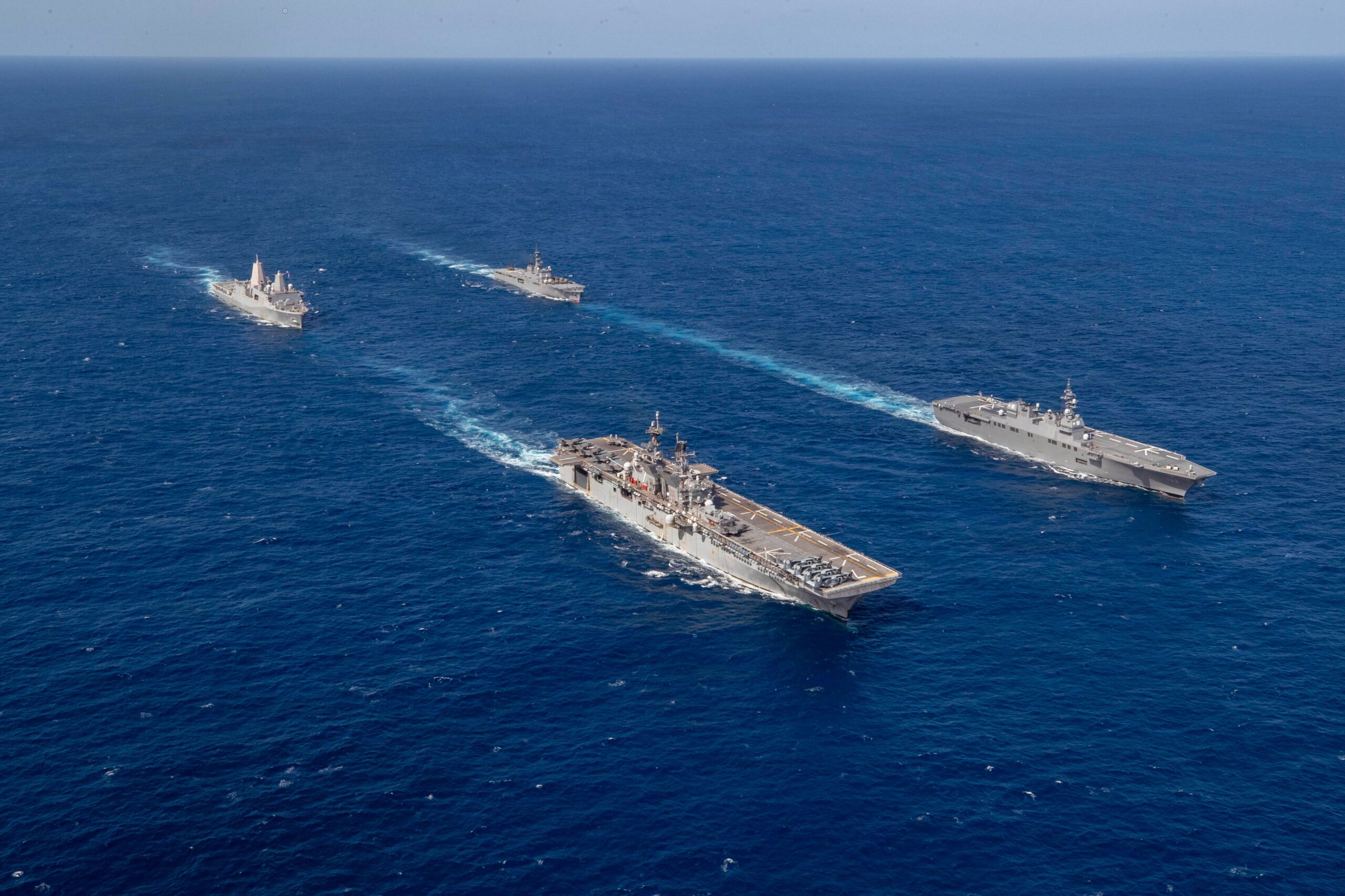
Most India-U.S. maritime conversations focus on China, and understandably so. Beijing’s naval rise and expanding presence have shaped how regional security is discussed. Yet a Gulf crisis shows how incomplete that lens has become. Asia’s maritime order is a connected system. Trouble in Hormuz reaches the Arabian Sea, the Indian Ocean, and beyond. Tankers, capital, and risk move through linked channels. One disruption can travel across the whole map.
Washington has made that plain, perhaps inadvertently. President Trump said that keeping Hormuz open should fall to those who depend on it, not the United States, adding that there was “no reason for us to do this.” India should read that not as abandonment, but as instruction. Strategic autonomy now means more than preserving room for choice. It also means having the capacity to absorb shocks without losing direction.
Preparedness begins with realism. New Delhi needs deeper energy buffers, clearer shipping contingency plans, stronger maritime domain awareness, and broader coordination with states that share an interest in open sea lanes. Quiet cooperation will matter more than dramatic words. Naval coordination, logistics access, shared surveillance, and port arrangements rarely make headlines, yet in a crisis, they build resilience.
Risk also creates an opening. Gulf instability should push Asian powers to engage in a more serious conversation about maritime risk and energy security. No formal bloc is needed. No new treaty must be invented overnight. Major Asian importers already share the same vulnerability, even if they still plan separately. India, Japan, South Korea, and others all depend on these shipping lanes. Planning together is not ideological. It is prudent. Joint preparation can reduce both economic loss and political panic when the next rupture comes.
India is well placed to begin that conversation. Its location, naval reach, energy needs, and diplomatic links give it unusual standing. New Delhi can engage Washington, Gulf capitals, and Asian importers without appearing tied to someone else’s military aims. Its most useful role lies in connecting interests, not joining camps. Keeping shipping open, sustaining commercial continuity, and calming markets would serve both national and regional needs.
Permanent uncertainty is becoming the governing condition of international politics. Finnish President Alexander Stubb has argued that the change in world order is permanent, and the point fits the present moment. Sea lanes once treated as fixed are now vulnerable to coercion, miscalculation, and spillover. Energy routes can become strategic fault lines overnight. Importing nations can no longer behave as though the Gulf sits outside Asia’s security framework.
Old maps no longer hold. Metaphorically, the Indo-Pacific no longer starts at the Strait of Malacca. It now begins in the Gulf.
Disclaimer: The opinions and views expressed in this article/column are those of the author(s) and do not necessarily reflect the views or positions of South Asian Herald.